Sunday, October 27th
sounds of Chicago
They sounded so good last week—let’s hear some more.
The Staple Singers, “Are You Sure,” live, 1971
**********
lagniappe
art beat
William Eggleston (1939-)

sounds of Chicago
They sounded so good last week—let’s hear some more.
The Staple Singers, “Are You Sure,” live, 1971
**********
lagniappe
art beat
William Eggleston (1939-)
sounds of Chicago
The Staple Singers, “Sit Down Servant,” live (TV show), 1963
**********
lagniappe
art beat
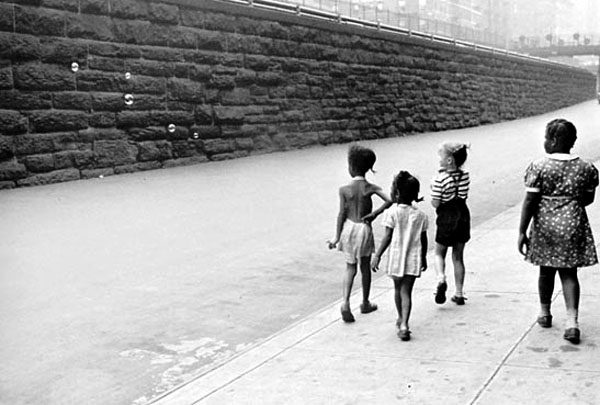
Helen Levitt (1913-2009), New York, c. 1940
what’s new
Mavis Staples, “I Like The Things About Me” (R. Staples & M. Stubbs), One True Vine, 6/13
**********
lagniappe
random thoughts
Language, no matter how much it’s used, never seems to get used up. Take this sentence, for instance, which opens Donald Ray Pollock’s story collection Knockemstiff: “My father showed me how to hurt a man one August night at the Torch Drive-in when I was seven years old.” Not one of these words is unusual, nor is the syntax. But this particular set of words, in this particular order, never existed before. How improbable is that?
coming to a theater near you
Rejoice and Shout (2011)
Vodpod videos no longer available.(Yo, Michael—thanks for the heads-up!)
**********
lagniappe
art beat
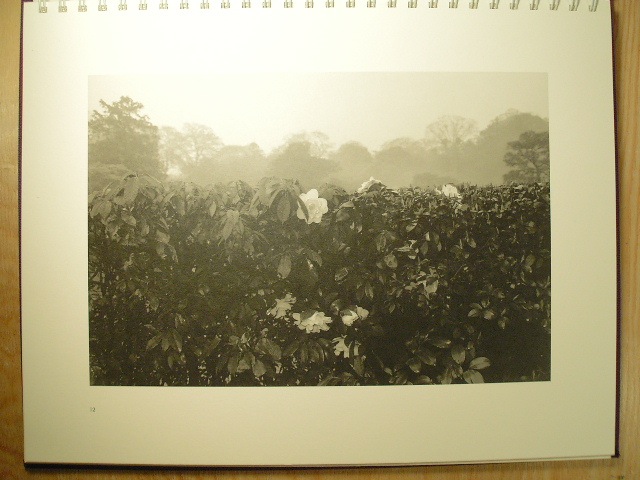
Here’s another image from the book featured yesterday.
Lee Friedlander, Kyoto, Japan, 1977
*****
taking a break
I’m taking a little break (my first since December)—back soon.
While I’m away, why not enjoy, oh, Amadou & Mariam and Ornette Coleman and Hound Dog Taylor and Solomon playing Beethoven’s Appassionata sonata and Solomon Burke and Del Shannon and . . . ?
You weren’t there Saturday (neither was I); but, hey, we’re here now.
North Mississippi Allstars (Luther [guitar] & Cody [drums] Dickinson [sons of the wonderful Jim Dickinson]), “Let It Roll,” “Ain’t No Grave,” live, Atlanta (Criminal Records), 2/5/11
Vodpod videos no longer available.**********
lagniappe
Keys to the Kingdom (new album)
Vodpod videos no longer available.*****
reading table
Country Fair
If you didn’t see the six-legged dog,
It doesn’t matter.
We did, and he mostly lay in the corner.
As for the extra legs,One got used to them quickly
And thought of other things.
Like, what a cold, dark night
To be out at the fair.Then the keeper threw a stick
And the dog went after it
On four legs, the other two flapping behind,
Which made one girl shriek with laughter.She was drunk and so was the man
Who kept kissing her neck.
The dog got the stick and looked back at us.
And that was the whole show.—Charles Simic
Simic reads this here, beginning at 2:08:
Vodpod videos no longer available.Sullivan Pugh, 1925-December 30, 2010
replay: a clip too good for just one day
The power of conviction?
Look at that smile (1:35).
The Consolers (Sullivan & Iola Pugh [husband and wife])
“The Grace of God,” live (TV broadcast [TV Gospel Time]), early 1960s
***
“Waiting For My Child,” live
***
“I Feel Good,” live
**********
lagniappe
In its classic form, gospel was music designed to kill—to slay the congregation in spirit, moving them not just to laughter, tears, and hollers, but to screams and even seizures. The first woman who started shrieking was known, in the parlance of the gospel quartets, as “Sister Flute.” Big churches had volunteers in nurses’ uniforms to tend to the stricken.
Later these forces were unleashed on white teenagers, to memorable effect. Little Richard, Sam Cooke, James Brown, Aretha Franklin, Tina Turner, Marvin Gaye, Al Green—two whole generations of soul singers got their start and their sound in church. You know what they can do. And you know the idioms too: You set me free. You set my soul on fire. Have mercy. Help me now. I need you early in the morning/in the midnight hour/in the evening/to hold my hand. Not to mention that rock and roll standby: I feel all right.
But—at the risk of a) sounding like a Christian or b) stating the obvious—in gospel those words make a kind of sense they will never make in secular music. In gospel a grownup can perform them and mean them right down to the ground. The lyrics may not be much in themselves: as [Anthony] Heilbut writes, “the music’s success depended more on its singers than its songs.” But for all the group participation in gospel, for all its expression of communal feeling (and political protest), these songs deal very deeply with loneliness, abandonment, and death. They ask more of God than we can ask of one another. The very idea of “needing” the one you love may predate the gospel explosion, but it is a gospel idea.
—Lorin Stein, “The Gospel According To Gospel,” The Paris Review (blog), 7/2/10
(Originally posted 8/1/10.)
*****
lagniappe (more)
“Glory Land,” 1962
Vodpod videos no longer available.
***
Sullivan Pugh, interview, “May The Work I’ve Done Speak For Me”
Vodpod videos no longer available.
***
Sullivan Pugh was born in Moorhaven, Florida in 1925. When his mother was killed in the 1926 Lake Okeechobee hurricane, Pugh and his five siblings were adopted by a family in the community of Punta Gorda. Pugh began singing as a child soloist at the First Born Church of the Living God in Miami.
He met his wife lola when she was singing with the Miami Gospel Singers. The couple married in 1950. In 1952 the pair decided to form a gospel trio with Pearl Nance-Rayford, and they called themselves the Miami Soul Stirrers. Their original repertoire was based on the traditional spirituals and songs of the Holiness Church. Early influences included other African American gospel groups such as the Soul Stirrers of Chicago (from which they took their name) and the National Gospel Twins of Delray Beach, Florida. In 1953, Nance-Rayford quit the trio and Sullivan and lola took the name The Spiritual Consolers for their duet.
During the early period of their careers, the Pughs sang for both the Glory and DeLuxe recording labels. In 1955 they signed with Nashboro Records in Nashville, Tennessee and shortened their name to The Consolers. Their first recording with Nashboro was “Give Me My Flowers.” “Flowers” would remain their best selling recording and signature song.
For forty years Sullivan and lola Pugh were considered among the elite traditional African American gospel performers in America. During this period they sang on numerous single releases and produced twenty-five albums. They performed concerts in the Bahamas, England, Africa, Canada, and throughout the United States. Favorite southern gospel performers, The Consolers performed at countless church conventions and camp meetings in Florida, Their blended vocals along with Sullivan’s guitar playing were considered trademarks in the world of gospel music. A gifted composer, Pugh wrote many of the songs heard on their recordings and in concert.
lola Pugh died in October 1994. Sullivan Pugh remains a member of his childhood church in Miami. He is actively involved with The Consolers Progressive Charity Club which assists the needy. Pugh continues to sing and participate in community and church activities.
***
The Consolers’ “Waiting For My Child,” released in the early ’60s and written by Sullivan, was covered a couple years ago by Mavis Staples and Patty Griffin.
Vodpod videos no longer available. music clip of the day