music clip of the day

jazz/blues/rock/classical/gospel/more

Thursday, June 19th

passings

Jimmy Scott, singer, July 17, 1925-June 12, 2014

“Sometimes I Feel Like a Motherless Child,” live, New York (Birdland), 2000

**********

lagniappe

reading table

If you were to open up Iona’s chest and pour all the grief out of it, you would probably flood the entire planet, yet it is not visible.

—Anton Chekhov (1860-1904), “Grief” (often rendered as “Misery”; translated from Russian by Rosamund Bartlett)

Wednesday, June 18th

never enough

Same composer, same pianist—23 years earlier.

Ludwig van Beethoven (1770-1827), Piano Sonata No. 29 in B-flat major (“Hammerklavier”), Friedrich Gulda (1930-2000), live, Germany (Bonn), 1970

1st & 2nd movements

3rd movement (beginning)

3rd movement (end), 4th movement

**********

lagniappe

art beat

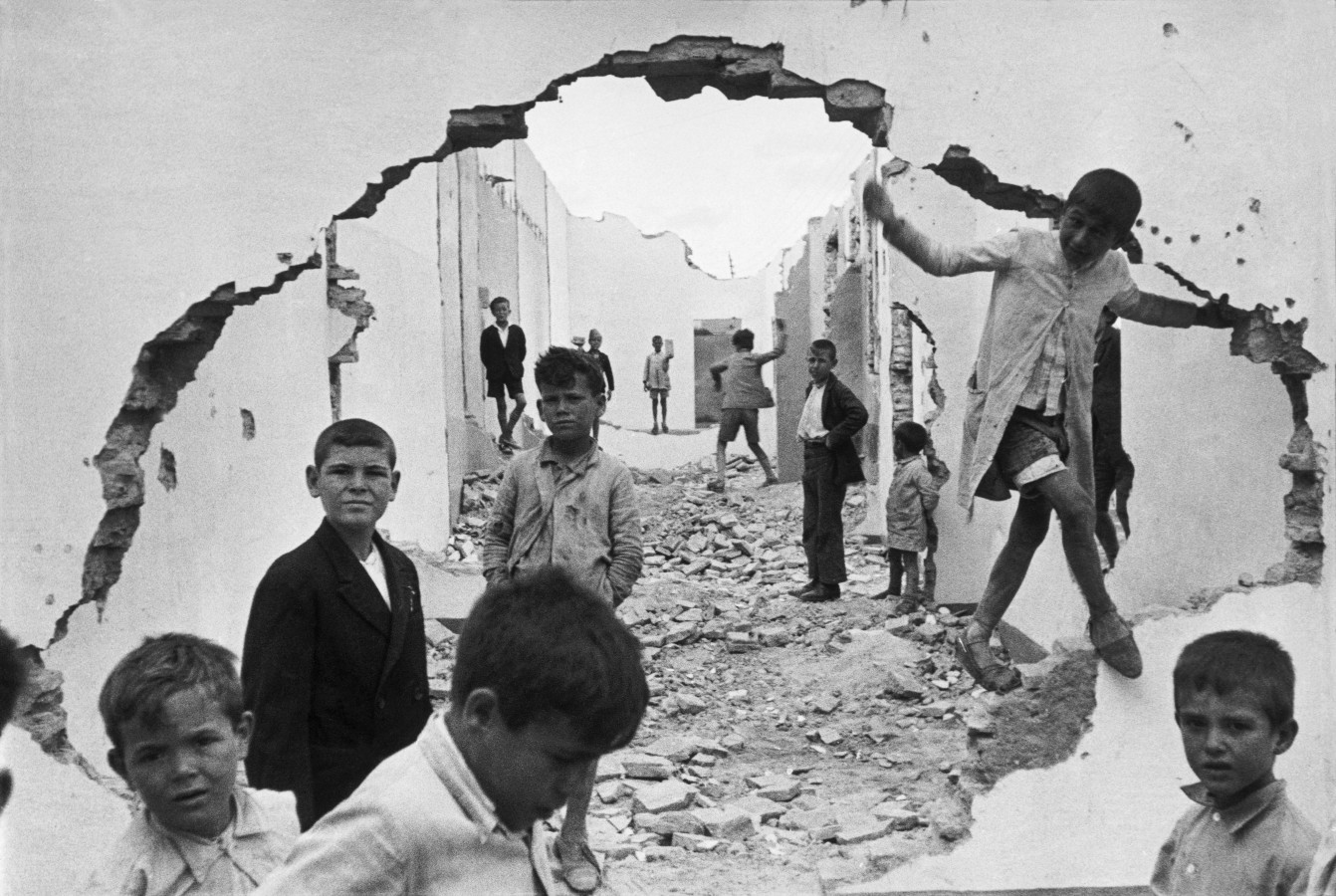
Henri Cartier-Bresson (1908-2004), Seville, Spain, 1933

Cartier-Bresson-e-i-bambini

Tuesday, June 17th

alone

Searching, searching—never finding.

Ludwig van Beethoven (1770-1827), Piano Sonata No. 31 in A-flat major (Third Movt.), Friedrich Gulda (1930-2000), live, Japan, 1993

**********

lagniappe

reading table

Imaginary Number
by Vijay Seshadri (1954-)

The mountain that remains when the universe is destroyed
is not big and is not small.
Big and small are

comparative categories, and to what
could the mountain that remains when the universe is destroyed
be compared?

Consciousness observes and is appeased.
The soul scrambles across the screes.
The soul,

like the square root of minus 1,
is an impossibility that has its uses.

Monday, June 16th

Ornette, at 84, still plays some of the most haunting blues I’ve ever heard.

Ornette Coleman (alto saxophone), with Henry Threadgill (alto saxophone), David Murray (tenor saxophone), Savion Glover (tap dance), et al., live, New York (Prospect Park), 6/12/14

*****

With Don Cherry (trumpet), Charlie Haden (bass), Billy Higgins (drums), The Shape Of Jazz To Come, 1959

**********

lagniappe

art beat

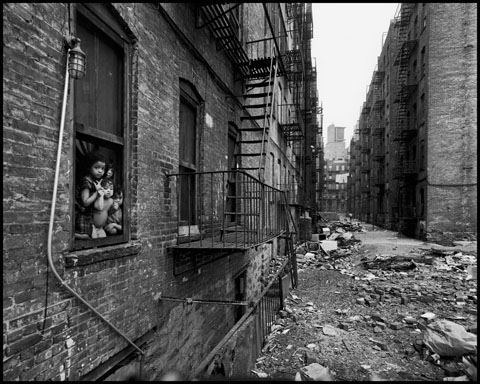
Bruce Davidson (1933-), East 100th St., New York, 1966

4996_1dsvidson_boy_rabbits

Sunday, June 15th

back to church

Bozie Sturdivant, “Ain’t No Grave Can Hold My Body Down,” live, Clarksdale, Miss. (Silent Grove Baptist Church), 1942


**********

lagniappe

art beat

Bruce Davidson (1933-), East 100th St., New York, 1966

DAB1966046W00343/14

Saturday, June 14th

passings

Bob Abrahamian, soul music DJ (WHPK, Sitting in the Park), historian, archivist, September 25, 1978-June 5, 2014

 Dolores Gibson, “I Got A Feeling,” 1960

*****

Byrdie Green, “Tremblin’,” 1962

*****

Deanie Parker, “Each Step I Take,” 1964

*****

These tracks opened his last radio show (5/4/14).

Friday, June 13th

sounds of Brazil & Jamaica

Slavish imitation. Contrived reinvention. Tributes usually leave me wondering why they even bothered. Not this.

Gilberto Gil (1942-), Tribute to Bob Marley, live, Brazil (Sao Paulo), 2001

Thursday, June 12th

sounds of Chicago

One-word review: mesmerizing.

Art Ensemble of Chicago, live, France (Chateauvallon), 1970


**********

lagniappe

reading table

Despite all my inner crumblings,
I’m still able to recognize a perfect day:
sea without shadow,
sky without wrinkles,
air hovering over me like a blessing.

—Nina Cassian (1924-2014), “Summer X-Rays” (fragment)


Wednesday, June 11th

voices I miss

Rahsaan Roland Kirk, live, Switzerland (Montreux Jazz Festival), 1972


**********

lagniappe

art beat

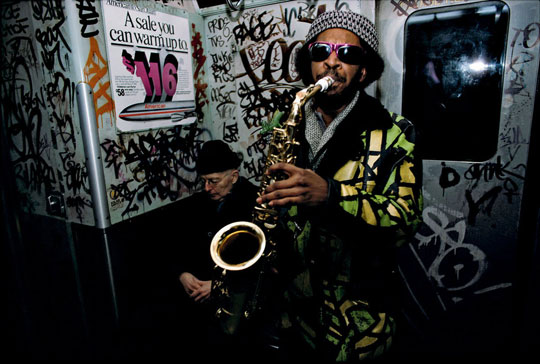
Bruce Davidson (1933-), New York, 1980s

Bruce-Davidson-subway-07


Tuesday, June 10th

Why not listen to something new?

Ellen Fullman (1957-), long string instrument (with Theresa Wong, cello; Abby Alwin, cello; James Cornish, trumpet), live, Detroit, 2013


**********

lagniappe

reading table

     Lost really has two disparate meanings. Losing things is about the familiar falling away, getting lost is about the unfamiliar appearing. There are objects and people that disappear from your sight or knowledge or possession; you lose a bracelet, a friend, the key. You still know where you are. Everything is familiar except that there is one item less, one missing element. Or you get lost, in which case the world has become larger than your knowledge of it. Either way, there is a loss of control. Imagine yourself streaming through time shedding gloves, umbrellas, wrenches, books, friends, homes, names. This is what the view looks like if you take a rear-facing seat on the train. Looking forward you constantly acquire moments of arrival, moments of realization, moments of discovery. The wind blows your hair back and you are greeted by what you have never seen before. The material falls away in onrushing experience. It peels off like skin from a molting snake. Of course to forget the past is to lose the sense of loss that is also memory of an absent richness and a set of clues to navigate the present by; the art is not one of forgetting but letting go. And when everything else is gone, you can be rich in loss.
—Rebecca Solnit, A Field Guide to Getting Lost