Monday, 8/23/10
Who would’ve thought this would be so good?
Tom Jones & Janis Joplin, “Raise Your Hand,” live (TV broadcast), 1969
Who would’ve thought this would be so good?
Tom Jones & Janis Joplin, “Raise Your Hand,” live (TV broadcast), 1969
replay: a clip too good for just one day
If spirit could be sold, New Orleans would be rich.
Rebirth Brass Band, live, New Orleans, 2009
**********
lagniappe
Brass band musicians are a wild bunch. They’re hard to control. The street funk that the Rebirth Brass Band plays definitely isn’t traditional—it might be in thirty years time.
—Lajoie “Butch” Gomez (in Mick Burns, Keeping the Beat on the Street: The New Orleans Brass Band Renaissance [2006])
(Originally posted on 9/11/09.)
my new mantra
Say ‘bye bye, bogeyman.’
—Whispering Jack Smith
Whispering Jack Smith, “Happy Days” (Happy Days [shot in 1929, released in 1930])
**********
lagniappe
more music to chase away the bogeyman
Sidney Bechet (clarinet, with Henry “Red” Allen, trumpet; J.C. Higginbotham, trombone; James Tolliver, piano; Wellman Braud, bass; J.C. Heard, drums), “Egyptian Fantasy” (1941)
Let’s lift the bandstand.
—Thelonious Monk
Woody Shaw/Johnny Griffin Quintet (Woody Shaw, trumpet; Johnny Griffin, tenor saxophone; John Hicks, piano; Reggie Johnson, bass; Alvin Queens, drums), “Night in Tunisia,” live, Germany (Koln), 1986
**********
lagniappe
Now there’s a great trumpet player. He [Woody Shaw] can play different from all of them.
—Miles Davis
*****
Anthony Braxton on playing with Woody Shaw.
*****
reading table
Look after the sound and the sense will take care of itself.
—Adam Phillips, London Review of Books, 7/22/10 (reviewing Christopher Ricks’ True Friendship: Geoffrey Hill, Anthony Hecht and Robert Lowell Under The Sign Of Eliot And Pound)
They weren’t glamorous. And they couldn’t have been paying a whole lot. But everybody, it seemed, wanted to play with them.
Delaney & Bonnie
With Eric Clapton (guitar), Dave Mason (guitar), Bobby Whitlock (vocal); “Poor Elijah-Tribute to Robert Johnson”; live (TV broadcast), England, 1969
•••••
With Eric Clapton (guitar), George Harrison (guitar), Bobby Whitlock (keyboards), Carl Radle (bass), Jim Gordon (drums); “Comin’ Home”; live, England, 1969
*****
With Duane Allman (guitar), Gregg Allman (organ), King Curtis (tenor saxophone); “Only You Know And I Know”; live, 1971
(The bass player, whoever he is, is the MVP here—he lights up everything [check out, for instance, 1:06-1:56].)
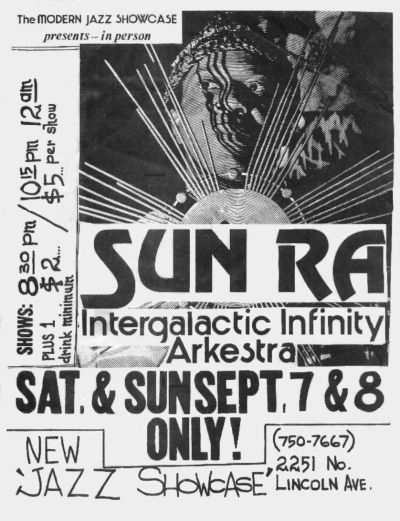
Here’s a big birthday shout-out to my wife Suzanne, who’s not nearly as crazy as I am about music—not nearly as crazy, period—but is crazy enough that she kept going out with me after I took her on our first date, in the summer of 1974, to Chicago’s Jazz Showcase (then on Lincoln Avenue) to see this guy, whose multimedia performance that night featured some of this footage—the stuff with the pyramids.
Sun Ra & His Arkestra in Egypt and Italy, 1971
**********
lagniappe
Even in the excesses of this era there were few audiences prepared for an ominous, ragtag group of musicians in Egyptian robes, Mongolian caps (Mongolian, as from the planet Mongo of Flash Gordon), and B-movie spacesuits who played on a variety of newly invented or strangely modified electronic instruments (the sun harp, the space organ, the cosmic side drum) and proclaimed the greatness of the most ancient of races (this, the Sun Ra of the Solar-Myth Arkestra); or, on yet another night, a merry band in jester’s motley, jerkins, and pointed caps (a la Robin Hood or perhaps the Archers of Arboria) who marched or crawled through the audience, chanting cheerful songs about travel to Venus. It was intensely dramatic music, moving from stasis to chaos and back, horn players leaping about, or rolling on the bandstand, sometimes with fire eaters, gilded muscle men, and midgets, an all-out assault on the senses. At the end of the evening the musicians and dancers moved among the audience, touching them, surrounding them, inviting them to join the Arkestra in marching off to Jupiter.
—John F. Szwed, Space Is The Place: The Lives And Times Of Sun Ra (1997)
*****
Sun Ra’s consistent statement, musically and spoken, is that this is a primitive world. Its practices, beliefs, religions, are uneducated, unenlightened, savage, destructive, already in the past. . . . That’s why Sun Ra returned only to say he left. Into the future. Into Space.
—Amiri Baraka (formerly known as LeRoi Jones)
*****
Silence is music. There are different kinds of silence, each silence is a world all of its own . . . silence is an integral part of all music . . .
***
When you meet a man
You meet a scheme of words
Patterns of concept
A concepted being
Whose very birth conception is called.
***
The earth cannot move without music. The earth moves in a certain rhythm, a certain sound, a certain note. When the music stops the earth will stop and everything upon it will die.
—Sun Ra
*****
What the world needs now?
Nah, not love.
What the world needs now—what it cries out for, daily—is inspired silliness.
Brave Combo, live
“The Denton Polka,” Texas (Denton), 2007
*****
“Louie, Louie,” Illinois (Berwyn [FitzGerald’s]), 2008
Brave Combo played a wild set Sunday night (the 4th) at FitzGerald’s American Music Festival—everything from “Beer Barrel Polka” to a hard-rockin’ “Hokey Pokey” to a polka-inflected “Ode to Joy” (“Any Beethoven fans in the house?”) to a Tejano-style “America the Beautiful.” By the end of the 90-minute set, everybody’s IQ, it seemed, had gone up 15 points. Or was it down?
looking back
Today, celebrating our 300th post, we revisit a few favorites.
**********
3/12/10
Both Chicago blues artists. Both guitar players. Both influenced by other kinds of music.
Musical personalities? They could hardly be more different.
Buddy Guy, “Let Me Love You Baby,” live
*****
Fenton Robinson, “Somebody Loan Me A Dime,” live, 1977
***
Back in the 1970s, when I was at Alligator Records, I had the pleasure of working with Fenton, co-producing his album I Hear Some Blues Downstairs (a Grammy nominee). He didn’t fit the stereotype of a bluesman. Gentle, soft-spoken, serious, introspective: he was all these things. He died in 1997.
**********
3/3/10
What other pop star has made such stunning contributions as a guest artist?
Sinead O’Connor
With Willie Nelson, “Don’t Give Up”
*****
With the Chieftains, “The Foggy Dew”
*****
With Shane MacGowan, “Haunted”
**********
5/28/2010
two takes
“La-La Means I Love You”
The Delfonics, live, 2008 (originally recorded 1968)
*****
Bill Frisell, live, New York (Rochester), 2007
**********
lagniappe
musical thoughts
Music . . . carr[ies] us smoothly across the tumult of experience, like water over rocks.
—Vijay Iyer, liner notes, Historicity (2009)
replay: a clip too good for just one day
Muddy Waters, Saul Bellow, Steppenwolf Theater Company (John Malkovich, John Mahoney, Gary Sinise, Laurie Metcalf, et al.), Curtis Mayfield: a lot of great artists, musical and otherwise, have come out of Chicago in the last 50 years. Among the greatest is this group: the Art Ensemble of Chicago. While the horn players (Roscoe Mitchell, Joseph Jarman, Lester Bowie) got the lion’s share of the attention, what gave their music its juice—what made it dance—was (as you’ll hear) one of the finest rhythm sections ever: Malachi Favors, bass; Don Moye, drums.
Art Ensemble of Chicago, live, Poland (Warsaw), 1982 (in four parts)
Part 1
Part 2
Part 3
Part 4
(I talk about the AEC in the past tense because, while recordings are still released under this name from time to time, with two key members [they were all “key members”] now dead—trumpeter Lester Bowie [1999] and bassist Malachi Favors [2004]—it just isn’t [nor could it be] the same.)
**********
subscribe
Many things in life don’t quite seem, alas, to live up to their billing. It appears that the RSS (Real Simple Syndication) service that’s referenced in the righthand column (under “Subscribe”) may fall into this category—at least, that is, for those of us who are (as the expression goes) of a certain age. The problem seems to lie at the threshold: “real simple.”
Anyway, in the life’s-too-short, keep-it-simple-stupid department, if you’d like to “subscribe” to this blog, just send me an email (Richard McLeese/rmcleeselaw@aol.com) with “subscribe” in the subject line and—voila!—you’ll be added to an ever-growing email list that will have you receiving an e-notice whenever there’s a new blog post. As indicated in the “About” section (see righthand column), this whole thing started from a very small (like, oh, two, sometimes three, folks) email list, which then grew, then grew some more. One of many miraculous things about electronic communication is that there’s always room for one more.
(Originally posted 9/8/09.)
movies/part 3
Once upon a time, before the Gulf oil spill, before Katrina, there was a city . . .
*****

*****
New Orleans (1947)
Billie Holiday, Louis Armstrong
“Do You Know What It Means To Miss New Orleans?”
Want more Billie Holiday? Here. Here.
More Louis Armstrong? Here.
**********
lagniappe
The impact of the oil from the Gulf of Mexico spill now soiling the Louisiana shoreline was felt far inland on Thursday as P&J Oyster Company, the country’s oldest oyster processor and distributor, ceased its shucking operations.
“The bottom line is that the guys that we purchase from are not working,” said Sal Sunseri, referring to the oyster harvesters who’ve been idled by the mass closure of harvesting areas and freshwater diversions. “Today’s our last day of shucking.”
***
“Having the guy down the street deliver oysters that were shucked just that morning to our doorstep is an amazing thing,” said John Besh, who featured P&J Oysters at his five New Orleans area restaurants. “The relationship is so valuable, knowing that I can count on them to source the best oysters from the saltiest areas and deliver them in a consistent, uniform manner.”
“They provide wonderful oysters,” said Darin Nesbit, chef at the Bourbon House, whose relationship with P&J is so tight Sal Sunseri helped shuck oysters the first night the restaurant opened following Hurricane Katrina. “Even in times of trouble, they’ve always taken care of us.”
P&J was started in 1876 by John Popich, a Croatian immigrant who took on partner Joseph Jurisich at the turn of the century. In 1921, Popich and Jurisich purchased a shucking house at the corner of Toulouse and North Rampart streets. Alfred Sunseri, the current owners’ grandfather, who was married to Popich’s cousin, joined the company soon after.
—Brett Anderson, “P&J looks to bring oysters in from the West Coast for the first time In its 134 years,” New Orleans Times-Picayune, 6/10/10
*****
You’re right, not only can’t you lip-synch this stuff; you can’t really sing it if you don’t know it in your heart. That’s why it’s sooooo good. [The Pilgrim Jubilees, 6/13/10]

