music clip of the day

jazz/blues/rock/classical/gospel/more

Category: musical thoughts

Wednesday, 2/1/12

Morton Feldman, For Bunita Marcus (1985)
John Tilbury, piano

According to iTunes, I’ve listened to this piece, which I often put on “repeat” before going to sleep, over a thousand times.

***

More Feldman?

Here.

And here.

Here. 

And here. And here. And here.

Here. 

And here.

**********

lagniappe

musical thoughts

Compositionally I always wanted to be like Fred Astaire.

***

 I never feel that my music is sparse or minimal; the way fat people never really think they’re fat. I certainly don’t consider myself a minimalist at all.

***

No one has the Houdini school of composition.

Morton Feldman (1926-87)

*****

reading table

Last week a record store in Dupont Circle announced that it was closing. The immediate cause of its demise—it had outlasted national and regional chains—was Price Check, Amazon’s new idea for exterminating competition. It is an app that allows shoppers to scan the bar code on any item in any store and transmit it to Amazon for purposes of comparison, and if it compares favorably to Amazon’s price, Amazon’s special promotion promises a discount on the same item. In this way shoppers become spies, and stores, merely by letting customers through their doors, become complicit in their own undoing. It will not do to shrug that this is capitalism, because it is a particular kind of capitalism: the kind that entertains fantasies of monopoly. For all its technological newness, Amazon’s “vision” is disgustingly familiar. (“Amazon is coming to eat me,” a small publisher of fine religious books stoically told me a few weeks ago.) Nor will it do to explain that Amazon’s app is convenient, unless one is prepared to acquiesce in a view of American existence according to which its supreme consideration must be convenience. How easy must every little thing be? A record store in your neighborhood is also convenient, and so is a bookstore. There is also a sinister side to the convenience of online shopping: hours once spent in the sensory world, in the diversified satisfaction of material needs and desires, can now be surrendered to work. It appears to be a law of American life that there shall be no respite from screens. And so Amazon’s practices raise the old question of the cultural consequences of market piggishness. For there are businesses that are not only businesses, that also have non-monetary reasons for being, that are public goods. Their devastation in the name of profit may be economically legitimate, but it is culturally calamitous. In a word, wrong.

WHEN MY FRIEND at Melody Records told me about the death of his store, I was bereft. This was in part because he is my friend—after my father died, I received a letter from the Holocaust Museum informing me that he had made a donation in my father’s memory—and now he must fend for himself and his family and his staff in the American wreckage. But my dejection was owed also to the fact that this store was one of the primary scenes of my personal cultivation. For thirty years it stimulated me, and provided a sanctuary from sadness and sterility. “Going to Melody” was a reliable way of improving my mind’s weather. The people who worked there had knowledge and taste: they apprised me of obscure pressings of Frank Martin’s chamber music, and warned me about the sound quality of certain reissues of Lucky Thompson and Don Byas, and turned me on to old salsa and new fado. They even teased me about my insane affection for Rihanna. When they added DVDs to the store, my pleasures multiplied. (Also my amusements. Not long ago Marcel Ophuls’ great film arrived in the shop, and the box declared: “Woody Allen presents The Sorrow and The Pity.” Beat that.) Of course all these discs can be found online. But the motive of my visits to the store was not acquisitiveness, it was inquisitiveness. I went there to engage in the time-honored intellectual and cultural activity known as browsing.

IT IS A MATTER OF some importance that the nature of browsing be properly understood. Browsing is a method of humanistic education. It gathers not information but impressions, and refines them by brief (but longer than 29 seconds!) immersions in sound or language. Browsing is to Amazon what flaneurie is to Google Earth. It is an immediate encounter with the actual object of curiosity. The browser (no, not that one) is the flaneur in a room. Browsing is not idleness; or rather, it is active idleness—an exploring capacity, a kind of questing non-instrumental behavior. Browsing is the opposite of “search.” Search is precise, browsing is imprecise. When you search, you find what you were looking for; when you browse, you find what you were not looking for. Search corrects your knowledge, browsing corrects your ignorance. Search narrows, browsing enlarges. It does so by means of accidents, of unexpected adjacencies and improbable associations. On Amazon, by contrast, there are no accidents. Its adjacencies are expected and its associations are probable, because it is programmed for precedents. It takes you to where you have already been—to what you have already bought or thought of buying, and to similar things. It sells similarities. After all, serendipity is a poor business model. But serendipity is how the spirit is renewed; and a record store, like a bookstore, is nothing less than an institution of spiritual renewal.

—Leon Wieseltier, “Going To Melody,” The New Republic, 2/2/12
Tuesday, 1/17/12

keep on dancing

Theo Parrish (Detroit-based DJ/producer), live, Spain (Madrid), 2010

#1

***

#2

***

#3

***

#4

**********

lagniappe

musical thoughts

[I]f you think about it, sound behaves a lot like sculpture except there’s a time limit. Look at that sculpture right there behind you. You look at it and there’s a front, a back, an up, a down, around and through. So you’re talking about volume. You’re talking about spatial relationships.

The thing about sound is that there is a beginning and there is usually an end, there’s a certain amount of space that it takes up, but the big difference is that all of that is merely alluded to. It’s not something that’s concretely in front of you. It’s fluid. You may hear a snare, but the way that it’s presented and the textures that it has, you can bring certain mental images to it. If you’re listening. If you’re listening.

A lot of times you’ll put something on and it’s just another track, but if you’re listening to it you can hear a lot of the nuances that are in there and really start to understand . . . start to really get your head around it . . .

Repetition kind of sets a certain mass in a song. That’s a constant, that’s something you can ‘see’ all the time. Then there’s little bits that come in and out and these changes that kinda shift on that pivot. If you think of it visually, sometimes you’re dealing with almost a mobile-like thing. This is where I go in my head sometimes. Mobile means shifting, spinning, all kinds of stuff.

If you look at it, it could almost be like sculpting air. It’s like you have all of these shapes . . . but you have to rely on a structure, but then again you really don’t have to. So your structure tends to be your time limit—how long your recording is from beginning to end. Anything that happens in that amount of time is on you. Totally up to your creativity.

Theo Parrish

Monday, 1/2/12

what you’d be listening to if you were 20* 

Lupe Fiasco, “The End of the World” (sampling M83, “Midnight City”), 2011

*****

Adele, “Rolling in the Deep,” Jamie xx Remix, feat. Childish Gambino, 2011

**********

lagniappe

musical thoughts

Hip-hop is jazz’s great grandson.

Roy Hargrove, trumpet player, bandleader

*****

 found words

Don’t Die with your Teeth in a Glass.

—Billboard, Chicago Ave. at LaSalle St., Chicago
(Dr. Irfan [Ivan] Atcha, “Chicago’s #1 provider for Teeth-In-A-Day & Teeth-In-An Hour Dental Implants”)

*****

*Based on a sample of one—my son Luke. What a treat to have a pair of 20-year-old ears back in the house (and car) over the holidays.

Wednesday, 12/28/11

more favorites from the past year

passings

*****

Is any drummer more lyrical?

Paul Motian, drummer, composer, collaborator, bandleader
March 25, 1931-November 22, 2011

Paul Motian Trio (PM, drums; Joe Lovano, saxophone; Bill Frisell, guitar), “It Should’ve Happened a Long Time Ago” (P. Motian), live, New York (Village Vanguard), 2005

**********

lagniappe

Sometimes he would strip a beat to absolute basics, the sound of brushes on a dark-toned ride cymbal and the abrupt thump of his low-tuned kick drum. Generally, a listener could locate the form, even when Mr. Motian didn’t state it explicitly.

“With Paul, there was always that ground rhythm, that ancient jazz beat lurking in the background,” said the pianist Ethan Iverson, one of the younger bandleaders who played with and learned from him toward the end.

Mr. Motian’s final week at the [Village] Vanguard was with Mr. Osby and Mr. Kikuchi, in September. “He was an economist: every note and phrase and utterance counted,” Mr. Osby said on Tuesday. “There was nothing disposable.”

—Ben Ratliff, New York Times11/22/11

(Originally posted 11/23/11.)

*******

You’re never too young to die.

 Amy Winehouse, September 14, 1983-July 23, 2011

“Tears Dry On Their Own”

Take 1: original recording and video (2006)

Vodpod videos no longer available.

***

Take 2: remix by Organized Noize Dungeon Family (Big Boi)
(released 7/24/11)

Vodpod videos no longer available.

(Originally posted 7/26/11.)

*******

Today we remember him with a mix of new clips and old favorites.

Gil Scott-Heron, April 1, 1949-May 27, 2011

“The Bottle,” live, Jamaica (Montego Bay, Reggae Sunsplash), 1983
Cool Runnings: The Reggae Movie (1983)

*****

I’m New Here (2010)

“Where Did The Night Go”

***

“Me And The Devil” (Robert Johnson)

***

It’s a remix world.

“New York Is Killing Me” (2010), Chris Cunningham remix

****

Here’s the original track, followed by a couple more remixes.

Vodpod videos no longer available.

***

With Nas

Vodpod videos no longer available.

***

With Mos Def

Vodpod videos no longer available.

**********

langiappe

musical thoughts

In the dark times, will there also be singing? Yes, there will be singing. About the dark times.

—Bertolt Brecht

(Originally posted 5/30/11.)

*******

Lloyd Knibb, drummer (Skatalites, et al.)
March 8, 1931-May 12, 2011

Lloyd Knibb’s importance to Jamaican music can’t be overstated. The inventor of the ska beat at Coxson Dodd’s Studio One, Knibb created a sound that spread like wildfire the world over.

—Carter Van Pelt, host, Eastern Standard Time, WKCR-FM

“Freedom Sound,” live, Belgium (Lokerse Festival), 1997

******

Live, Los Angeles, 2007

#1

***

#2

(Originally posted 5/18/11.)

Thursday, 12/15/11

mysterious, adj. exciting wonder, curiosity, or surprise, while baffling efforts to comprehend or identify. E.g., the string quartet music of Anton Webern.

Anton Webern (1883-1945), Five Movements for String Quartet, Op. 5
Penderecki String Quartet, live
Falls Village, Connecticut (Music Mountain), 2010

Part 1

***

Part 2

More? Here.

**********

lagniappe

musical thoughts

Ignorance has a big upside: the more music you’ve never heard, the more there is to discover.

Wednesday, 12/7/11

What a treat to hear a guitar-led group that sounds so fresh.

Nels Cline (guitar) and Friends play the music of Andrew Hill

Live, New York (Jazz Standard), 2007

**********

lagniappe

musical thoughts

The more one studies the harmony of music, and then studies human nature, how people agree and how they disagree, how there is attraction and repulsion, the more one will see that it is all music.

Hazrat Inayat Khan (quoted at Nels Cline’s website)

Tuesday, 12/6/11

 passings

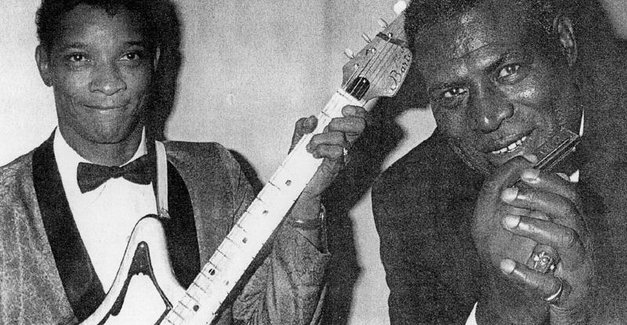
Hubert Sumlin, guitar player, November 16, 1931-December 4, 2011

*****

Howlin’ Wolf, with Hubert Sumlin (guitar)

“Smokestack Lightning” (AKA “Smoke Stack Lightning”; rec. 1956, Chicago)

In a country that paid proper respect to its cultural heritage, this would be played for children in school, as part of their cultural education. Instead kids encounter it, if at all, on TV—the soundtrack to a Viagra commercial.

***

“Back Door Man” (rec. 1960, Chicago)

***

“Wang Dang Doodle” (rec. 1960, Chicago)

**********

lagniappe

musical thoughts

I started listening to people like Hubert Sumlin and trying to deal with a less muscular way of reaching people . . .

Marc Ribot

*****

random thoughts

Rankin, Loda, Cissna Park, Schwer, Gilmer, Watseka: the world is filled with places we’ve never even heard of (many less than 150 miles away), as I was reminded yesterday driving home from Danville, Illinois, where I’d gone to see clients at the prison.

Thursday, 12/1/11

No matter how often I hear it, this piece—Beethoven’s final piano sonata—never fails to astonish.

Beethoven, Piano Sonata No. 32
Rudolf Serkin (piano), live, Austria (Vienna), 1987

#1: 1st movement

***

#2: 2nd movement, part 1

***

#3: 2nd movement, part 2

***

If I knew I had a week to live, this is one of the things I’d want to listen to—more than once.

***

Another take on this sonata? Here (Claudio Arrau).

More of Serkin playing Beethoven? Here.

**********

lagniappe

100

200

300

400

500

600

700

Today marks our 800th post.

*****

reading table

A Day! Help! Help!
Another Day!
Your prayers – Oh Passer by!

—Emily Dickinson, c. 1858 (58 [Franklin], excerpt)

**********

musical thoughts

If it wasn’t for the music, I don’t know what I’d do.

“Last Night A DJ Saved My Life”

Tuesday, 11/29/11

old stuff

Best two minutes of the whole day?

Jimmie Lunceford and his Orchestra (with Jimmy Crawford, drums)
“White Heat,” 1939

**********

lagniappe

musical thoughts

It’s difficult to name one favorite drummer, because . . . I’ve got a lot of favorites. But Jimmy Crawford—they called him “Craw”—with the Jimmie Lunceford band? He was a motherfucker.

Paul MotianYouTube

*****

reading table

How should I not be glad to contemplate
The clouds clearing beyond the dormer window
And a high tide reflected on the ceiling?
There will be dying, there will be dying,
But there is no need to go into that.
The lines flow from the hand unbidden
And the hidden source is the watchful heart.
The sun rises in spite of everything
And the far cities are beautiful and bright.
I lie here in a riot of sunlight
Watching the day break and the clouds flying.
Everything is going to be all right.

—Derek Mahon, “Everything Is Going to Be All Right”

Tuesday, 11/22/11

Frederic Chopin, Mazurka in C Major, Op. 24, No. 2
Martha Argerich, live, Sweden (Stockholm), 2009

More? Here. And here. And here. And here.

**********

lagniappe

musical thoughts

When I don’t play Chopin for a while, I don’t feel like
a pianist.

—Martha Argerich

*****

reading table

Look how
we “attempted to express ourselves.”

Every one of these words is wrong.

It wasn’t us.
Or we made no real attempt.
Or there is no discernible difference
between self and expression.

*****

The outer world means
State Farm Donuts Tae Kwando?

*****

Today could be described as a retired man humming
tunelessly to himself.

*****

Any statement I issue
if particular enough

will prove
I was here

*****

It’s as if
the real
thing—
your own
absence—
can never be
uncovered.

*****

These temporary credits
will no longer be reflected
in your next billing period.

—Rae Armantrout, Versed (2009), misc. fragments