On July 29, 1946, Charlie Parker was arrested in Los Angeles, after starting a fire in his hotel room. Earlier that day, unable to score heroin, scratchy, drunk on whiskey, he recorded this track, which, depending on your point of view, is either one of the worst records he ever made (Parker’s view) or, despite (because of?) its raggedyness, among the greatest (Charles Mingus’s opinion). After his arrest he was confined, for six months, at Camarillo State Mental Hospital.
Charlie Parker, “Lover Man” (CP, alto saxophone; Howard McGhee, trumpet; Jimmy Bunn, piano; Bob Kesterson, bass; Roy Porter, drums), rec. 7/29/46
The cafeteria in the hospital’s basement was the saddest place in the world, with its grim neon lights and gray tabletops and the diffuse forboding of those who had stepped away from suffering children to have a grilled cheese sandwich.
***
The next day, I set up an iPod dock and played music, not only in the willfully delusional belief that music would be good for a painful, recovering brain but also to counter the soul-crushing hospital noise: the beeping of monitors, the wheezing of respirators, the indifferent chatter of nurses in the hallway, the alarm that went off whenever a patient’s condition abruptly worsened.
***
One early morning, driving to the hospital, I saw a number of able-bodied, energetic runners progressing along Fullerton Avenue toward the sunny lakefront, and I had a strong physical sensation of being in an aquarium: I could see out, the people outside could see me (if they chose to pay attention), but we were living and breathing in entirely different environments.
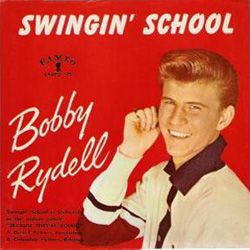
Bobby Rydell, “Swingin’ School” (Billboard Hot 100, #5)
Live (TV broadcast), 1960
Vodpod videos no longer available.
Of musical memories there is no end.
**********
lagniappe
*****
reading table
You see what I am doing: there was an empty space left in the trunk which I am filling with hay; that’s how it is in our life’s baggage; no matter what we stuff it with it’s better than having empty space.
Lloyd Knibb, drummer(Skatalites, etal.)
March 8, 1931-May 12, 2011
Lloyd Knibb’s importance to Jamaican music can’t be overstated. The inventor of the ska beat at Coxson Dodd’s Studio One, Knibb created a sound that spread like wildfire the world over.
—Carter Van Pelt, host, Eastern Standard Time, WKCR-FM
Sometimes it takes years—decades even—before you’re really able to hear somebody’s music. The other day, for instance, I put on a CD by this guy, a jazz pianist and composer whose music, which I first encountered 20 or 30 years ago, I’d admired more than enjoyed. I put this on expecting to do some work while it played in the background. But it refused to cooperate. Instead of staying put, it jumped out of the speakers, grabbed me, wouldn’t let go. No work got done.
M. Abel Bonnard, of Villeneuve-Saint-Georges, who was playing billiards, put out his left eye falling on his cue.
***
On the bowling lawn a stroke leveled M. Andre, 75, of Levallois. While his ball was still rolling he was no more.
—Félix Fénéon, trans. Luc Sante, Novels in Three Lines (collecting, as the back cover puts it, “more than a thousand items that appeared anonymously in the French newspaper Le Matin in 1906—true stories of murder, mayhem, and everyday life”)