At least one day out of the year all musicans should just put their instruments down, and give thanks to Duke Ellington.
—Miles Davis
Duke Ellington and His Orchestra
“C Jam Blues,” 1942
*****
“Mood Indigo,” “Sophisticated Lady,” “It Don’t Mean a Thing (If It Ain’t Got That Swing),” “Don’t Get Around Much Anymore,” 1943
lagniappe
It is becoming increasingly difficult to decide where jazz starts or where it stops, where Tin Pan Alley begins and jazz ends, or even where the borderline lies between between classical music and jazz. I feel there is no boundary line.
No jazz composer since Thelonious Monk has a stronger voice.
Lyrical beauty, inexhaustible drive, deep feeling: what more could you ask for?
Enormously influential, his music served as a bridge between the compositional elegance of Duke Ellington and the freewheeling rambunctiousness of the Art Ensemble of Chicago, Henry Threadgill, David Murray, et al.
Charles Mingus Quintet (CM, bass; Dannie Richmond, drums; Eric Dolphy, alto saxophone, bass clarinet; Clifford Jordan, tenor saxophone; Jaki Byard, piano), live (TV broadcast), Belgium, 1964
. . . [Mingus’s] music was pledged to the abolition of all distinctions: between the composed and the improvised, the primitive and the sophisticated, the rough and the tender, the belligerent and the lyrical.—Geoff Dyer, But Beautiful: A Book About Jazz (1996)
*****
Making the simple complicated is commonplace; making the complicated simple, awesomely simple, that’s creativity.
***
I, myself, came to enjoy the players who didn’t only just swing but who invented new rhythmic patterns, along with new melodic concepts. And those people are: Art Tatum, Bud Powell, Max Roach, Sonny Rollins, Lester Young, Dizzy Gillespie and Charles Parker, who is the greatest genius of all to me because he changed the whole era around.
***
In my music, I’m trying to play the truth of what I am. The reason it’s difficult is because I’m changing all the time.
The sound quality may be pretty raggedy, but that hardly matters—this is history.
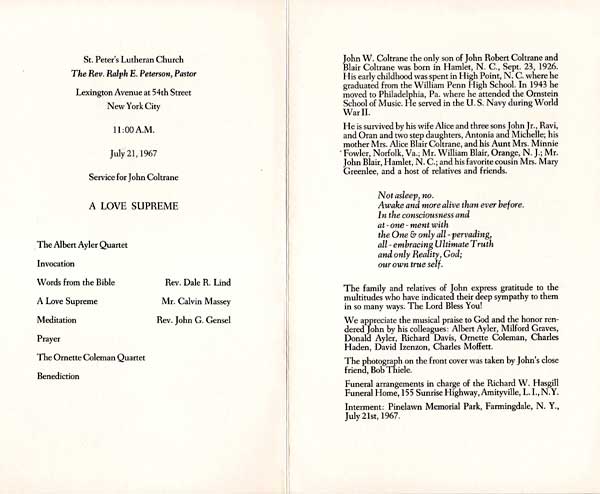
Albert Ayler, tenor saxophone (“Love Cry,” “Truth Is Marching In,” “Our Prayer”), live, John Coltrane’s funeral, St. Peter’s Lutheran Church, New York, July 21, 1967
**********
lagniappe
Click for a clearer image.
*****
Pinelawn Memorial Park, Farmingdale, New York
*****
Trane was the father. Pharoah was the son. I was the holy ghost.—Albert Ayler
This guy’s one of the most lyrical players and composers around.
(He also happens to have paranoid schizophrenia.)
Tom Harrell, flugelhorn/Tom Harrell Quintet
“Rhythm-A-Ning,” live, France (Paris), 2008
*****
“In the Infinite” (by TH), live, Italy (Sorrento), 2008
*****
“Dancin’ Around” (by TH), live, Brazil (Sao Paulo), 2003
**********
lagniappe
I’m posting this next piece with mixed feelings. Talking about Harrell’s psychiatric condition can distract from what’s most important—his music. On the other hand, what he’s been able to accomplish says a lot not only about him but also about the power of music.
If I could listen to only one singer for the rest of my life, she’d be the one.
No one gives you more of life.
Inessentials? No one offers fewer.
Moment by moment, no one is more enthralling.
***
Billie Holiday
“The Blues Are Brewin’,” with Louis Armstrong (New Orleans, 1947)
*****
“Fine and Mellow,” with Ben Webster (ts), Lester Young (ts), Vic Dickenson (trbn), Gerry Mulligan (bs), Coleman Hawkins (ts), Roy Eldridge (trmpt), live (TV broadcast), 1957
*****
“What A Little Moonlight Can Do,” with Mal Waldron (p), live (TV broadcast), 1958
BILLIE HOLIDAY BIRTHDAY BROADCAST : APRIL 7th, 2010
Ninety-five years after her birth, on April 7th, 2010, WKCR will dedicate all programming to Billie Holiday. Born Elinore Fagan in Baltimore, Holiday learned songs by Louis Armstrong and Bessie Smith despite the instability and tragedy of her childhood. In 1929, she teamed up with tenor sax player Kenneth Hollan, slowly building her reputation as a vocalist. She replaced Monette Moore at a club called “Covan’s” on West 132 Street in 1932. When producer John Hammond came to see Moore, he was instead captivated by Holiday. He secured a record deal for her, and she recorded two tracks with Benny Goodman. She soon began to record under her own name, collaborating with the greatest artists of the swing era. With pianist Teddy Wilson, she manipulated the melody of dull pop songs for jukeboxes, transforming them into jazz standards, and she courageously recorded “Strange Fruit” with Commodore records when Columbia rejected the sensitive subject matter. Though her career was strained by substance abuse and heartbreak, her voice did not deteriorate. As she inscribed the catastrophes of her life on the texture of her voice, it became only more powerful, more haunting. On April 7th, we will examine the life of this great, mysterious artist, but most importantly, we will listen to her voice.—WKCR-FM
Act I: Playing for change on New York City street corners and subway platforms, without a regular home, for 20 years.
Act II: Performing at nightclubs, concert halls, and festivals around the world.
That’s a life story no one would believe. But it’s the one this guy has lived.
Charles Gayle Trio, live, Russia (St. Petersburg)
**********
lagniappe
The challenge of free jazz is to create coherent, compelling music without such obvious devices as melody, recurring chord sequences or a steady beat. It’s a challenge that has defeated many a virtuoso since the free-jazz heyday of the 1960’s. But Charles Gayle, a tenor saxophonist, is carving out a free jazz that is muscular, impassioned, clearly structured and wonderfully volatile. . . . Mr. Gayle’s trio made music to move mountains by.—Jon Pareles, New York Times
That’s not something you think about with a musician.
But this guy, who’s celebrating his 85th birthday with a sold-out Carnegie Hall concert, is so deaf that as a child he was mistaken for retarded.
James Moody, saxophone & flute
**********
lagniappe
How were you able to become a musician?
Well, I hear what I hear. I can hear low pitches but I can’t hear high pitches. That’s why I don’t play high on the flute and I don’t play piccolo. I can’t hear them. I have to really listen for the high notes. And that’s why I sound like I have a lisp. But I don’t have a lisp, I mean a speech impediment. It’s ’cause I don’t hear S’s. I can’t hear them.—James Moody
If I didn’t have kids, would my ears be stuck, forever, on “repeat”?
Here’s something my younger son Luke, who just started college, played for me recently, after first pronouncing it, with quiet but absolute authority, the best thing this guy has done (already Luke’s learned that what’s important isn’t to be right; it’s to seem right).
Lupe Fiasco, “Hip Hop Saved My Life,” live, Los Angeles, 2008
*****
And here’s a track my older son Alex played for me a couple weeks ago, before heading back to school.
Dirty Projectors, “Stillness Is The Move”
*****
Koan for aging parents: What is the sound of a childless house?
How to be both solid and fluid, both fat and delicate. How to make the beat breathe. These are things that, as a child, Philly Joe Jones began to learn while dancing—tap-dancing. Just watch the way Thelonious Monk, listening to this solo, rocks back and forth (1:25-1:50), as if he’s about to break into a little dance himself.
Philly Joe Jones, live (with Thelonious Monk), 1959
**********
lagniappe
He breathed our history as/his walking beat . . . The Man/So Hip/A City/Took/His/Name.—Amiri Baraka (formerly LeRoi Jones, in Eulogies[1996])
The first time I stood before a judge at Chicago’s Criminal Courts Building at 26th and California—this was back in the ’70s (when I was working at Alligator Records)—it was to speak on behalf of this man, Hound Dog Taylor. The day before, during a drunken argument at his apartment, he’d shot his longtime guitarist Brewer Phillips (who survived). In his own way, Hound Dog was a pretty canny guy. When he told me about this incident over the phone, shortly after it happened, he put it this way: “Richard, they say I shot Phillip.”
(No, don’t touch that dial; these stills are way out of focus—which, for Hound Dog, seems just right.)
*****
Hound Dog Taylor and the Houserockers, live, Ann Arbor Blues Festival, 1973
Here one of the greatest American artists of the 20th century (composer Morton Feldman [1926-1980]) pays homage to another (painter Mark Rothko [1903-1970]).
Morton Feldman, “Rothko Chapel” (composed in 1971; first performed, at Houston’s Rothko Chapel, in 1972)
I first heard this guy back in the mid-1970s, after reading a review in the New York Times, by the late Robert Palmer, of his first album, The Gospel Saxophone of Vernard Johnson—and I’ve been listening to him ever since.
Vernard Johnson, saxophone
Live, Texas (Roanoke)
**********
lagniappe
reading table
Music . . . helped me to go deeper inside myself, to find new things there: the variety which I had vainly sought in life and in travel, yet the longing for which was stirred in me by the surge of sound whose sunlit wavelets came to break at my feet.
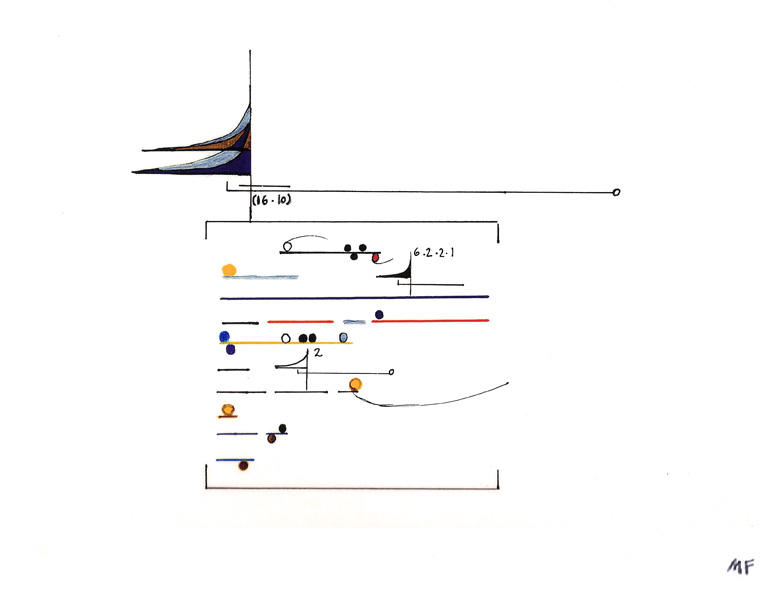
Trying to capture jazz in standard notation can be like trying to translate poetry into another language—what you wind up with is everything but the poetry. So composer/trumpeter Wadada Leo Smith (who, like many of his peers, eschews “jazz” as a label for his music) invented his own system of graphic notation.
***************
Wadada Leo Smith (trumpet) with his Golden Quartet (Vijay Iyer [piano], John Lindberg [bass], Ronald Shannon Jackson [drums]); Eclipse, 2005
Part 1
*****
Part 2
*****
Part 3
*****
Part 4
*****
Part 5
*****
Part 6
*****
Part 7
*****
Part 8
**********
lagniappe
art beat
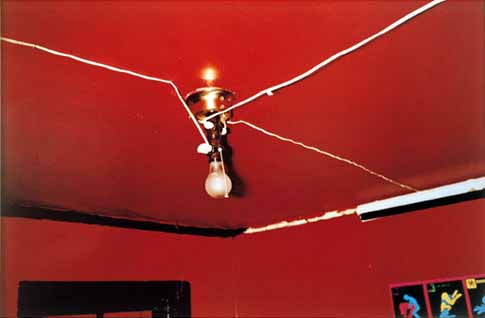
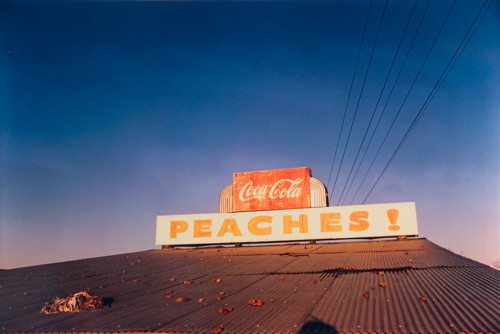
Earlier this month, when I mentioned the exhibit of William Eggleston’s photographs that’s currently at the Art Institute—posting an album cover that you’ll find in a display case there—I didn’t expect that Big Star would appear here again before the month’s end. But then I didn’t expect that Alex Chilton would pass away, either.Alex had more than simply an artistic interest in Eggleston and his work. He’d known the photographer, who was a good friend of his parents, since he was a little boy. Here, again, is the image Alex chose for that album cover, followed by a couple more from this exhibit.




 music clip of the day