Wednesday, February 4th
sounds of Mali (day two)
Trio Da Kali and Kronos Quartet, “Diaraby,” live, University of Maryland, 2014
sounds of Mali (day two)
Trio Da Kali and Kronos Quartet, “Diaraby,” live, University of Maryland, 2014
string quartet festival (day five)
Maurice Ravel (1875-1937), String Quartet in F major (1903); Hagen Quartet, live, Austria (Salzburg), 2000
1st movt.
2nd movt.
3rd movt.
4th movt.
string quartet festival (day four)
Dmitri Shostakovich (1906-1975), String Quartet No. 8 in C minor (1960); Borodin Quartet, live
string quartet festival (day two)
Back to the beginning—the “father” of the string quartet.
Josef Haydn (1732-1808), String Quartet in C-major, Op. 76, No. 3 (“Emperor”), c. 1796; St. Lawrence String Quartet, live, Houston, 2014
string quartet festival (day one)
Ludwig van Beethoven (1770-1827), String Quartet No. 14 (Op. 131, C-sharp minor), 1826
Alban Berg Quartet, live, Vienna, 1989
***
Végh Quartet, recording, 1952
***
Budapest String Quartet, recording, 1951
**********
lagniappe
musical thoughts
Opus 131 . . . is routinely described as Beethoven’s greatest achievement, even as the greatest work ever written. Stravinsky called it ‘perfect, inevitable, inalterable.’ It is a cosmic stream of consciousness in seven sharply contrasted movements, its free-associating structure giving the impression, in the best performances, of a collective improvisation. At the same time, it is underpinned by a developmental logic that surpasses in obsessiveness anything that came before. The first four notes of the otherworldly fugue with which the piece begins undergo continual permutations, some obvious and some subtle to the point of being conspiratorial. Whereas the Fifth Symphony hammers at its four-note motto in ways that any child can perceive, Opus 131 requires a lifetime of contemplation. (Schubert asked to hear it a few days before he died.)
—Alex Ross, “Deus Ex Musica,” New Yorker, 10/20/14
sounds of Chicago (day two)
Sometimes encountering a new piece of music can turn your whole day around, which is what happened to me the other day when I bumped into this.
Georg Friedrich Haas (1953-), In Vain (2000)
Ensemble Dal Niente, live, Chicago, 2013
**********
lagniappe
art beat: yesterday at the Art Institute of Chicago
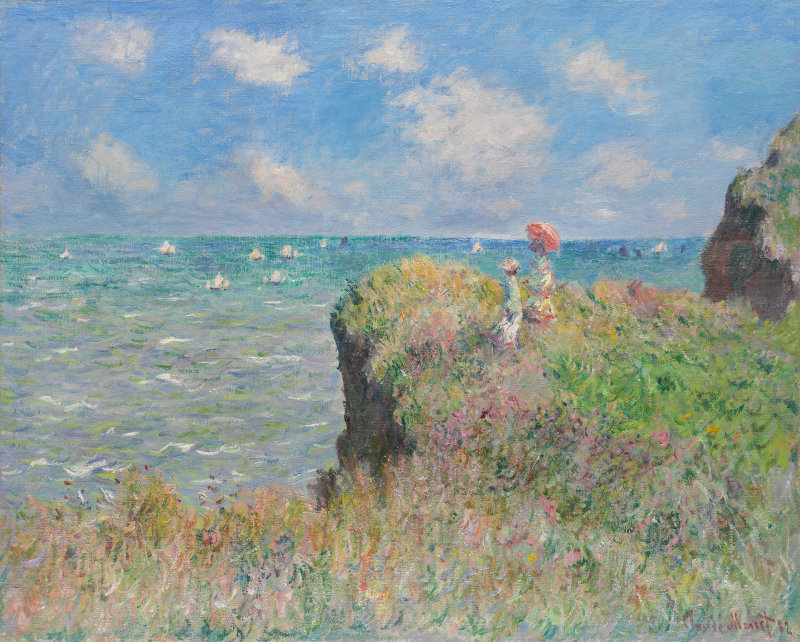
Claude Monet (1840-1926), Cliff Walk at Pourville (1882)
***
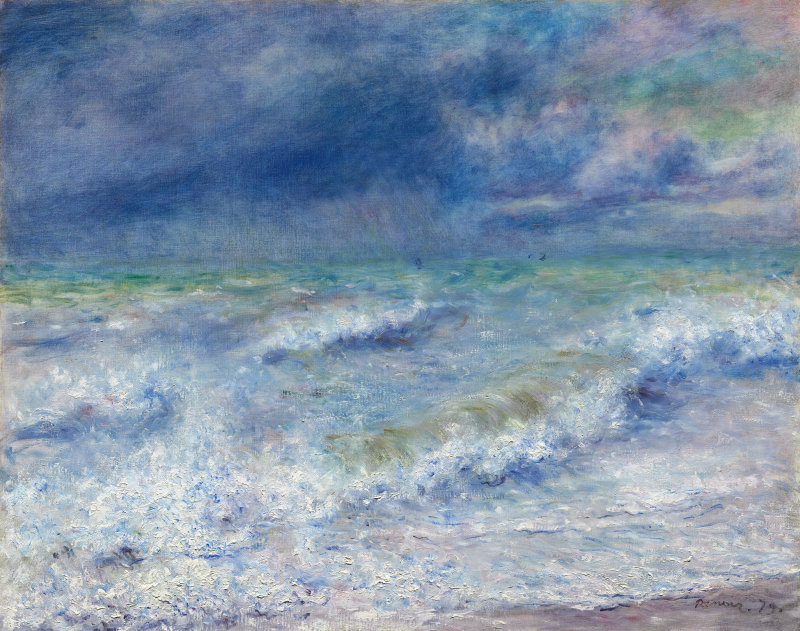
Pierre-Auguste Renoir (1841-1919), Seascape (1879)
*****
random thoughts
Eyes taste paintings no less than mouths taste food.
Morton Feldman (1926-1987), Patterns in a Chromatic Field (1981)
Arne Deforce (cello) & Yutaka Oya (piano)
Live (excerpts), Belgium (Kortrijk), 2013
***
Charles Curtis (cello) & Aleck Karis (piano)
Recording, 2004
**********
lagniappe
random thoughts: New Year’s resolution #4
No matter how much I get out, it never fails. Whenever I experience live music, as I did Sunday when I heard this otherworldly piece played, wonderfully, by cellist Mira Luxion and pianist Andy Costello (Constellation, Chicago), I leave with the same thought—you really ought to do this more often.
Bach cello festival (final day)
Cello Suite No. 6 in D major; Matt Haimovitz (cello), live, Montreal, 2011
Prelude
Allemande
Courante
Sarabande
Gavottes 1 and 2
Gigue
**********
lagniappe
random thoughts
Joy sometimes comes not in waves but droplets.
Bach cello festival (day five)
Cello Suite No. 5 in C minor; Mstislav Rostropovich (1927-2007), live, France (Vezelay), 1991
**********
lagniappe
art beat: Sunday at the Art Institute of Chicago
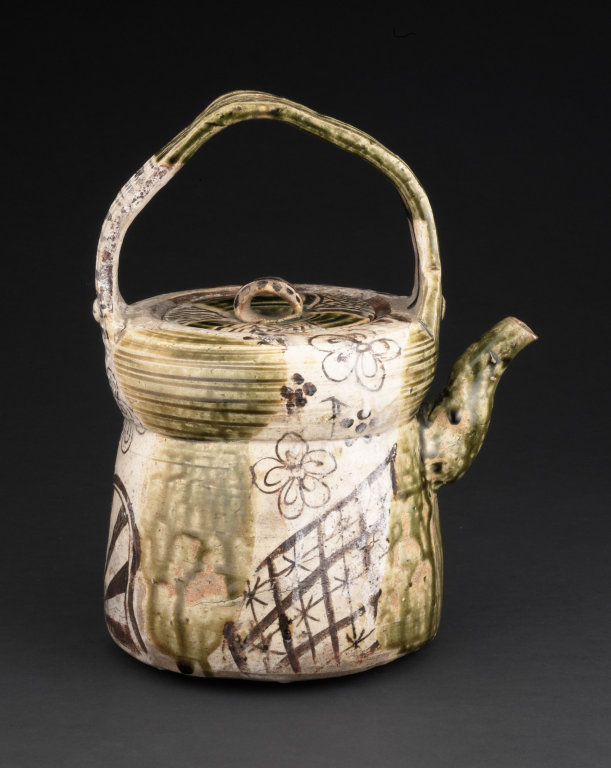
Oribe-Type Ewer (glazed stoneware), early 17th century, Japan

 music clip of the day