Rev. Claude Jeter, Shirley Caesar, The Dixie Hummingbirds, Take Six, et al., “Mary, Don’t You Weep,”* TV show (Night Music), 1989
*David Sanborn is overly generous in his introduction. Claude Jeter may be responsible for this arrangement, but he certainly didn’t write the song. Folks were singing it before he was born.
• WKCR-FM (broadcasting from Columbia University)
—Lester Young/Charlie Parker birthday marathon
—Bird Flight (Phil Schaap, jazz [Charlie Parker]) —Eastern Standard Time (Carter Van Pelt, Jamaican music)
[The Dixie Hummingbirds were] the original spiritual pioneers of song. They set the standard for all to follow by spreading the message of God’s love through quartet singing.—Stevie Wonder
*****
[The Dixie Hummingbirds] are true American heroes. They are what singers and show people and entertainers wish they could be. They’re not just legends. They are heavenly stars.—Solomon Burke
*****
Few singers have held a job longer, or been more revered by audiences and their fellow singers [than the Dixie Hummingbirds’ Ira Tucker, above left].
‘The virtuoso of quartet,’ gospel historian Anthony Heilbut called Tucker.
Blues singers like Bobby ‘Blue’ Bland said they learned at his feet. The Temptations were Tucker disciples, as were hundreds of rhythm and blues vocal groups of the 1950s and 1960s.
James Brown, Jackie Wilson, Al Green and Brook Benton were among the artists who took lessons in lyrical phrasing and stage showmanship from Tucker.
Most famously to pop music fans, Paul Simon used the Hummingbirds on his recording of “Love Me Like A Rock” in 1973. They later recorded it themselves, with Tucker on lead of course, and it won them a Grammy.—David Hinckley
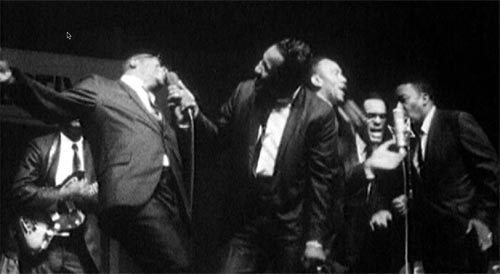
 music clip of the day