Sunday, April 19th
This I tire of never.
Soul Stirrers (feat. R.H. Harris, Paul Foster), “By and By,” 1950
**********
lagniappe
random sights
yesterday, Chicago

This I tire of never.
Soul Stirrers (feat. R.H. Harris, Paul Foster), “By and By,” 1950
**********
lagniappe
random sights
yesterday, Chicago
timeless
Soul Stirrers (feat. R.H. Harris, James H. Medlock), “One Day,” 1947
**********
lagniappe
random sights
other day, Chicago

timeless
R. H. Harris (1916-2000; :30-) and His Gospel Paraders, “Have You Got Good Religion,” live (TV show [TV Gospel Time]), 1960s
**********
lagniappe
random sights
yesterday, Oak Park, Ill.

*****
reading table
My spring is just this:
a single bamboo shoot,
a willow branch—Kobayashi Issa (1763-1827), translated from the Japanese by Sam Hamill
timeless
Five Soul Stirrers (feat. R. H. Harris), “Walk Around” (R. H. Harris), 1939
**********
lagniappe
art beat
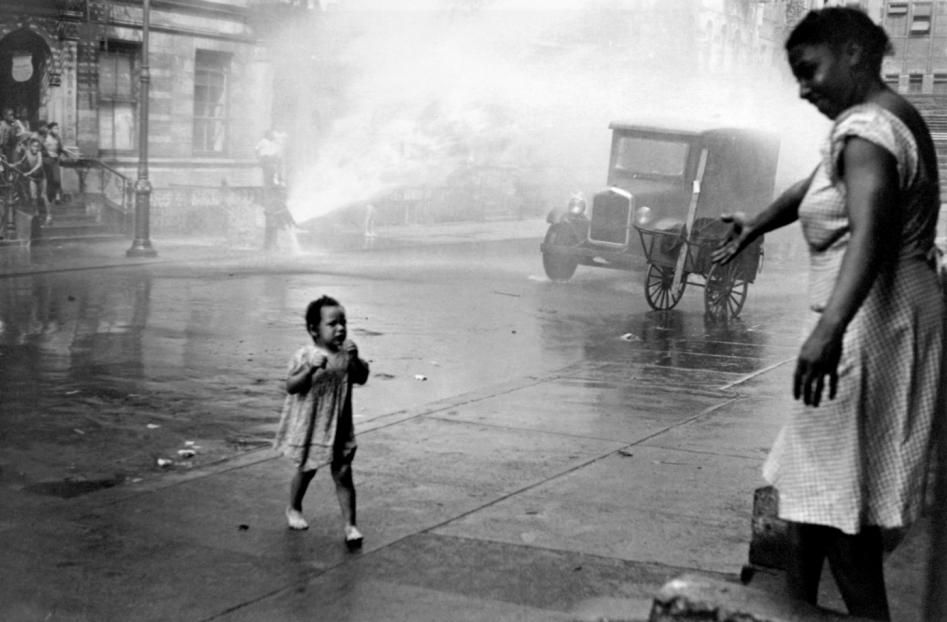
Helen Levitt (1913-2009, MCOTD Hall of Fame), New York, c. 1940
two takes
“His Eye Is on the Sparrow” (C.D. Martin, C.H. Gabriel), 1905
Soul Stirrers (feat. R.H. Harris), 1946
*****
Gladys Knight, live, Washington, D.C., 2017
old school
Soul Stirrers (feat. R.H. Harris), “Canaan Land,” 1947
Ever tire of the 21st century?
Me, too.
**********
lagniappe
art beat: other day, Art Institute of Chicago
Paul Cezanne (1839-1906), The Bathers, 1899/1904

old school
I could live five hundred years and never tire of hearing this voice.
Soul Stirrers (feat. R. H. Harris [1916-2000], lead vocals), “Lord, I’ve Tried” (T. A. Dorsey), 1946
Photograph by Robert Frank (1924-).
three takes
“His Eye Is on the Sparrow” (C. Martin, C. Gabriel)
Soul Stirrers (feat. R. H. Harris, lead vocals), recording, 1946
***
Harmonizing Four (feat. Jimmy Jones, bass), recording, 1958
***
Kathleen Battle, Vienna Symphony Orchestra (Michael Tilson Thomas, cond.), live, Vienna, 1983
**********
lagniappe
random thoughts: New Year’s resolution #2
Take nothing for granted.
Claude Jeter, Inez Andrews, Archie Brownlee, Dorothy Love Coates, this guy: where else can you find so many unforgettable voices?
Soul Stirrers (featuring R. H. Harris), “His Eye Is on the Sparrow” (1946)
Vodpod videos no longer available.
**********
lagniappe
When R. H. Harris, the renowned gospel tenor, died last month, I went back to the records he had made in the 1950’s with his quartet, the Soul Stirrers. Harris was the — founder is not too strong a word — of a soul singing that concentrated on supple phrasing and tonal sweetness. He could, as Tina Turner used to say, ”do it rough,” but there was a core of reticence, even melancholy in him. His roughness was strategic.
The Soul Stirrers set the mold for other outstanding quartets like the Swan Silvertones and the Five Blind Boys of Alabama, and for younger soul singers, from Sam Cooke (trained by Harris) to David Ruffin and Eddie Kendricks of the Temptations (Harris had mastered husky rhythm singing and falsetto), and Smokey Robinson and Marvin Gaye.
***
The discipline required of a first-rate ensemble, vocal or instrumental, translates into the kind of musical discretion that comes only from intense on-the-spot listening. Not biding time or doing cute things onstage until your solo comes, but listening. Take melisma (one syllable stretched over many notes), the vocal weapon so battered and abused by pop singers today. Harris was a master of it. For him it was a musical resource, like dynamics or timbre, not a way of muscling listeners to the ground till they screamed and clapped, maybe because they were overpowered, maybe just to stop the madness.
The Soul Stirrers’ a cappella harmonies are deeply satisfying. And when Harris rises above them with his pure, true pitch (pitch is usually the missing element in today’s melisma mania), you will experience true bliss.
—Margo Jefferson, New York Times, 10/2/00
*****
reading table
The self never ages.
—Roland Barthes, Mourning Diary (trans. Richard Howard, 2010)
 music clip of the day