Wednesday, December 7th
timeless
T-Bone Walker (1910-1975, vocals, guitar) with Memphis Slim (piano), Willie Dixon (bass), Jump Jackson (drums), “Don’t Throw Your Love on Me So Strong,” live (TV), Germany, 1962
timeless
T-Bone Walker (1910-1975, vocals, guitar) with Memphis Slim (piano), Willie Dixon (bass), Jump Jackson (drums), “Don’t Throw Your Love on Me So Strong,” live (TV), Germany, 1962
sounds of Chicago
Art Ensemble of Chicago (Roscoe Mitchell, 1940-, reeds; Joseph Jarman, 1937-2019, reeds; Lester Bowie, 1941-1999, trumpet [MCOTD Hall of Fame]; Malachi Favors, 1927-2004, bass, percussion; Don Moye, 1946-, drums, percussion), live, Montreux Jazz Festival (Switzerland), 1983
**********
lagniappe
random sights
yesterday, Chicago
like nobody else
John Zorn (composition, alto saxophone, direction) with Marc Ribot (guitar), Kenny Wollesen (vibraphone), Jamie Saft (keyboards), Trevor Dunn (bass), Cyro Baptista (percussion), Joey Baron (drums): “Karaim,” France (Marciac), 2010
**********
lagniappe
random sights
this morning, Chicago

never enough
Wolfgang Amadeus Mozart (1756-1791), Fantasia in D minor (K. 397): Kristian Bezuidenhout (1979-, fortepiano), live, Amsterdam (Netherlands), 2013
**********
lagniappe
reading table
Music avoids impossibility.
—Louis Zukofsky (1904-78), from Anew (#2)
*****
random sights
yesterday, Chicago

only rock ‘n’ roll
Sonic Youth, live (studio: “The Sprawl,” “Incinerate,” “Hey Joni,” “Jams Run Free,” “Pink Steam”), 2007
**********
lagniappe
random sights
other day, Chicago

sounds of Chicago
Fred Moten (voice, words), Brandon Lopez (bass), Gerald Cleaver (percussion, voice), live, Chicago, 10/21/22
**********
lagniappe
random sights
yesterday, Oak Park, Ill.
alone
Why not slow down and . . . listen . . . to . . . each . . . sound?
Susan Alcorn (pedal steel guitar), “Three Waters” (photos and video footage, David Lobato and Susan Alcorn Lobato), 2011
**********
lagniappe
random sights
other day, Chicago

more sounds of Brazil
Tom Zé (1936-, vocals, compositions), live, Sao Paulo (Brazil), 2018
**********
lagniappe
random sights
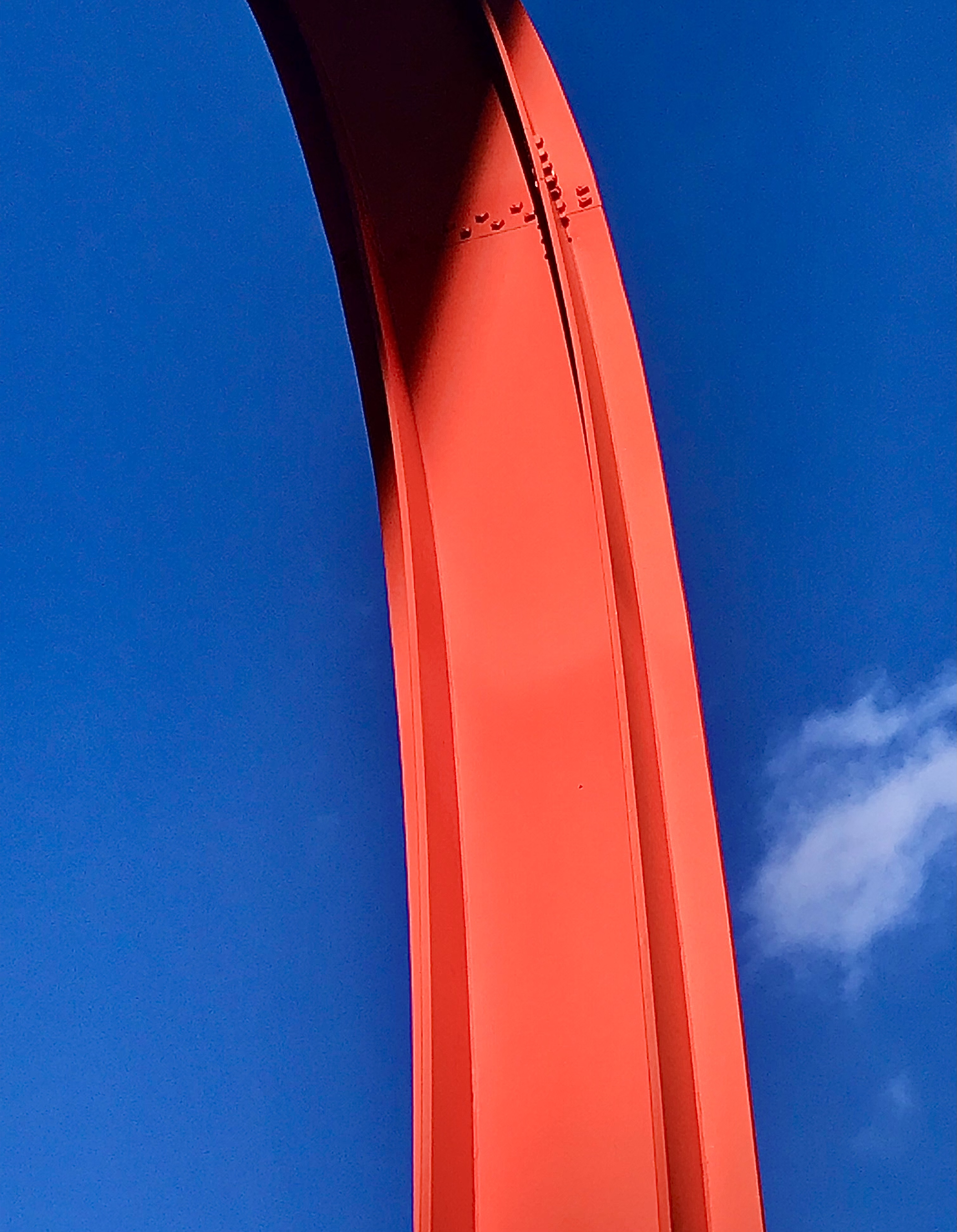
yesterday, Chicago (Alexander Calder [1898-1976], Flamingo [1973], detail)
passings
Gal Costa, singer, September 26, 1945–November 9, 2022
“Sua Estupidez” (R. Carlos), live (TV show), 2002
Gal Costa, one of Brazil’s greatest singers and a model for generations of Brazilian performers, died on Wednesday at her home in São Paulo. She was 77.
Her death was announced on her social media accounts. No cause was cited.
Ms. Costa’s voice, a lustrous mezzo-soprano, was a marvel of grace and vitality, equally capable of gravity-defying delicacy, tart teasing, jazzy agility and rock intensity. Over a recording career that spanned more than 50 years and three dozen albums, she championed innovative Brazilian songwriters and cross-fertilized Brazilian regional styles with international pop and rock.
In the 1960s, Ms. Costa was at the forefront of tropicália, the movement that brought psychedelic experimentation and anti-authoritarian irreverence to Brazilian pop music. When the leading songwriters of tropicália, Gilberto Gil and Caetano Veloso, were forced into exile by Brazil’s dictatorship, from 1969 to 1972, Ms. Costa recorded their songs for Brazilian listeners.
—New York Times obituary (excerpt), 11/9/22 (Jon Pareles)
back to church
Center Baptist Hymn Choir, “It Will All Be Over After a While,” live, Gastonia, North Carolina, 1997
**********
lagniappe
random sights
other day, Oak Park, Ill.
 music clip of the day