music clip of the day

jazz/blues/rock/classical/gospel/more

Tag: music clip of the day

Sunday, 10/10/10

Albertina Walker, October 29, 1929-October 8, 2010

“I Can Go To God In Prayer” (joined, at the end, by Patti LaBelle), live, Chicago, 1991

*****

“Please Be Patient With Me” (with James Cleveland), live, Chicago, 1979

This track, which I first encountered 30 years ago, I never tire of hearing.

*****

“Lord Keep Me Day By Day,” live (James Cleveland’s funeral), Los Angeles, 1991

**********

lagniappe

Somebody gonna leave here feeling a little better than they did when they came in . . .

—Albertina Walker

**********

Happy Birthday, Monk!

In celebration of the birthday of Thelonious Monk (October 10, 1917-February 17 1982), WKCR-FM is playing his music all day—and we’re replaying some clips.

**********

Here is the onliest Thelonious.

Thelonious Monk, “Epistrophy,” live (TV broadcast), Paris, 1966

*****

Thelonoius Monk, “’Round Midnight,” live (TV broadcast)

*****

You can tell a lot about Monk’s music—about the centrality of dance, about the interplay between melody and rhythm, about the way a melody’s irregular accents override the pulse (making the dance melodic)—just by watching, in the second performance, the way his right foot moves.

**********

lagniappe

He played each note as though astonished by the previous one, as though every touch of his fingers on the keyboard was correcting an error and this touch in turn became an error to be corrected and so the tune never quite ended up the way it was meant to be.

***

You had to see Monk to hear his music properly. The most important instrument in the group—whatever the format—was his body.

—Geoff Dyer, But Beautiful: A Book About Jazz (1996)

(Originally posted 11/2/09.)

**********

Yeah, the format might seem a little strange: soprano saxophone, unaccompanied. But Monk’s musical language—its tangy mix of geometric elegance and off-kilter bluesiness—is rarely spoken this eloquently.

Sam Newsome, Thelonious Monk Medley, live, 2008

**********

lagniappe

The clarity and logic of his [Thelonious Monk’s] work might have been compared with the craft of an architect. Each phrase, each fragment, each plump chord had its exact place in his musicial structure.—Mimi Clar (in Robin D. G. Kelley, Thelonious Monk: The Life and Times of an American Original [2009])

*****

‘All jazz musicians are mathematicians unconsciously’ was a favorite theory of Monk’s.—Randy Weston (in Deborah Kapchan, Traveling Spirit Masters: Moroccan Gnawa Trance and Music in the Global Marketplace [2007])

(Originally posted 11/25/09.)

**********

genius at work

Thelonious Monk with saxophonist Charlie Rouse, working out a number, “Boo Boo’s Birthday,” during a recording session, 1967

*****

Thelonious Monk (with Charlie Rouse, tenor saxophone; Ben Riley, drums; Larry Gales, bass), “Boo Boo’s Birthday” (Underground [Columbia], 1968)

(Originally posted 12/28/09.)

**********

What did it sound like when Beethoven, seated at the piano, played Bach? For that we have to use our imagination. For this we don’t.

Thelonious Monk plays Duke Ellington, live, Berlin, 1969

“Satin Doll”

*****

“Sophisticated Lady”

*****

“Caravan”

*****

“Solitude”

(Yo, Michael: Thanks for the tip!)

**********

lagniappe

[T]he only time I’ve ever seen Monk act like a little boy and looking up to somebody [was in the presence of Duke Ellington]. That was his idol.—Joe Termini (quoted in Robin D. G. Kelley, Thelonious Monk: The Life and Times of an American Original [2009])

(Originally posted 1/13/10.)
Saturday, 10/9/10

If you ain’t losing, you’re winning.

That’s something I’ve always believed, as a criminal defense lawyer, and it’s something that may be going through the mind of this guy, whose federal trial in Tampa, on drug charges, recently ended in a hung jury and mistrial.

He’d been charged with trying to buy five kilos of cocaine. The defense, apparently, was that he’d been set up (or, in legal parlance, entrapped). A retrial is expected soon.

Bob Marley’s son, Stephen, appearing as a character witness, called him the “voice of the people”—the “voice of Jamaica.”

Buju Banton

“Wanna Be Loved” (1995)

***

“Bondage” (2010)

**********

lagniappe

radio interview (from jail), 3/17/10

Friday, 10/8/10

Things going wrong?

You’ve come to the right place.

This’ll make you feel all right.

Them (with Van Morrison), “Mystic Eyes,” “Gloria,” live (TV broadcast), France, 1965

Thursday, 10/7/10

How many tracks this terrific have engendered videos this nutty?

Rosanne Cash, “The Wheel” (1993)

Wednesday, 10/6/10

Dying and going to heaven—could it sound any sweeter than this vocal track?

Smokey Robinson & the Miracles, “Ooo Baby Baby” (vocal track), 1965

**********

lagniappe

My mom was a woman who went to church two or three times a week. . . . We had gospel music in the house, and we lived in a black neighborhood, so gospel music is prevalent. I knew Aretha Franklin when I was growing up, and her father was one of the biggest ministers in the country.

—Smokey Robinson

Tuesday, 10/5/10

beauty from behind bars

Tadd Dameron wrote and arranged this while serving time for a federal drug crime.

Blue Mitchell Orchestra (Blue Mitchell, trumpet, with [among others] Clark Terry, trumpet; Tommy Flanagan, piano; Willie Ruff, French horn; Philly Joe Jones, drums), “Smooth as the Wind” (1961)

***

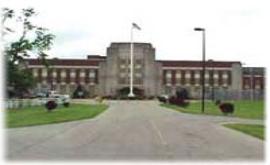
Federal Bureau of Prisons
Federal Medical Center (as it’s now called)
Lexington, Kentucky

***

Tadd Dameron

**********

lagniappe

Sarah Vaughan, live, “If You Could See Me Now” (Tadd Dameron)

*****

radio gems: jazz

Bird Flight
WKCR-FM
New York (Columbia University)
Monday-Friday, 8:20-9:30 a.m. (EST)

I know of nothing, in radio or anywhere else, like Phil Schaap’s daily meditations on the music of Charlie Parker, which he’s been offering now, five days a week, for over twenty-five years. At its best, his show enthralls. At its worst, well, sometimes you wish Phil would play a little more music and talk a little less. But even when he goes on longer than perhaps he should, your tendency, as with a charmingly eccentric uncle, is to excuse his excesses.

Monday, 10/4/10

Anyone can make English sound like English.

Tom Waits, live, California (Mountain View), 1999

Part 1

***

Part 2


Want more? Here.

Sunday, 10/3/10

three takes

You don’t need no baggage, you just get on board.

“People Get Ready”

Curtis Mayfield, live, England (London), 1988

*****

The Impressions (featuring Curtis Mayfield), 1965

More Curtis Mayfield? Here. Here. Here.

*****

Al Green, live, Washington, D.C., 1983 (Gospel According to Al Green, 1984)

More Al Green? Here. Here. Here.

**********

lagniappe

radio gems: gospel

Gospel Memories
WLUW-FM
Chicago, Illinois
Saturday, 10-11 a.m. (CST) (archived shows)

Wednesday, 9/29/10

From a small orchestra in Germany to one in Senegal.

Orchestra Baobab, “Utru horas,” live

Here’s a big (23rd) birthday shout-out to my son Alex—with whom I saw these guys a few years ago at Chicago’s (much missed) HotHouse.

Tuesday, 9/21/10

No tenor player moves me more.

Von Freeman

“I Can’t Get Started” (excerpt), live, Belgium, 1992

*****

“Blues for Sunnyland,” live, Germany (Berlin), 2002

*****

Live, Chicago, 2009

**********

lagniappe

Being a local legend can be a mixed bag. Consider Von Freeman, the 72-year-old tenor saxophonist who reigns as Chicago’s preeminent local jazz legend. In the 40s, he performed with bop genius Charlie Parker. In the 60s, Miles Davis tried to hire him as a replacement for John Coltrane. In the 80s, he and his son Chico, a formidable saxophonist himself, shared an album with the first family of jazz: trumpeter Wynton Marsalis, his saxophonist brother Branford, and his pianist father Ellis (Fathers and Sons, Columbia). And in the 90s, he’s performed at New York’s most prestigious concert halls–Lincoln Center and Carnegie Hall.

But legendary status can have drawbacks. It’s opened a lot of doors for Freeman, making him a familiar figure at a variety of local clubs (including the Bop Shop, the Green Mill, Pops for Champagne, and Andy’s). But appearing so often at so many places can make a performer seem as unremarkable as a crooked alderman. And the tag “legendary,” which smacks of the sort of hushed reverence usually reserved for the dead, can make a performer seem less a vital artist–one who continues to take chances–than a bloodless icon.

But Freeman is neither unremarkable nor bloodless. Hearing him live is like taking a tour of a fun house: you never know what you’ll find behind the next door.

Upon entering, the first thing you notice is that the floor seems tilted–the result of Freeman’s distinctively oblique intonation. His sour off-center tone–which occasionally prompts charges that he plays out of tune–invests the best of his performances with a hard-edged emotional intensity. When he played Charlie Parker’s “Confirmation” on a recent weekend at the Jazz Showcase, where he led a fine quintet (Brad Goode on trumpet; Joan Hickey on piano; Mendai on bass; Robert Shy on drums one night and Michael Raynor on drums the other), he bristled with energy but also sounded wounded. And when he played the ballad “Lover Man,” he conjured up a world that was unremittingly bleak.

Freeman’s improvisations take you quickly from one room to the next. Some of them, like the meowing slurs during an unaccompanied solo on the ballad “Body and Soul,” are breathtakingly strange. Others, like the wild chorus at the top of his range on Duke Ellington’s “Caravan,” offer hair-raising adventure.

Not all of his ideas are equally striking. But jazz improvisation on the order of Freeman’s is necessarily a hit-or-miss affair. As Somerset Maugham put it, only the mediocre are always at their best.

Throughout the recent performance Freeman played the role of genial host. One moment he was encouraging the bassist: “Hit it, Mendai!” The next he was indulging in Von-speak, adding the ending “-ski” to proper nouns, turning himself into “Vonski” and the Duke Ellington piece into “Caravanski.” And in another he was explaining, in a tone half mocking and half serious, the unpredictable nature of jazz: “Sometimes this horn plays and sometimes it doesn’t. I have no control over it.”

At their best, Freeman’s performances dazzle in ways all too rarely encountered in jazz these days. While the well-mannered music of many of today’s most acclaimed performers (Wynton Marsalis, Marcus Roberts) may have its appeal, it generally lacks those undomesticated virtues that Freeman’s music celebrates: daring, originality, and unpredictability. Like the man himself, Freeman’s musical values are a product of this city. He began developing them while attending DuSable High School, where–like many other Chicago-bred jazz giants, including fellow tenor saxophonists Gene Ammons, Johnny Griffin, and John Gilmore–he studied under the fabled music teacher Captain Walter Dyett. As Freeman once explained in a New York Times interview, Dyett stressed originality, preaching a message both simple and elusive: “Try and find yourself.” Even when performing classic material (Ellington, Parker, Monk), Freeman’s music sounds brand-new. The difference between him and many younger musicians who have achieved greater renown is like that between a fun house and a museum.

“Jazz Tilt-A-Whirl,” (review of Von Freeman, Jazz Showcase, 1/13-14/1995), Chicago Reader, 1/26/1995 (yeah, I’m cannibalizing myself here)

*****

. . . one of the most original and creative tenormen of the 1950s and, in light of other work I’ve heard by him, a great tenor player by any standards.

***

An exceptional artist, he belongs in jazz’s pantheon.

Harvey Pekar, JazzTimes, 1-2/2001