Friday, January 23rd
More reasons to wonder: Where would we be without the saxophone?
Collective Identity Saxophone Quartet (Alex Harding, baritone; Jorge Sylvester & Bruce Williams, alto; Sam Newsome, soprano), live, New York, 10/11/14
More reasons to wonder: Where would we be without the saxophone?
Collective Identity Saxophone Quartet (Alex Harding, baritone; Jorge Sylvester & Bruce Williams, alto; Sam Newsome, soprano), live, New York, 10/11/14
my back pages
On this date in 1977, at a church thirty miles north of Chicago, amidst the cold and the snow and the dark, tenor saxophonist Von Freeman (1923-2012), a MCOTD Hall-of-Famer, played for a wedding. He was accompanied by pianist John Young (1922-2008). Here is how they sounded that night, as people were entering the church (0:15-, “Somewhere Over the Rainbow,” “It Never Entered My Mind,” “More”), as the bride walked down the aisle (8:00-, “In a Sentimental Mood”), and as folks were leaving (10:20-, “My Favorite Things,” “Song for My Father”).
***
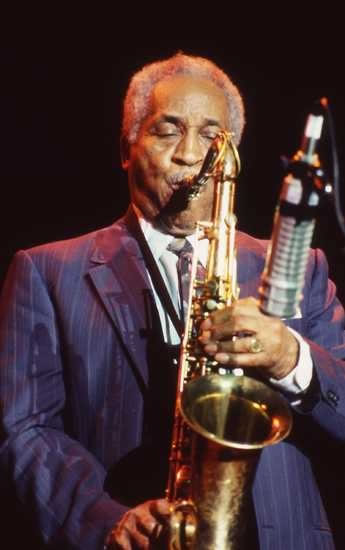
Von Freeman
Open Minds: Chris Potter Underground (with CP, tenor saxophone, bass clarinet; Craig Taborn, keyboards; Adam Rogers, guitar; Nate Smith, drums), 2012
Music documentaries can go wrong in so many ways. Too much talk. Talk that reminds you, repeatedly, why musicians aren’t paid to speak. Mediocre sound. This one, which I bumped into yesterday, seems to avoid them all.
Need a jolt?
Brandon Lopez (bass), Tyshawn Sorey (drums), Chris Pitsiokos (alto saxophone), live, New York, 11/10/14
Talk about range. The piece we heard Saturday—the one with flute, violin, bass clarinet, and piano? It was composed by the drummer.
He didn’t just speak—he sang.
Martin Luther King Jr., “I Have a Dream” (excerpt)
Washington, D.C., August 28, 1963
*****
Interview with MLK adviser and speechwriter Clarence B. Jones, 2013
How many of today’s songs will people want to hear in 2078?
Hank Williams (1923-1953), live (TV show), 1952
“Cold, Cold Heart”
***
“I Can’t Help It If I’m Still in Love with You” (with Anita Carter)
basement jukebox
Kitty Wells (1919-2012), “Will Your Lawyer Talk to God” (H. Howard), 1962
sounds of Chicago (day one)
Art Ensemble of Chicago (Roscoe Mitchell, reeds; MCOTD Hall-of-Famer Lester Bowie [1941-1999], trumpet; Malachi Favors [1927-2004], bass; Don Moye, drums), live, Hungary (Budapest), 1995
from my desert-island list
No matter how many times I hear it, this recording, made over 80 years ago, never fails to sweep me away.
Frederic Chopin (1810-1849), Preludes, Op. 28
Alfred Cortot (1877-1962), piano, 1933
alone
This guy breathes life into whatever he plays. The other day we heard a Beethoven performance from 1993. Here he is in 1964.
Johann Sebastian Bach (1685-1750), Chromatic Fantasy and Fugue; Friedrich Gulda (1930-2000), piano, live, 1964
**********
lagniappe
reading table
‘[O]ur days on Earth are numbered, and the numbers are not that big.’
—Samantha Harvey, Dear Thief
 music clip of the day