Monday, July 20th
sounds of Eau Claire
Bon Iver (AKA Justin Vernon), live, Eaux Claires Music & Arts Festival (Eau Claire, Wisconsin), 7/18/15
*****
taking a break
I’m taking some time off—back in a while.
sounds of Eau Claire
Bon Iver (AKA Justin Vernon), live, Eaux Claires Music & Arts Festival (Eau Claire, Wisconsin), 7/18/15
*****
taking a break
I’m taking some time off—back in a while.
Before Jerry Lee, before Little Richard, there was . . .
Arizona Dranes (c. 1891-1963), “I Shall Wear a Crown,” c. 1927
Here’s more of drummer Paal Nilssen-Love and reed player Ken Vandermark—this time together.
Live, Romania (Oradea), 2012
**********
lagniappe
reading table
These Songs are not meant to be understood, you understand. / They are only meant to terrify & comfort.
—John Berryman (1914-1972, MCOTD Hall of Fame), Dream Song 366
*****
random sights
last night
Columbus Park, Chicago

timeless
Otis Redding (with Booker T. & the M.G.’s, Sam & Dave), live, 1967
In the right hands, a drum kit can be a kinetic orchestra.
Paal Nilssen-Love, live, Norway (Høvikodden), 2010
**********
lagniappe
reading table
The jane is zoned!
—John Berryman (1914-1972, MCOTD Hall of Fame), Dream Song 2
Two voices in the dark, singing.
Mat Maneri (viola), Daniel Levin (cello), live, Rome, 2015
sounds of Colombia
Bomba Estéreo, live (studio performance), Seattle, 2013
**********
lagniappe
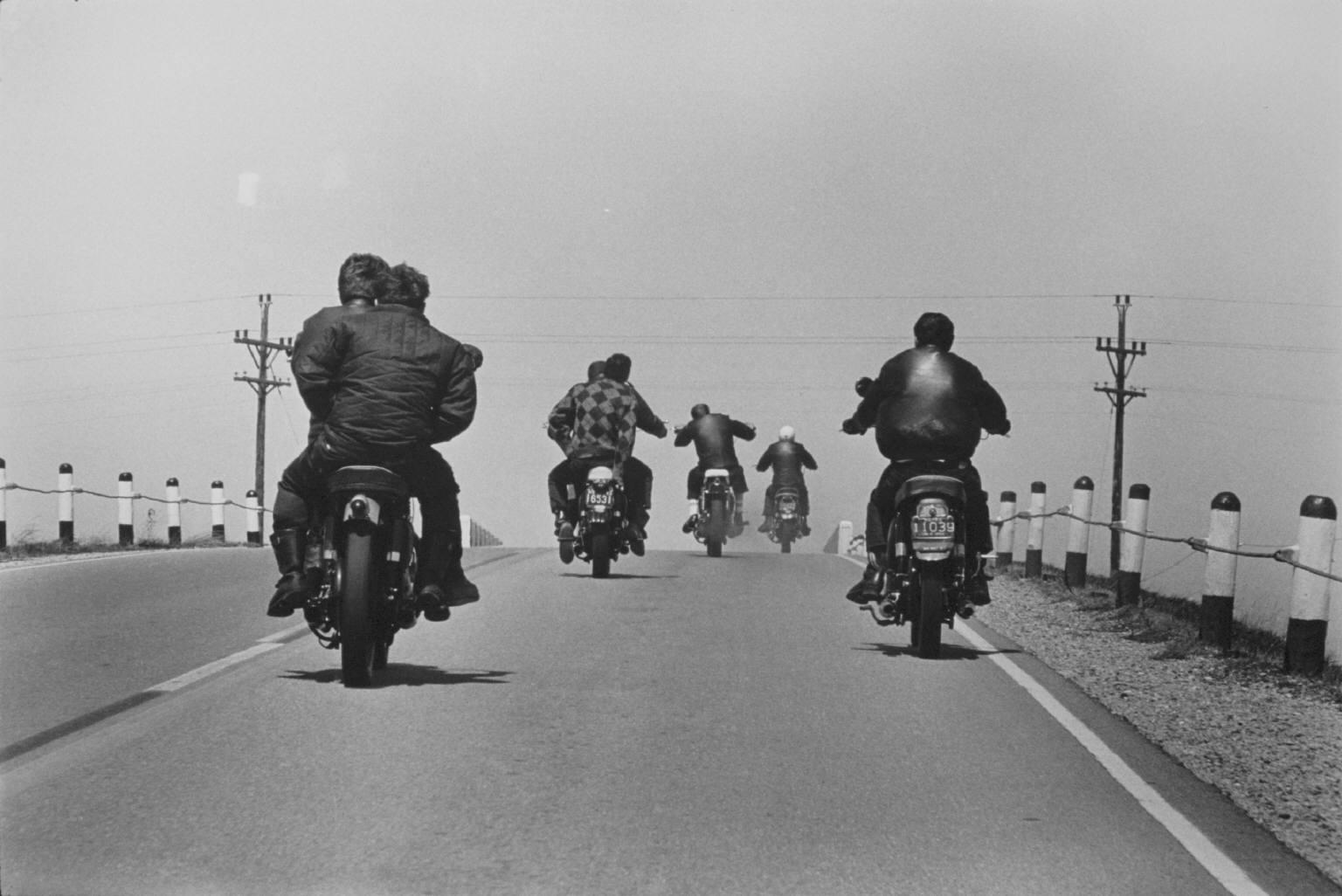
art beat
Danny Lyon (1942-), Route 12, Wisconsin, 1963
President Obama testifies
“Amazing Grace,” funeral for Rev. Clementa Pinckney, Charleston, South Carolina, 6/26/15
**********
lagniappe
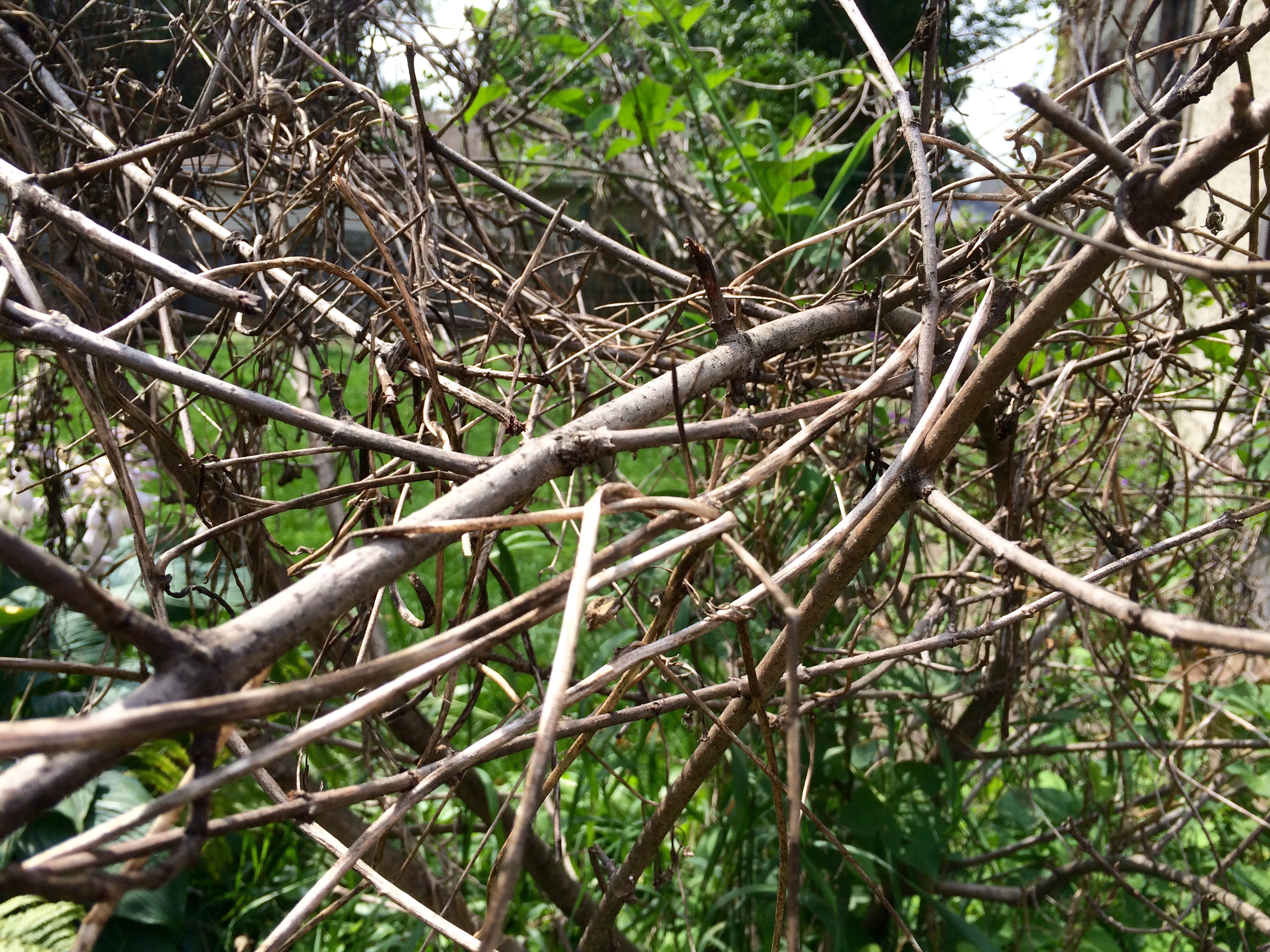
random sights
Friday morning
Oak Park, Illinois
*****
random thoughts
Life is full of unexpected sorrows, but also treasures. When I was a teenager, never could I have imagined that, one morning, I would wake up and find myself married, for nearly four decades, to a woman—a wonderful woman—who, that day, was turning sixty-three.
sounds of Argentina
Juana Molina, live (studio performance), Seattle, 2014
**********
lagniappe
reading table: two takes
The Map
by Elizabeth Bishop (1911-1979)Land lies in water; it is shadowed green.
Shadows, or are they shallows, at its edges
showing the line of long sea-weeded ledges
where weeds hang to the simple blue from green.
Or does the land lean down to lift the sea from under,
drawing it unperturbed around itself?
Along the fine tan sandy shelf
is the land tugging at the sea from under?The shadow of Newfoundland lies flat and still.
Labrador’s yellow, where the moony Eskimo
has oiled it. We can stroke these lovely bays,
under a glass as if they were expected to blossom,
or as if to provide a clean cage for invisible fish.
The names of seashore towns run out to sea,
the names of cities cross the neighboring mountains
—the printer here experiencing the same excitement
as when emotion too far exceeds its cause.
These peninsulas take the water between thumb and finger
like women feeling for the smoothness of yard-goods.Mapped waters are more quiet than the land is,
lending the land their waves’ own conformation:
and Norway’s hare runs south in agitation,
profiles investigate the sea, where land is.
Are they assigned, or can the countries pick their colors?
—What suits the character or the native waters best.
Topography displays no favorites; North’s as near as West.
More delicate than the historians’ are the map-makers’ colors.
Map
by Wislawa Szymborska (1923-2012, MCOTD Hall of Fame; translated from Polish by Clare Cavanagh)Flat as the table
it’s placed on.
Nothing moves beneath it
and it seeks no outlet.
Above—my human breath
creates no stirring air
and leaves its total surface
undisturbed.Its plains, valleys are always green,
uplands, mountains are yellow and brown,
while seas, oceans remain a kindly blue
beside the tattered shores.Everything here is small, near, accessible.
I can press volcanoes with my fingertip,
stroke the poles without thick mittens,
I can with a single glance
encompass every desert
with the river lying just beside it.A few trees stand for ancient forests,
you couldn’t lose your way among them.In the east and west,
above and below the equator—
quiet like pins dropping,
and in every black pinprick
people keep on living.
Mass graves and sudden ruins
are out of the picture.Nations’ borders are barely visible
as if they wavered—to be or not.I like maps, because they lie.
Because they give no access to the vicious truth.
Because great-heartedly, good-naturedly
they spread before me a world
not of this world.
only rock ‘n’ roll
Wire with St. Vincent, “Drill,” live, Chicago, 6/12/15
**********
lagniappe
art beat
Danny Lyon (1942-), Brooklyn, 1974

 music clip of the day