music clip of the day

jazz/blues/rock/classical/gospel/more

Tag: Morton Feldman

Saturday, 9/10/11

lucid, adj. suffused with light, luminous. E.g., Morton Feldman’s Piano and String Quartet.

Morton Feldman, Piano and String Quartet (1985)
Kronos Quartet with Aki Takahashi (piano)

Vodpod videos no longer available.

In a world that keeps getting faster and noisier, Feldman offers a refuge.
Here time slows. Quietly.

More? Here. And here. And here. And here. And here.

Sunday, 9/4/11

The Dixie Hummingbirds (with Ira Tucker, lead vocals), “If You See My Savior” (T. Dorsey), live (TV broadcast), early 1960s

With a voice like this, who needs words?

(Listen, for instance, at :55 and 1:50.)

More? Here.

**********

lagniappe

listening room: (some of) what’s playing

Theo Parrish, Sound Sculptures Vol. 1 (Sound Signature)

• Various artists, Goodbye Babylon (Dust-to-Digital)

Sun Ra, Jazz in Silhouette (Evidence)

Anthony Braxton, For Alto (Delmark)

Fred Anderson, Timeless (Delmark)

• Bach, Suites for Unaccompanied Cello/Steven Isserlis (Hyperion UK [import])

• Alfred Schnittke, Piano Quintet, String Trio, etc. (Naxos)

• Morton Feldman, For Bunita Marcus, Stephane Ginsburgh, piano (Sub Rosa) (available as a download from Amazon for 89¢)

• WKCR-FM (broadcasting from Columbia University)
—Lester Young/Charlie Parker birthday marathon
Bird Flight (Phil Schaap, jazz [Charlie Parker])
Eastern Standard Time (Carter Van Pelt, Jamaican music)

• WFMU-FM
Mudd Up! (DJ/Rupture“new bass and beats”)
Sinner’s Crossroads 
(Kevin Nutt, gospel)


Sunday, 8/21/11

Ever feel like, each day, you understand less and less?

Davis Sisters (with Jackie Verdell), “We’ll Understand It Better By and By,” live (TV broadcast), early 1960s

Vodpod videos no longer available.

**********

lagniappe

reading table

So long as that woman from the Rijksmuseum
in painted quiet and concentration
keeps pouring milk day after day
from the pitcher to the bowl
the World hasn’t earned
the world’s end.

—Wislawa Szymborska, “Vermeer”  (trans. Clare Cavanagh & Stanislaw Baranczak, Here [2010])

***

Johannes Vermeer, The Milkmaid (c. 1658)

*****

Speaking of Szymborska, a charter member, like Von Freeman, of the recently announced MCOTD Hall of Fame (coincidentally, they were both born in 1923), here’s something I just came across:

I am a big admirer of her [Szymborska’s] work. I have read everything she has written, and I keep coming back to it. She is a very witty poet and she has greatly helped me to enjoy life. She exactly fits my definition of an artist. Who shouldn’t only have profound insight and a sharp mind but also remember that his obligation is to entertain the reader. And this is exactly what she does.

—Woody Allen, in the documentary Sometimes Life Is Bearable (2010)

*****

listening room: (some of) what’s playing

Paul Simon, So Beautiful or So What (Hear Music)

Shane MacGowan and the Popes, The Snake (ZTT [import])

Captain Beefheart & His Magic BandTrout Mask Replica (Reprise/Ada)

• The Best of Charlie Patton (Yazoo)

Charley PattonThe Voice of the Delta (Indigo)

• The Detroiters/The Golden Echoes, Old Time Religion (Specialty)

• The Spiritualaires of Hurtsboro, Alabama, Singing Songs of Praise (CaseQuarter)

Archie Shepp/Kahil El’Zabar’s Ritual Trio, Conversations (Delmark)

• Benny Goodman, The Complete Trios (Capitol)

Charlie Parker, The Complete Royal Roost Live Recordings on Savoy, Vol. 3 (Savoy/Columbia [import])

Charles Gayle, Repent (Knitting Factory)

Steve Lacy-Roswell Rudd Quartet, School Days (hat Art)

• Wadada Leo Smith & Jack DeJohnette, America (Tzadik)

Kenny Werner, No Beginning, No End (Half Note)

Bach, Suites for Unaccompanied Cello/Jean-Guihen Queyras (Harmonia Mundi [import])

Alfred Schnittke, String Quartet No. 3, Piano Quintet, Piano Quartet/
Borodin String Quartet with Ludmilla Berlinsky (Virgin Classics)

Morton Feldman, Piano and String Quartet/Kronos Quartet with Aki Takahashi (Nonesuch)

• Morton Feldman, For Bunita Marcus, Stephane Ginsburgh, piano (Sub Rosa) (available as a download from Amazon for 89¢)

• WKCR-FM (broadcasting from Columbia University)
Bird Flight (Phil Schaap, jazz [Charlie Parker])
Traditions in Swing (Phil Schaap, jazz)
Eastern Standard Time (Carter Van Pelt, Jamaican music)
Raag Aur Taal (Various, Indian music)

• WFMU-FM
Mudd Up! (DJ/Rupture“new bass and beats”)
Sinner’s Crossroads 
(Kevin Nutt, gospel)

Sunday, 7/24/11

Last Sunday they sounded so good—let’s hear some more.

The Staple Singers, “On My Way To Heaven,” “Going Away,” “I’m Leaning,”
“I Know I Got Religion”; Uncloudy Day (Vee-Jay), 1959

Vodpod videos no longer available.

**********

lagniappe

listening room: (some of) what’s playing

• Muhal Richard Abrams (with Malachi Favors), Sightsong (Black Saint)

• King Oliver, Off the Record: The Complete 1923 Jazz Band Recordings (Off the Record/Archeophone)

• Beethoven, Symphonies Nos. 1 & 3 (“Eroica”)/ Arturo Toscanini, conductor, NBC Symphony Orchestra (RCA)

• Bach, Cello Suites, Steven Isserlis (Hyperion UK)

Morton Feldman, For Bunita Marcus, Stephane Ginsburgh, piano (Sub Rosa) (available as a download from Amazon for 89¢)

WKCR-FM (broadcasting from Columbia University)
Bird Flight (Phil Schaap, jazz [Charlie Parker])
Traditions in Swing (Phil Schaap, jazz)
Afternoon New Music (Various, classical and hard-to-peg)
Eastern Standard Time (Carter Van Pelt, Jamaican music)
Raag Aur Taal (Various, Indian music)

WFMU-FM
Mudd Up! (DJ/Rupture, “new bass and beats”)
Sinner’s Crossroads
(Kevin Nutt, gospel)

*****

reading table

Here are a couple cheery things (ha, ha) from a favorite poet.

John Berryman, Two Dream Songs

More? Here. And here.

Sunday, 7/3/11

This guy I can’t get enough of.

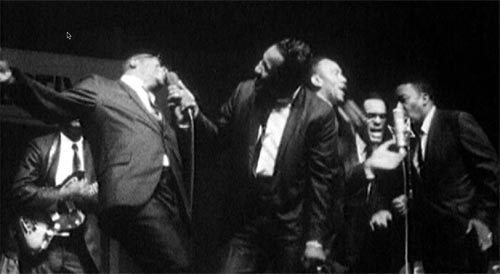
Vernard Johnson, “Don’t Wait ’Til The Battle Is Over, Shout Now!”; live, TV broadcast (Bobby Jones Gospel)

Vodpod videos no longer available.

Time for just one note? 6:23.

More? Here. And here.

**********

lagniappe

art beat

Lee Friedlander, Cherry Blossom Time in Japan (2006)

*****

reading table

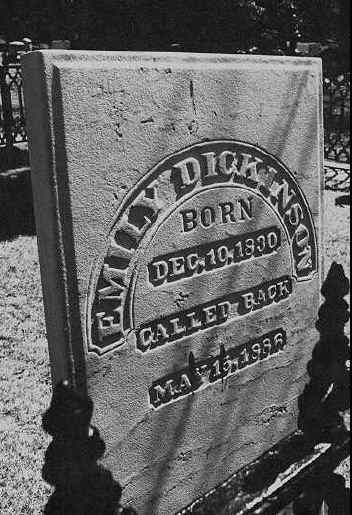
Yesterday, opening my Emily Dickinson collection (The Poems of Emily Dickinson, edited by R. W. Franklin) at random, I came upon this.

We do not play on Graves —
Because there isn’t Room —
Besides — it isn’t even — it slants
And People come —

And put a Flower on it —
And hang their faces so —
We’re fearing that their Hearts will drop —
And crush our pretty play —

And so we move as far
As Enemies — away —
Just looking round to see how far
It is — Occasionally —

—Emily Dickinson (#599)

***
*****

listening room: what’s playing

Echocord Jubilee Comp. (Echocord)

Art Ensemble of Chicago, Full Force (ECM)

Art Ensemble of Chicago, Urban Bushmen (ECM)

Paul Motian (with Lee Konitz, soprano & alto saxophones; Joe Lovano, tenor saxophone; Bill Frisell, guitar; Charlie Haden, bass), On Broadway Vol. 3 (Winter & Winter)

Rebirth Brass Band, Feel Like Funkin’ It Up (Rounder)

Marc Ribot, Silent Movies (Pi Recordings)

• Wadada Leo Smith, Kabell Years: 1971-1979 (Tzadik)

Charles “Baron” Mingus, West Coast, 1945-49 (Uptown Jazz)

• John Alexander’s Sterling Jubilee Singers, Jesus Hits Like The Atom Bomb (New World Records)

Rev. Johnny L. Jones, The Hurricane That Hit Atlanta (Dust-to-Digital)

Elliott Carter, composer; Ursula Oppens, piano; Oppens Plays Carter (Cedille)

Arnold Schoenberg, Anton Webern, composers; Maurizio Pollini, piano, piano works (Schoenberg), Variations Op. 27 (Webern) (Deutsche Grammophon)

Morton Feldman, For Bunita Marcus, Stephane Ginsburgh, piano (Sub Rosa)

WKCR-FM (broadcasting from Columbia University)
Bird Flight (Phil Schaap, jazz [Charlie Parker])
Traditions in Swing (Phil Schaap, jazz)
—Daybreak Express
(Various, jazz)
Out to Lunch (Various, jazz)
Jazz Profiles (Various, jazz)
Jazz Alternatives (Various, jazz)
Morning Classical (Various, classical)
Afternoon New Music (Various, classical and hard-to-peg)
Eastern Standard Time (Carter Van Pelt, Jamaican music)

WFMU-FM
Mudd Up! (DJ/Rupture, “new bass and beats”)
Sinner’s Crossroads
(Kevin Nutt, gospel)
—Give The Drummer Some
(Doug Schulkind, sui generis)
Downtown Soulville with Mr. Fine Wine (soul)
Thursday, 6/30/11

two questions

1. Why would anyone create a piece of music that lasts not one, or two, or three, or four, or five, but six hours?

2. Why don’t more more people?

Morton Feldman, String Quartet No. 2 (1983), excerpts, Flux Quartet

***

On June 12th the Flux Quartet performed this piece in Philadelphia, the finale of American Sublime, a festival devoted to Feldman’s late music. The concert, which took place in the sanctuary of Philadelphia Cathedral, began at 2 p.m.; it ended around 8 p.m. The program notes said: “Audience may come and go as they please.”

More? Here. And here. And here. And here. And here.

**********

lagniappe

this & that

I don’t win stuff. I don’t even enter things—contests, sweepstakes, lotteries—that would give me a shot at winning stuff. Until yesterday, that is.

Yesterday morning, driving home after dropping my son Luke off at work (7 a.m. can be a pretty brutal starting time for a 20-year-old), I was listening, as I often do while driving, to our local public radio station (WBEZ-FM), which, I learned, was in the midst of a fundraising drive. “Pledge,” they said, and “you’ll be entered in drawings for an iPad 2,” which were going to be made throughout the day. The earlier you pledge, they said, with what seemed unassailable logic, the better your chances of winning. I hadn’t sent them any money in a while so, when I got home, I went on-line and pledged. A couple hours later, a friend sent me an email: “Congratulations on your iPad.”

When bad stuff happens, particularly bad stuff that’s unexpected and outside my control (as often seems to be the case), my tendency is to try to let it go. Why invest bad experiences with ill-fitting, after-the-fact meanings? This is different. This experience I’d like to invest with all kinds of after-the-fact-meanings, ill-fitting or not. I’d like to see this as a favorable omen, one that portends all sorts of wonderful stuff—things that, at the moment, I can’t even begin to imagine. Goofy? Yeah, I suppose. But is it any nuttier than any number of other stories we tell ourselves to get us through the day?

Sunday, 6/19/11

Gospel, soul, blues—sometimes they seem inseparable.

Willie Banks and The Messengers, live, Mississippi (Jackson), 1990

“Things I Can’t Change”

***

“God Is Still In Charge”

**********

lagniappe

listening room: what’s playing

Talib Kweli, Gutter Rainbows (Javotti Media/3d)

Art Ensemble of Chicago, Full Force (ECM)

Anthony Braxton Quartet, (GTM) 2006 (Important Records)

John Coltrane (with Rashied Ali), Interstellar Space (Impulse!)

The Lester Young/Count Basie Sessions (1936-1940) (Mosaic)

• Various Artists, Ska Bonanza: The Studio One Ska Years (Heartbeat)

Stefan Wolpe: Compositions for Piano (1920-1952), David Holzman, piano (Bridge)

• Ann Southam: Simple Lines of Enquiry, Eve Egoyan, piano (Centrediscs)

Morton Feldman, For Bunita Marcus, Stephane Ginsburgh, piano (Sub Rosa); John Tilbury, piano, Morton Feldman, All Piano (London HALL)

WKCR-FM (broadcasting from Columbia University)
Bird Flight (Phil Schaap, jazz [Charlie Parker])
Traditions in Swing (Phil Schaap, jazz)
Out to Lunch (Various, jazz)
Jazz Profiles (Various, jazz)
Jazz Alternatives (Various, jazz)
Afternoon New Music (Various, classical and hard-to-peg)
Eastern Standard Time (Carter Van Pelt, Jamaican music)
Rag Aur Taal (Various, Indian)
Morning Ragas (Various, Indian)
Amazing Grace (Various, gospel)
Live Constructions (Various, hard-to-peg)

WFMU-FM
Mudd Up! (DJ/Rupture, “new bass and beats”)
Sinner’s Crossroads
(Kevin Nutt, gospel)
—Give The Drummer Some
(Doug Schulkind, sui generis)
Transpacific Sound Paradise (Rob Weisberg, “popular and unpopular music from around the world”)
Daniel Blumin (sui generis)
Airborne Event (Dan Boodah, sui generis)
The Push Bin with Lou (Lou Z., sui generis)

*****

art beat

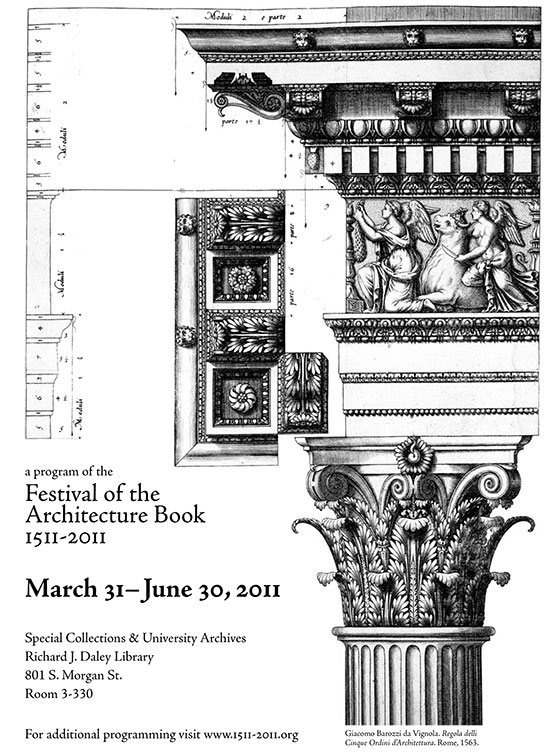
One of the great things about having friends is that they invite you to things you’d never get to, or even know about, otherwise—like, for instance, this wonderful exhibit of illustrated architecture books (dating from 1511), something I wouldn’t have gotten to but for my friend Bob Blythe.

Friday, May 20, 2011

Who else (besides, of course, Bob Dylan) has played so many different roles so brilliantly?

Miles Davis (with Robben Ford & guest Carlos Santana, guitars), “Burn”
Live, Giants Stadium, East Rutherford, New Jersey, 6/15/86

Listen to stuff long enough and it changes—or you do, anyway. Once I might have faulted this for being repetitive. But that’s a bit like faulting roast beef for being meat. Of course it’s repetitive. That’s part of what makes it soar.

More? Here.

**********

lagniappe

listening room: what’s playing

Rashied Ali Quintet, Live In Europe (Survival Records)

• Paul Motian (with Chris Potter, Jason Moran), Lost In A Dream (ECM)

Charlie Parker, The Complete Royal Roost Live Recordings on Savoy, Vol. 3 (Columbia Japan)

Eric Dolphy At The Five Spot, Vol. 2 (with Booker Little, Mal Waldron, Richard Davis, Ed Blackwell; Prestige)

• Various Artists, Fire In My Bones: Raw + Rare + Other-Worldly African-American Gospel (1944-2007) (Tompkins Square)

• Reverend Charlie Jackson, God’s Got It: The Legendary Booker and Jackson Singles (CaseQuarter)

Group Doueh, Guitar Music from the Western Sahara (Sublime Frequencies)

Mozart: Piano Sonata No. 8 in A Minor, Helene Grimaud, Resonances (Deutsche Grammophon)

Beethoven: Piano Sonata No. 23 (“Appasionata”) and No. 29 (“Hammerklavier”), Solomon, The Master Pianist (EMI Classics)

Anton Webern: String Quartet, Six Bagatelles for String Quartet, String Quartet Op. 28, LaSalle Quartet (Brilliant Classics)

• Arnold Schoenberg: String Quartet in D major, LaSalle Quartet (Brilliant Classics)

Roger Sessions: String Quartet No. 2, Julliard String Quartet (Composers Recordings)

Morton Feldman: For Bunita Marcus, John TilburyMorton Feldman, All Piano (London HALL)

WKCR-FM (broadcasting from Columbia University)
Bird Flight (Phil Schaap, jazz [Charlie Parker])
Morning Classical (Various)
Amazing Grace (Various)

WFMU-FM
Mudd Up! (DJ/Rupture, “new bass and beats”)
Sinner’s Crossroads
(Kevin Nutt, gospel)
—Give The Drummer Some
(Doug Schulkind, sui generis)
—Fool’s Paradise
(Rex, sui generis)
Transpacific Sound Paradise (Rob Weisberg, “popular and unpopular music from around the world”)

Sunday, 5/8/11

Feet, hands, voices—spirits, too.

Christian Home Baptist Church Hymn Choir, “Hezekiah—You Got To Die!”
Live, McConnells, South Carolina (Mt. Do-Well Baptist Church), 1994

Vodpod videos no longer available.

**********

lagniappe

serendipity

If you keep your ears open, music turns up unexpectedly. Last month, for instance, I was in Cambridge, Massachusetts, where I got to talking with a Harvard student who’s from Greenville, South Carolina. He’s studying religion, hoping to be a minister. I told him, referring to performances like the one featured today, that I’d heard gospel music from the Greenville area that I loved. As it turned out, he’d grown up with the music—his grandfather sang in quartets. Now he sings, too.

Damaris Taylor, “’Tis So Sweet to Trust in Jesus”
Live, Cambridge, Massachusetts (Harvard BSA Apollo Night), 2010

Vodpod videos no longer available.

*****

listening room: what’s playing

• The Complete Blue Note Recordings of Herbie Nichols (Mosaic)

• The Lester Young/Count Basie Sessions (1936-1940) (Mosaic)

• Equal Interest (Joseph Jarman, Leroy Jenkins, Myra Melford), Equal Interest (OmniTone)

Billy Bang Quintet, Above and Beyond (Justin Time)

Various Artists, Trojan Box Set: Lovers (Trojan)

• Various Artists, Fire In My Bones: Raw + Rare + Other-Worldly African-American Gospel (1944-2007) (Tompkins Square)

Ernest Bloch: String Quartets 1-4, The Griller String Quartet (Decca)

Sviatoslav Richter, Richter Rediscovered: Carnegie Hall Recital 1960 (RCA Red Seal)

Alfred Schnittke: String Quartet No. 3, The Britten Quartet (Collins Classics)

Morton Feldman: For Bunita Marcus, John TilburyMorton Feldman, All Piano (London HALL)

WKCR-FM (broadcasting from Columbia University)
Bird Flight (Phil Schaap, jazz [Charlie Parker])
Morning Classical (Various)

WFMU-FM
Mudd Up! (DJ/Rupture, “new bass and beats”)
—Toothpick Rhythm
(Betsey Nichols, country)
Sinner’s Crossroads
(Kevin Nutt, gospel)
—Give The Drummer Some
(Doug Schulkind, sui generis)
—Downtown Soulville
(Mr. Fine Wine, soul)
Pseu Braun
(sui generis)
—Fool’s Paradise
(Rex, sui generis)
Transpacific Sound Paradise (Rob Weisberg, “popular and unpopular music from around the world”)
Daniel Blumin (sui generis)

*****

100

200

300

400

500

Today MCOTD celebrates its 600th post.

Tuesday, 4/26/11

 favorites
(an occasional series)

Here one of the greatest American artists of the 20th century (composer Morton Feldman [1926-1980]) pays homage to another (painter Mark Rothko [1903-1970]).

Morton Feldman, Rothko Chapel (composed in 1971; first performed, at Houston’s Rothko Chapel, in 1972)

Part 1

***

Part 2

***

Part 3

***

Part 4

***

Part 5

More? Here. And here. And here. And here.

**********

lagniappe

. . . The example of the painters was crucial. Feldman’s scores were close in spirit to Rauschenberg’s all-white and all-black canvases, Barnett Newman’s gleaming lines, and, especially, Rothko’s glowing fog banks of color. His habit of presenting the same figure many times in succession invites you to hear music as a gallery visitor sees paintings; you can study the sound from various angles, stand back or move up close, go away and come back for a second look. Feldman said that New York painting led him to attempt a music ‘more direct, more immediate, more physical than anything that had existed heretofore.’ Just as the Abstract Expressionists wanted viewers to focus on paint itself, on its texture and pigment, Feldman wanted listeners to absorb the basic facts of resonant sound. At a time when composers were frantically trying out new systems and languages, Feldman chose to follow his intuition. He had an amazing ear for harmony, for ambiguous collections of notes that tease the brain with never-to-be-fulfilled expectations. Wilfrid Mellers, in his book ‘Music in a New Found Land,’ eloquently summed up Feldman’s early style: ‘Music seems to have vanished almost to the point of extinction; yet the little that is left is, like all of Feldman’s work, of exquisite musicality; and it certainly presents the American obsession with emptiness completely absolved from fear.’ In other words, we are in the region of Wallace Stevens’s ‘American Sublime,’ of the ’empty spirit / In vacant space.’

***

If there is a Holocaust memorial in Feldman’s work, it is ‘Rothko Chapel,’ which was written in 1971, for Rothko’s octagonal array of paintings in Houston. Rothko had committed suicide the previous year, and Feldman, who had become his close friend, responded with his most personal, affecting work. It is scored for viola, solo soprano, chorus, percussion, and celesta. There are voices, but no words. As is so often the case in Feldman’s music, chords and melodic fragments hover like shrouded forms, surrounded by thick silence. The viola offers wide-ranging, rising-and-falling phrases. The drums roll and tap at the edge of audibility. Celesta and vibraphone chime gentle clusters. There are fleeting echoes of past music, as when the chorus sings distant, dissonant chords reminiscent of the voice of God in Schoenberg’s ‘Moses und Aron,’ or when the soprano sings a thin, quasi-tonal melody that echoes the vocal lines of Stravinsky’s final masterpiece, the ‘Requiem Canticles.’ That passage was written on the day of Stravinsky’s funeral, in April, 1971—another thread of lament in the pattern. But the emotional sphere of ‘Rothko Chapel’ is too vast to be considered a memorial for an individual, whether it is Rothko or Stravinsky.

Shortly before the end, something astonishing happens. The viola begins to play a keening, minor-key, modal song, redolent of the synagogue. Feldman had written this music decades earlier, during the Second World War, when he was attending the High School of Music and Art, in New York. Underneath it, celesta and vibraphone play a murmuring four-note pattern, which calls to mind a figure in Stravinsky’s ‘Symphony of Psalms.’ The song unfurls twice, and the chorus answers with the chords of God. The allusions suggest that Feldman is creating a divine music, appropriate to the sombre spirituality of Rothko’s chapel. In a sense, he is fusing two different divinities, representative of two major strains in twentieth-century music: the remote, Hebraic God of Schoenberg’s opera, and the luminous, iconic presence of Stravinsky’s symphony. Finally, there is the possibility that the melody itself, that sweet, sad, Jewish-sounding tune, speaks for those whom Feldman heard beneath the cobblestones of German towns. It might be the chant of millions in a single voice.

But I can almost hear Feldman speaking out against this too specific reading. At a seminar in Germany in 1972, he was asked whether his music had any relationship to the Holocaust, and he said no. He was a hard-core modernist to the end, despite his sensualist tendencies, and he did not conceive of art a medium for sending messages. It was probably in reaction to the communicative power of ‘Rothko Chapel’ that he later dismissed it, unbelievably, as a minor work. But in that German seminar he did say, in sentences punctuated by long pauses, ‘There’s an aspect of my attitude about being a composer that is like mourning. Say, for example, the death of art . . . something that has to do with, say, Schubert leaving me.’ He also admitted, ‘I must say, you did bring up something that I particularly don’t want to talk about publicly, but I do talk privately.’

Only this one time, in the last minutes of ‘Rothko Chapel,’ did Feldman allow himself the consolation of an ordinary melody. Otherwise, he held the outside world at bay. Yet he always showed an awareness of other possibilities, a sympathy for all that he chose to reject. Listening to his music is like being in a room with the curtains drawn. You sense that with one quick gesture sunlight could fill the room, that life in all its richness could come flooding in. But the curtains stay closed. A shadow moves across the wall. And Feldman sits in his comfortable chair.—Alex Ross (New Yorker, 6/19/06)

(Originally posted 12/5/09.)