Sunday, July 16th
timeless
Arizona Dranes (1889 or 1891-1963, vocals, piano), “Lamb’s Blood Has Washed Me Clean,” rec. 1926 (Chicago)
**********
lagniappe
random sights
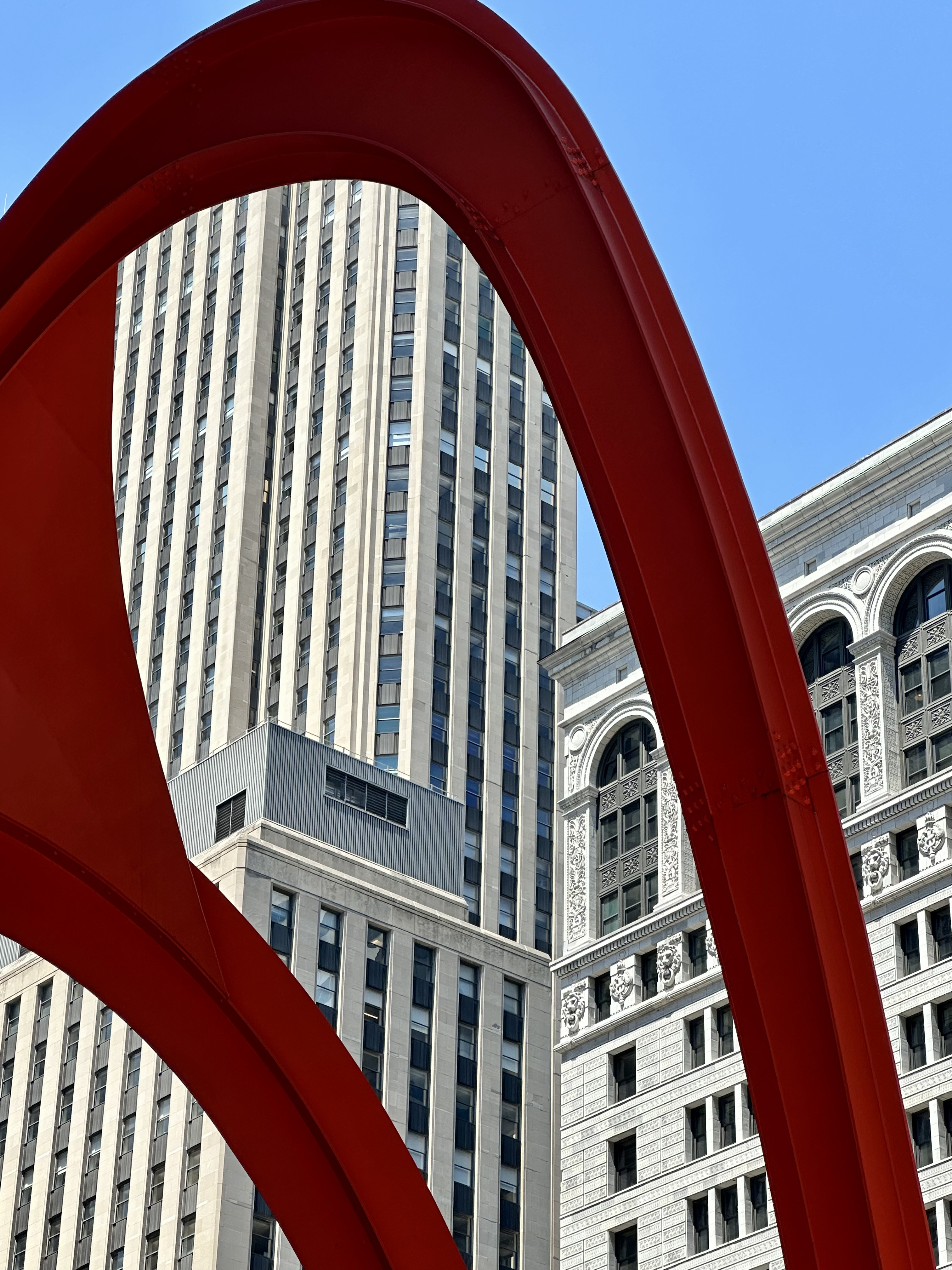
other day, Chicago (Alexander Calder [1898-1976], Flamingo [1973], detail)
timeless
Arizona Dranes (1889 or 1891-1963, vocals, piano), “Lamb’s Blood Has Washed Me Clean,” rec. 1926 (Chicago)
**********
lagniappe
random sights
other day, Chicago (Alexander Calder [1898-1976], Flamingo [1973], detail)
Before Jerry Lee, before Little Richard, there was . . .
Arizona Dranes (c. 1891-1963), “I Shall Wear a Crown,” c. 1927
Before Jerry Lee, before Little Richard, there was . . .
Arizona Dranes (c. 1891-1963), “My Soul Is a Witness for the Lord,” 1926
**********
lagniappe
art beat
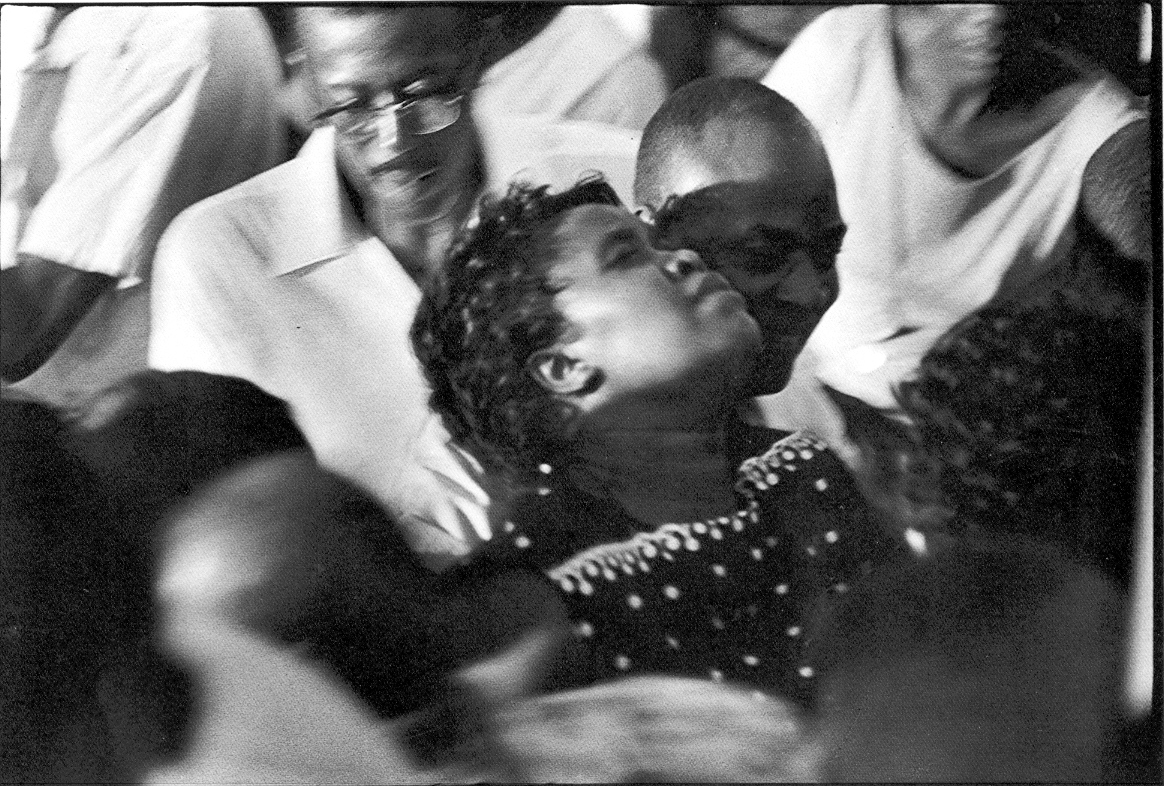
Danny Lyon (1942-), Albany, Ga. (Shiloh Baptist Church), 1962
old stuff
Rev. F. W. McGee (with Arizona Dranes, piano and vocals, and congregation), “Fifty Miles of Elbow Room,” 1930
**********
langniappe
reading table
He was little more than a ruin, but a superb one, or perhaps not even a ruin so much as that most romantic of beautiful objects, a rock in a storm. Lashed on all sides by the waves of suffering, of anger at suffering, and of the rising tide of death, by which he was surrounded, his face, crumbling like a block of stone, still kept the style, the hauteur I had always admired; it was worn away like one of those beautiful but half-obliterated classical heads with which we are still always glad to ornament a study. Only it seemed to belong to a period more ancient than before, not only because of the way in which its once more lustrous material had become rough and broken, but because an expression of subtlety and playfulness had been succeeded by an involuntary, an unconscious expression, constructed out of illness, the struggle against death, mere resistance and the difficulty of living. The arteries, all their suppleness gone, had given his once beaming face a sculptural rigidity. And although the Duc had no inkling of this, his neck, his cheeks, his forehead all displayed indications that the human being within, as if obliged to cling tenaciously to each minute, seemed to be buffeted by a tragic gale, while the white strands of his thinner but still magnificent hair lashed with their spume the flooded promontory of his face. And I realized that, like the strange, unique glints which only the approach of an all-engulfing storm gives to rocks normally a different colour, the leaden grey of the stiff, worn cheeks, the almost white, foam flecked grey of the swelling locks, the weak light still emanating from the scarcely seeing eyes, were not unreal colours, far from it, all too real, but uncanny, and borrowed from the palette and the lighting, inimitable in its terrifying and prophetic shades of darkness, of old age, and of the proximity of death.
—Marcel Proust, Finding Time Again (translated from French by Ian Patterson)
*****
What a strange thing!
to be alive
beneath cherry blossoms.—Kobayashi Issa (translated from Japanese by Robert Hass)
You’re sitting, in 1926, in the back of a little church in Dallas. It’s hot and the windows are open. This woman, who’s been at the piano since you walked in, begins to play.
Arizona Dranes, piano, “Crucifixion,” 1926
 music clip of the day