Friday, 3/5/10
Elvis!
Elvis Presley, live, Tupelo, Mississippi (Mississippi-Alabama Fair & Dairy Show), 1956
“Heartbreak Hotel”
*****
“Long Tall Sally”
**********
lagniappe

Elvis!
Elvis Presley, live, Tupelo, Mississippi (Mississippi-Alabama Fair & Dairy Show), 1956
“Heartbreak Hotel”
*****
“Long Tall Sally”
**********
lagniappe
Imagine that, one day, all the music you’ve ever heard in your life disappeared from the world.
How much music would remain?
What other pop star has made such stunning contributions as a guest artist?
Sinead O’Connor
With Willie Nelson, “Don’t Give Up”
*****
With the Chieftains, “The Foggy Dew”
*****
With Shane MacGowan, “Haunted”
street music
Barcelona
Hang drummer near La Sagrada Familia
**********
lagniappe
Thanks for the notification [2/21/10 post: Sister O.M. Terrell and Goodbye, Babylon]. Your blog looks great! I spent some time on it tonight, and have it bookmarked for the future.
—Lance Ledbetter, Dust-To-Digital
Cheesiness knows no boundaries.
Omar Souleyman
#1
*****
#2
*****
#3
*****
#4
Want more? Here.
**********
lagniappe
Omar Souleyman is a Syrian musical legend. Since 1994, he and his musicians have emerged as a staple of folk-pop throughout Syria, but until now they have remained little known outside of the country. To date, they have issued more than five-hundred studio and live-recorded cassette albums which are easily spotted in the shops of any Syrian city.
Born in rural Northeastern Syria, he began his musical career in 1994 with a small group of local collaborators that remain with him today. The myriad musical traditions of the region are evident in their music. Here, classical Arabic mawal-style vocalization gives way to high-octane Syrian Dabke (the regional folkloric dance and party music), Iraqi Choubi and a host of Arabic, Kurdish and Turkish styles, among others. This amalgamation is truly the sound of Syria. The music often has an overdriven sound consisting of phase-shifted Arabic keyboard solos and frantic rhythms. At breakneck speeds, these shrill Syrian electronics play out like forbidden morse-code, but the moods swing from coarse and urgent to dirgy and contemplative in the rugged anthems that comprise Souleyman’s repertoire. Oud, reeds, baglama saz, accompanying vocals and percussion fill out the sound from track to track. Mahmoud Harbi is a long-time collaborator and the man responsible for much of the poetry sung by Souleyman. Together, they commonly perform the Ataba, a traditional form of folk poetry used in Dabke. On stage, Harbi chain smokes cigarettes while standing shoulder to shoulder with Souleyman, periodically leaning over to whisper the material into his ear. Acting as a conduit, Souleyman struts into the audience with urgency, vocalizing the prose in song before returning for the next verse. Souleyman’s first hit in Syria was “Jani” (1996) which gained cassette-kiosk infamy and brought him recognition throughout the country. Over the years, his popularity has risen steadily and the group tirelessly performs concerts throughout Syria and has accepted invitations to perform abroad in Saudi Arabia, Dubai and Lebanon.—Sublime Frequencies
*****
art beat
Album covers and art museums rarely mix. But in a display case at the Art Institute’s William Eggleston exhibit (which just opened), you’ll find this:
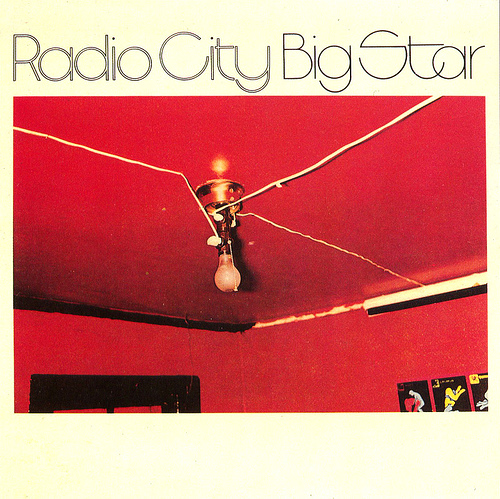
If you’re a gospel singer, any time—even (especially?) a sister’s funeral—is a time to sing.
Gene Stewart (of the Soul Stirrers) with Willie Rogers (also of the Soul Stirrers), “The Last Mile of the Way” (recorded by the Soul Stirrers, with Sam Cooke, in 1955), live
**********
lagniappe
Once you are a Soul Stirrer you are always a Soul Stirrer. Sam Cooke will always be known as a Soul Stirrer regardless of what he did in the world.—Willie Rogers
*****
Want more of the Soul Stirrers? Here (with Sam Cooke [10/4/09]).
It used to be that music came from a particular place. No more. Whether it’s Sohrab Saadat Ladjevardi (the Iranian saxophonist who’s lived in Germany, in Japan, and now in New York City [2/18/10]), or Burkina Electric (whose members come from Burkina Faso, from Germany, and from New York City [by way of Austria] [2/22/10]), or this singer, who’s lived (and has homes) in Nigeria and in Germany, much of today’s most intriguing music has its ears and heart and feet on more than one continent.
Nneka, “Heartbeat”
Take 1: recording/video
*****
Take 2: live, Philadelphia, 2009
*****
Take 3: J. Period Remix, featuring Talib Kweli
something you cannot do
Watch this guy and not feel better about, well, pretty much everything.
*****
Jackie Wilson, “You Better Know It,” 1959
Take 1: TV broadcast
*****
Take 2: Movie (Go, Johnny, Go!)
Want more? Here (“Lonely Teardrops” [11/20/09]).
Composed almost a century ago, these tiny pieces—haiku-like in their compression—still astonish.
Anton Webern (1883-1945), Six Bagatelles for String Quartet, Op. 9 (1911-13)/LaSalle Quartet
**********
lagniappe
The 15th of September 1945, the day of Anton Webern’s death, should be a day of mourning for any receptive musician. We must hail not only this great composer but also a real hero. Doomed to a total failure in a world of ignorance and indifference he inexorably kept on cutting out his diamonds, his dazzling diamonds, the mines of which he had such a perfect knowledge.—Igor Stravinsky
recipe
1. Take a singer whose range includes about as many notes as he has fingers (on one hand).
2. Add a saxophonist who’s renowned for his melodic and harmonic inventiveness.
3. Mix?
Leonard Cohen with Sonny Rollins, “Who By Fire,” live (TV broadcast), 1989
These two mostly sound (to these ears) like, well, what they are: two distinctive artists whose musical worlds couldn’t be more different. But when Sonny finally leaves his world and enters Leonard’s—a world where melodic invention counts for nothing and subtle changes in inflection count for everything—the results are breathtaking (5:47 and following).
**********
lagniappe
Salam Richard!
Thanks for the post! How did you find me?
Have you check my personal website: http://www.sohrab.info?
Do you know about my music on-line mag Doo Bee Doo Be Doo (which is looking for writers. What about you?)? Please visit http://www.doobeedoobeedoo.info
***
Hope that sometime I will play in your city to have a chance to meet you.
Greetings!
—Sohrab Saadat Ladjevardi [2/18/10]

