Saturday, February 21st
Twenty-four hours ago I’d never heard of this piece, nor this composer. Now I’ve listened to it, hungrily, twice. What a world.
Sulkhan Tsintsadze (1925-1991), String Quartet No. 6 (1968)
Twenty-four hours ago I’d never heard of this piece, nor this composer. Now I’ve listened to it, hungrily, twice. What a world.
Sulkhan Tsintsadze (1925-1991), String Quartet No. 6 (1968)
sounds of Mali (day two)
Trio Da Kali and Kronos Quartet, “Diaraby,” live, University of Maryland, 2014
string quartet festival (day five)
Maurice Ravel (1875-1937), String Quartet in F major (1903); Hagen Quartet, live, Austria (Salzburg), 2000
1st movt.
2nd movt.
3rd movt.
4th movt.
string quartet festival (day four)
Dmitri Shostakovich (1906-1975), String Quartet No. 8 in C minor (1960); Borodin Quartet, live
string quartet festival (day two)
Back to the beginning—the “father” of the string quartet.
Josef Haydn (1732-1808), String Quartet in C-major, Op. 76, No. 3 (“Emperor”), c. 1796; St. Lawrence String Quartet, live, Houston, 2014
string quartet festival (day one)
Ludwig van Beethoven (1770-1827), String Quartet No. 14 (Op. 131, C-sharp minor), 1826
Alban Berg Quartet, live, Vienna, 1989
***
Végh Quartet, recording, 1952
***
Budapest String Quartet, recording, 1951
**********
lagniappe
musical thoughts
Opus 131 . . . is routinely described as Beethoven’s greatest achievement, even as the greatest work ever written. Stravinsky called it ‘perfect, inevitable, inalterable.’ It is a cosmic stream of consciousness in seven sharply contrasted movements, its free-associating structure giving the impression, in the best performances, of a collective improvisation. At the same time, it is underpinned by a developmental logic that surpasses in obsessiveness anything that came before. The first four notes of the otherworldly fugue with which the piece begins undergo continual permutations, some obvious and some subtle to the point of being conspiratorial. Whereas the Fifth Symphony hammers at its four-note motto in ways that any child can perceive, Opus 131 requires a lifetime of contemplation. (Schubert asked to hear it a few days before he died.)
—Alex Ross, “Deus Ex Musica,” New Yorker, 10/20/14
sounds of New York (day three)
If this life of ours isn’t easy, why should our music be?
Alex Mincek (1975-), String Quartet No. 3; Mivos Quartet, live, New York, 2013
**********
lagniappe
reading table
By Emily Dickinson (1830-1886; Franklin 384)
It dont sound so terrible—quite—as it did—
I run it over—”Dead”, Brain—”Dead”.
Put it in Latin—left of my school—
Seems it don’t shriek so—under rule.Turn it, a little—full in the face
A Trouble looks bitterest—
Shift it—just—
Say “When Tomorrow comes this way—
I shall have waded down one Day” .I suppose it will interrupt me some
Till I get accustomed—but then the Tomb
Like other new Things—shows largest—then—
And smaller, by Habit—It’s shrewder then
Put the Thought in advance—a Year—
How like “a fit”—then—
Murder—wear!
Thankful I am, two days before Thanksgiving, for things that sound unlike anything I’ve ever heard before.
Horatiu Radulescu (1942-2008), String Quartet No. 5 (“before the universe was born”); JACK Quartet, live, Los Angeles, 2011
Need a jolt?
Bela Bartok (1881-1945), String Quartet No. 5, excerpt (first mvt.)
FLUX quartet, live, 2013
**********
lagniappe
art beat: yesterday at the Art Institute of Chicago
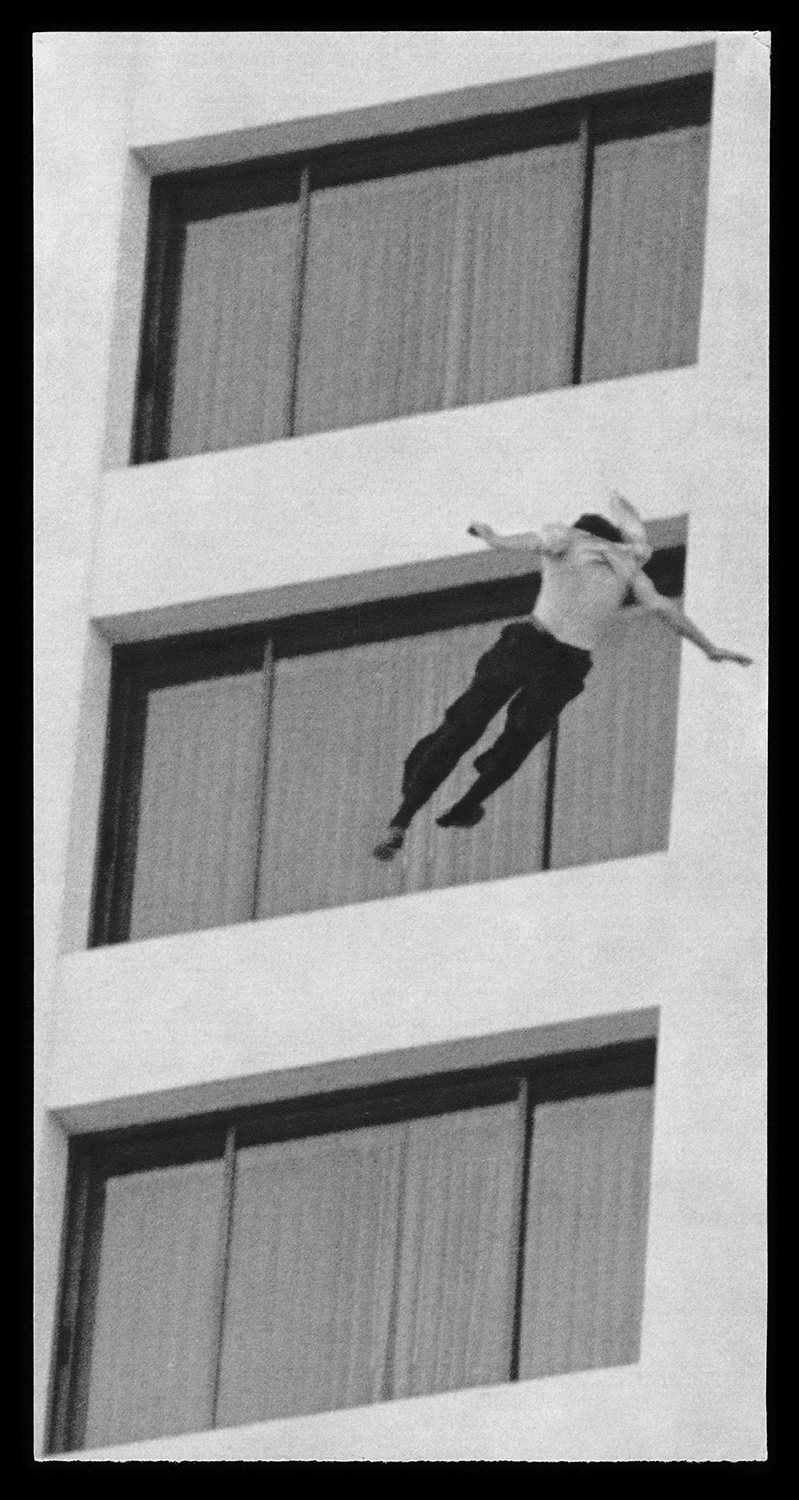
Susan Charlesworth (1947-2013), Unidentified Man, Ontani Hotel, Los Angeles, 1980 (printed 2012), Stills (through January 4th)
 music clip of the day