Paul Motian, drummer, composer, collaborator, bandleader March 25, 1931-November 22, 2011
Paul Motian Trio (PM, drums; Joe Lovano, saxophone; Bill Frisell, guitar), “It Should’ve Happened a Long Time Ago” (P. Motian), live, New York (Village Vanguard), 2005
**********
lagniappe
Sometimes he would strip a beat to absolute basics, the sound of brushes on a dark-toned ride cymbal and the abrupt thump of his low-tuned kick drum. Generally, a listener could locate the form, even when Mr. Motian didn’t state it explicitly.
“With Paul, there was always that ground rhythm, that ancient jazz beat lurking in the background,” said the pianist Ethan Iverson, one of the younger bandleaders who played with and learned from him toward the end.
Mr. Motian’s final week at the [Village] Vanguard was with Mr. Osby and Mr. Kikuchi, in September. “He was an economist: every note and phrase and utterance counted,” Mr. Osby said on Tuesday. “There was nothing disposable.”
Take 2: remix by Organized Noize Dungeon Family (Big Boi) (released 7/24/11)
Vodpod videos no longer available.
(Originally posted 7/26/11.)
*******
Today we remember him with a mix of new clips and old favorites.
Gil Scott-Heron, April 1, 1949-May 27, 2011
“The Bottle,” live, Jamaica (Montego Bay, Reggae Sunsplash), 1983 Cool Runnings: The Reggae Movie (1983)
*****
I’m New Here (2010)
“Where Did The Night Go”
***
“Me And The Devil” (Robert Johnson)
***
It’s a remix world.
“New York Is Killing Me” (2010), Chris Cunningham remix
****
Here’s the original track, followed by a couple more remixes.
Vodpod videos no longer available.
***
With Nas
Vodpod videos no longer available.
***
With Mos Def
Vodpod videos no longer available.
**********
langiappe
musical thoughts
In the dark times, will there also be singing? Yes, there will be singing. About the dark times.
—Bertolt Brecht
(Originally posted 5/30/11.)
*******
Lloyd Knibb, drummer(Skatalites, etal.)
March 8, 1931-May 12, 2011
Lloyd Knibb’s importance to Jamaican music can’t be overstated. The inventor of the ska beat at Coxson Dodd’s Studio One, Knibb created a sound that spread like wildfire the world over.
—Carter Van Pelt, host, Eastern Standard Time, WKCR-FM
Howard Tate, singer, August 13, 1939-December 2, 2011
“Get It While You Can” (J. Ragovoy)
Live (with Jerry Ragovoy, piano), Paris, 2003
Like a lot of performances, this gets better as it goes along. At first he seems a bit tentative. He’s trying to find his way. Then, at around 1:07, he starts to settle in and, before long, he’s inhabiting the song. If this were a recording session and I had a hand in it, I know what I’d do as this was ending. I’d ask them, without missing a beat, to keep going: “Again, from the top.”
*****
Recording, 1967
**********
lagniappe
Howard Tate, 72, an immensely talented soul singer who dropped out of the music business in frustration after the often brilliant albums he made in the late 1960s and early 1970s failed to reach a wide audience, died Friday of multiple myeloma and leukemia in his apartment in Burlington City.
Born in Georgia and raised in Philadelphia, Mr. Tate returned to recording and performing in the 2000s after a chance encounter in a South Jersey supermarket led to his rediscovery.
Working with Philadelphia producer and songwriter Jerry Ragovoy, Mr. Tate recorded one undeniably classic album: Get It While You Can, a 1966 release on Verve whose title track became much better known when sung by Janis Joplin.
***
Neither his debut nor the subsequent Reaction (1969) and Howard Tate (1972) earned him a large audience. Mr. Tate, who had sung early in his career with organist Bill Doggett and with his fellow North Philadelphia soul man Garnet Mimms (in the doo-wop group The Gainors), wound up disappearing from the music business altogether – an absence that made his legend grow stronger.
Without music in his life, Mr. Tate, who was raised in the neighborhood around 13th and Norris Streets, sold insurance and raised six children. He started drinking after his daughter was killed in a fire in his Wynnefield home in 1976, he told The Inquirer in 2004. After his marriage crumbled, his life took a harrowing turn.
“I turned to cocaine, and it was the worst thing I could have ever done,” he said. “It destroyed my willpower. I became homeless, roaming around those drug neighborhoods in Camden. I actually thought I was going to be found dead in an alley. It was like I was waiting to die.”
Instead, however, the Baptist preacher’s son turned to the Lord. In 1994, he founded the Gift of the Cross Church and began preaching in living rooms in West Philadelphia and South Jersey.
Presumed dead by many, he ran into a former member of Harold Melvin & the Blue Notes in a Willingboro supermarket on New Year’s Day in 2001, who told him that an oldies DJ, Phil Casem of WNJC in Sewell, N.J., had been making inquiries about his whereabouts on the radio.
Two years later, Mr. Tate returned with Rediscovered, an album that included “Either Side of the Same Town,” a song Elvis Costello and Ragovoy, who died earlier this year, wrote for Mr. Tate. With his remarkable voice miraculously preserved after nearly three decades out of action, he returned to performing, and released two more albums, A Portrait of Howard (2006) and Blue Day (2008).
Mimms, now pastor of the Bottom Line Revival Church in Cheltenham, recalled Tuesday the days when he sang lead and Mr. Tate sang tenor in the Gainors, the quintet that came together after Mimms got out of the U.S. Army in 1958.
“We were very close,” said Mimms, who introduced Mr. Tate to Ragovoy and had his own Ragovoy-penned classic soul hit, “Cry Baby,” in 1963.
Mr. Tate “was a very nice dresser, and very famous with the young ladies,” Mimms said. “He was an all outgoing guy, and his falsetto was unique. I had a high range myself, but I couldn’t do that falsetto stuff he did. He could come out of his natural, and go right into it. He had a great voice.”
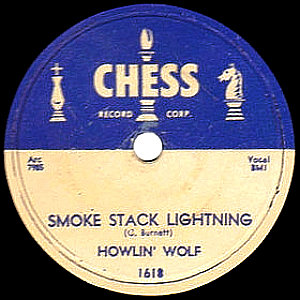
In a country that paid proper respect to its cultural heritage, this would be played for children in school, as part of their cultural education. Instead kids encounter it, if at all, on TV—the soundtrack to a Viagra commercial.
***
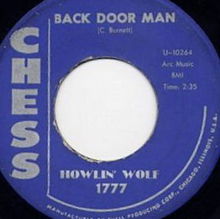
“Back Door Man” (rec. 1960, Chicago)
***
“Wang Dang Doodle” (rec. 1960, Chicago)
**********
lagniappe
musical thoughts
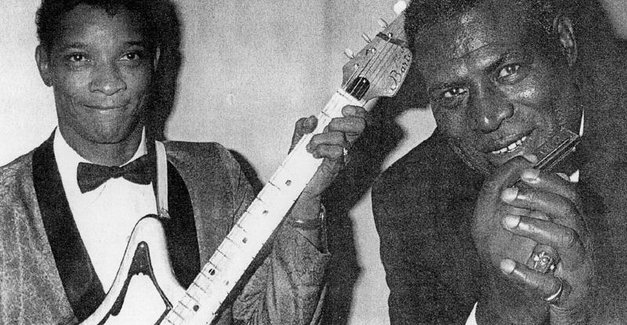
I started listening to people like Hubert Sumlin and trying to deal with a less muscular way of reaching people . . .
Rankin, Loda, Cissna Park, Schwer, Gilmer, Watseka: the world is filled with places we’ve never even heard of (many less than 150 miles away), as I was reminded yesterday driving home from Danville, Illinois, where I’d gone to see clients at the prison.
Paul Motian, drummer, composer, collaborator, bandleader March 25, 1931-November 22, 2011
Paul Motian Trio (PM, drums; Joe Lovano, saxophone; Bill Frisell, guitar), “It Should’ve Happened a Long Time Ago” (P. Motian), live, New York (Village Vanguard), 2005
Stephen Paul Motian (he pronounced his surname, which was Armenian, like the word “motion”) was born in Philadelphia on March 25, 1931, and reared in Providence, R.I. In 1950 he entered the Navy. After briefly attending its music school in Washington, he sailed around the Mediterranean until 1953, when he was stationed in Brooklyn. He was discharged a year later.
He met Evans in 1955, and by the end of the decade he was working in a trio with him and the bassist Scott LaFaro. That group, in which the bass and drums interacted with the piano as equals, continues to serve as an important source of modern piano-trio jazz.
In the late 1950s and early 1960s Mr. Motian played with many other bandleaders, including Lee Konitz, Warne Marsh, Mose Allison, Tony Scott, Stan Getz, Johnny Griffin and, for a week, [Thelonious] Monk. After leaving his partnership with Evans, he worked steadily with the pianist Paul Bley, whom he often credited with opening him up to greater possibilities.
“All of a sudden there was no restrictions, not even any form,” he told the writer and drummer Chuck Braman in 1996. “It was completely free, almost chaotic.”
In an interview on Tuesday, Mr. Bley recalled: “We shared the same philosophy, musically. He knew that what he was doing in the past was not his answer. What he lived for was growth and change.”
Then, and even more with Mr. Jarrett’s quartet in the 1970s, Mr. Motian moved away from swing-based rhythm; he improvised freely, or played off melodic form. Eager to grow beyond percussion, he studied and composed on a piano he had bought from Mr. Jarrett, and in 1973 he made a record of his own compositions for ECM, “Conception Vessel,” with Mr. Jarrett and others. One of the last records he made with Mr. Jarrett’s quartet, “Byablue” (1977), consisted mostly of Motian originals.
But the old sense of swing never left, and it later became abundantly clear again, whether he was playing an original sketch built on uneven phrasing with gaps of silence or a root text of jazz like “Body and Soul.” Sometimes he would strip a beat to absolute basics, the sound of brushes on a dark-toned ride cymbal and the abrupt thump of his low-tuned kick drum. Generally, a listener could locate the form, even when Mr. Motian didn’t state it explicitly.
“With Paul, there was always that ground rhythm, that ancient jazz beat lurking in the background,” said the pianist Ethan Iverson, one of the younger bandleaders who played with and learned from him toward the end.
Mr. Motian’s final week at the Vanguard was with Mr. Osby and Mr. Kikuchi, in September. “He was an economist: every note and phrase and utterance counted,” Mr. Osby said on Tuesday. “There was nothing disposable.”
Jessy Dixon, singer, songwriter, pianist
March 12, 1938-September 26, 2011
“I’m Too Close,” live 1988
Vodpod videos no longer available.
*****
“I’ll Tell It” (vocals, organ), with Rev. Milton Brunson & The Chicago Community Choir, live, c. early 1960s
Vodpod videos no longer available.
*****
“Nothing But the Blood,” with the Combined Choir of the Omega Baptist Church, recording, 1967
Vodpod videos no longer available.
**********
lagniappe
Though he was already well known in gospel circles, Mr. Dixon reached the mainstream pop-music audience in the 1970s, whenhe collaborated with Mr. Simon on the albums “Paul Simon in Concert: Live Rhymin’ ” (a follow-up to Mr. Simon’s hit album “There Goes Rhymin’ Simon”) and “Still Crazy After All These Years.” The two musicians had met at the Newport Jazz Festival in 1972, and Mr. Simon was impressed with his vocals.
Mr. Dixon and his group, the Jessy Dixon Singers, toured with Mr. Simon for the next eight years. Mr. Dixon also played keyboard with the funk group Earth, Wind and Fire and collaborated with the guitarist Phil Upchurch.
But these were side projects. It was in the gospel genre that he left an important musical mark, releasing 18 albums between 1964 and 2006 — five of them went gold — and touring worldwide until 2001. After his work with Paul Simon, Mr. Dixon built a large following in Europe.
Born on March 12, 1938, in San Antonio, Texas, Mr. Dixon studied classical piano as a boy and started singing as a teenager at the Refuge Church of Our Lord Jesus Christ. The son of a porter and a seamstress, he went to a local Catholic college on a scholarship but dropped out to pursue a career as a musician. At 17, he was touring and playing black churches in California, Texas and Louisiana.
It was during a performance at a theater in San Antonio in 1957 that the Rev. James Cleveland, the great Chicago-based gospel musician, discovered Mr. Dixon and asked him to move to Chicago. There he became a pianist and singer with Mr. Cleveland’s group, The Original Chimes.
Mr. Dixon told The Associated Press in 1997 that being a young musician on Chicago’s South Side in the 1960s was like getting an advanced degree in blues and gospel music. “Going to church was like going to school,” he said.
Wade Mainer, singer, banjo player, April 21, 1907-September 12, 2011
“I’ll Be a Friend to Jesus” (1936)
Vodpod videos no longer available.
*****
Singing, playing, talking (c. 2004)
Part 1
Vodpod videos no longer available.
***
Part 2
Vodpod videos no longer available.
***
Part 3
Vodpod videos no longer available.
*****
lagniappe
What we was playin’ in the ’30s was true country music—no electric instruments, no copyrights. Something’d happen and someone’d write a song about it—nobody owned it, nobody’d know who wrote it. The music just told a story.

 music clip of the day