music clip of the day

jazz/blues/rock/classical/gospel/more

Category: reading table

Thursday, July 10th

alone

Franz Schubert (1797-1828), Piano Sonata No. 20 in A major (2nd movt., Andantino), Paul Lewis (1972-), live, Boston, 2013


**********

lagniappe

reading table

During Wind and Rain
by Thomas Hardy (1840-1928)

They sing their dearest songs—
He, she, all of them—yea,
Treble and tenor and bass,
And one to play;
With the candles mooning each face. . . .
Ah, no; the years O!
How the sick leaves reel down in throngs!

They clear the creeping moss—
Elders and juniors—aye,
Making the pathways neat
And the garden gay;
And they build a shady seat. . . .
Ah, no; the years, the years;
See the white storm-birds wing across!

They are blithely breakfasting all—
Men and maidens—yea,
Under the summer tree,
With a glimpse of the bay,
While pet fowl come to the knee. . . .
Ah, no; the years O!
And the rotten rose is ript from the wall.

They change to a high new house,
He, she, all of them—aye,
Clocks and carpets and chairs
On the lawn all day,
And brightest things that are theirs. . . .
Ah, no; the years, the years;
Down their carved names the rain-drop ploughs.
Thursday, June 19th

passings

Jimmy Scott, singer, July 17, 1925-June 12, 2014

“Sometimes I Feel Like a Motherless Child,” live, New York (Birdland), 2000

**********

lagniappe

reading table

If you were to open up Iona’s chest and pour all the grief out of it, you would probably flood the entire planet, yet it is not visible.

—Anton Chekhov (1860-1904), “Grief” (often rendered as “Misery”; translated from Russian by Rosamund Bartlett)

Tuesday, June 17th

alone

Searching, searching—never finding.

Ludwig van Beethoven (1770-1827), Piano Sonata No. 31 in A-flat major (Third Movt.), Friedrich Gulda (1930-2000), live, Japan, 1993

**********

lagniappe

reading table

Imaginary Number
by Vijay Seshadri (1954-)

The mountain that remains when the universe is destroyed
is not big and is not small.
Big and small are

comparative categories, and to what
could the mountain that remains when the universe is destroyed
be compared?

Consciousness observes and is appeased.
The soul scrambles across the screes.
The soul,

like the square root of minus 1,
is an impossibility that has its uses.

Sunday, June 15th

back to church

Bozie Sturdivant, “Ain’t No Grave Can Hold My Body Down,” live, Clarksdale, Miss. (Silent Grove Baptist Church), 1942


**********

lagniappe

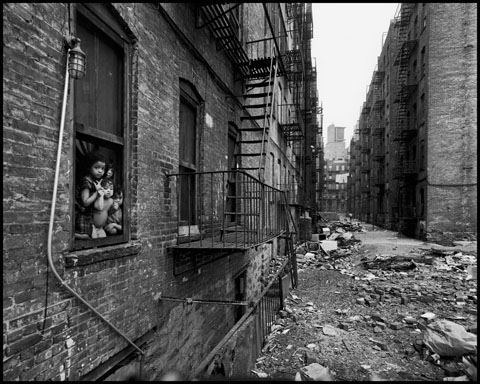
art beat

Bruce Davidson (1933-), East 100th St., New York, 1966

DAB1966046W00343/14

Thursday, June 12th

sounds of Chicago

One-word review: mesmerizing.

Art Ensemble of Chicago, live, France (Chateauvallon), 1970


**********

lagniappe

reading table

Despite all my inner crumblings,
I’m still able to recognize a perfect day:
sea without shadow,
sky without wrinkles,
air hovering over me like a blessing.

—Nina Cassian (1924-2014), “Summer X-Rays” (fragment)


Tuesday, June 10th

Why not listen to something new?

Ellen Fullman (1957-), long string instrument (with Theresa Wong, cello; Abby Alwin, cello; James Cornish, trumpet), live, Detroit, 2013


**********

lagniappe

reading table

     Lost really has two disparate meanings. Losing things is about the familiar falling away, getting lost is about the unfamiliar appearing. There are objects and people that disappear from your sight or knowledge or possession; you lose a bracelet, a friend, the key. You still know where you are. Everything is familiar except that there is one item less, one missing element. Or you get lost, in which case the world has become larger than your knowledge of it. Either way, there is a loss of control. Imagine yourself streaming through time shedding gloves, umbrellas, wrenches, books, friends, homes, names. This is what the view looks like if you take a rear-facing seat on the train. Looking forward you constantly acquire moments of arrival, moments of realization, moments of discovery. The wind blows your hair back and you are greeted by what you have never seen before. The material falls away in onrushing experience. It peels off like skin from a molting snake. Of course to forget the past is to lose the sense of loss that is also memory of an absent richness and a set of clues to navigate the present by; the art is not one of forgetting but letting go. And when everything else is gone, you can be rich in loss.

—Rebecca Solnit, A Field Guide to Getting Lost

Sunday, May 18th

testify!

Lee Williams & the Spirtual QC’s, “I Can’t Give Up,” live, Brownsville, Tenn.


**********

lagniappe

reading table

Please Give This Seat to an Elderly or Disabled Person
by Nina Cassian (1924-2014; translated from Romanian by Naomi Lazard)

I stood during the entire journey:
nobody offered me a seat
although I was at least a hundred years older than anyone else on board,
although the signs of at least three major afflictions
were visible on me:
Pride, Loneliness, and Art.


Saturday, May 17th

beyond category

John Zorn, Book of Angels (excerpts); Uri Caine, piano; Masada String Trio (Mark Feldman, violin; Erik Friedlander, cello;* Greg Cohen, bass); live, France (Marciac), 2008

**********

lagniappe

reading table

There’s a line in Tarkovsky’s Solaris: we never know when we’re going to die and because of that we are, at any given moment, immortal.

—Geoff Dyer, “Diary,” London Review of Books, 4/3/14

***

*It’s all related: Erik’s the son of photographer Lee Friedlander, whose work is often featured here.

Wednesday, May 14th

basement jukebox

J. B. Lenoir (1929-1967), “Mama Talk To Your Daughter,” 1954


**********

lagniappe

reading table

In the hospital yard stands a small annex surrounded by a whole forest of burdock, nettles, and wild hemp. The roof is rusty, the chimney is half fallen down, the porch steps are rotten and overgrown with grass, and only a few traces of stucco remain. The front facade faces the hospital, the back looks onto a field, from which it is separated by the gray hospital fence topped with nails. These nails, turned point up, and the fence, and the annex itself have that special despondent and accursed look that only our hospitals and prisons have.

—Anton Chekhov (1860-1904), “Ward No. 6” (opening paragraph; translated from Russian by Richard Pevear and Larissa Volokhonsky)

Tuesday, May 6th

soundtrack for a dream

Marcos Balter (1974-), Frisson (2011); Chicago Composers Orchestra (Matthew Kasper, cond.) with Eric Lamb (flute), Chicago, 2011


**********

lagniappe

reading table

Speculative, imaginative writings—texts that ‘open possibility’—help us to live because the definitions by which we live are themselves productions of the cultural imaginary.

—Frances Richard, “Multitudes” (Poetry, May, 2014)