Art Ensemble of Chicago, live, France (Chateauvallon), 1970
**********
lagniappe
reading table
Despite all my inner crumblings,
I’m still able to recognize a perfect day:
sea without shadow,
sky without wrinkles,
air hovering over me like a blessing.
Ellen Fullman (1957-), long string instrument (with Theresa Wong, cello; Abby Alwin, cello; James Cornish, trumpet), live, Detroit, 2013
**********
lagniappe
reading table
Lost really has two disparate meanings. Losing things is about the familiar falling away, getting lost is about the unfamiliar appearing. There are objects and people that disappear from your sight or knowledge or possession; you lose a bracelet, a friend, the key. You still know where you are. Everything is familiar except that there is one item less, one missing element. Or you get lost, in which case the world has become larger than your knowledge of it. Either way, there is a loss of control. Imagine yourself streaming through time shedding gloves, umbrellas, wrenches, books, friends, homes, names. This is what the view looks like if you take a rear-facing seat on the train. Looking forward you constantly acquire moments of arrival, moments of realization, moments of discovery. The wind blows your hair back and you are greeted by what you have never seen before. The material falls away in onrushing experience. It peels off like skin from a molting snake. Of course to forget the past is to lose the sense of loss that is also memory of an absent richness and a set of clues to navigate the present by; the art is not one of forgetting but letting go. And when everything else is gone, you can be rich in loss.
Lee Williams & the Spirtual QC’s, “I Can’t Give Up,” live, Brownsville, Tenn.
**********
lagniappe
reading table
Please Give This Seat to an Elderly or Disabled Person by Nina Cassian (1924-2014; translated from Romanian by Naomi Lazard)
I stood during the entire journey:
nobody offered me a seat
although I was at least a hundred years older than anyone else on board,
although the signs of at least three major afflictions
were visible on me:
Pride, Loneliness, and Art.
John Zorn, Book of Angels (excerpts); Uri Caine, piano; Masada String Trio (Mark Feldman, violin; Erik Friedlander, cello;* Greg Cohen, bass); live, France (Marciac), 2008
**********
lagniappe
reading table
There’s a line in Tarkovsky’s Solaris: we never know when we’re going to die and because of that we are, at any given moment, immortal.
—Geoff Dyer, “Diary,” London Review of Books, 4/3/14
***
*It’s all related: Erik’s the son of photographer Lee Friedlander, whose work is often featured here.
J. B. Lenoir (1929-1967), “Mama Talk To Your Daughter,” 1954
**********
lagniappe
reading table
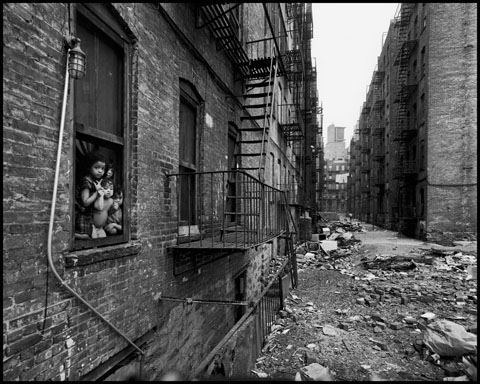
In the hospital yard stands a small annex surrounded by a whole forest of burdock, nettles, and wild hemp. The roof is rusty, the chimney is half fallen down, the porch steps are rotten and overgrown with grass, and only a few traces of stucco remain. The front facade faces the hospital, the back looks onto a field, from which it is separated by the gray hospital fence topped with nails. These nails, turned point up, and the fence, and the annex itself have that special despondent and accursed look that only our hospitals and prisons have.
—Anton Chekhov (1860-1904), “Ward No. 6” (opening paragraph; translated from Russian by Richard Pevear and Larissa Volokhonsky)
Marcos Balter (1974-), Frisson (2011); Chicago Composers Orchestra (Matthew Kasper, cond.) with Eric Lamb (flute), Chicago, 2011
**********
lagniappe
reading table
Speculative, imaginative writings—texts that ‘open possibility’—help us to live because the definitions by which we live are themselves productions of the cultural imaginary.
—Frances Richard, “Multitudes” (Poetry, May, 2014)
Johann Sebastian Bach (1685-1750), Violin Sonata No. 1 in G minor (2nd Movt.)
Henryk Szeryng (1918-1988), live
***
Arthur Grumiaux (1921-1986), recording
***
Yoojin Jang (1990-), live
**********
lagniappe
reading table
[A] mad person not helped out of his trouble by anything real begins to trust what is not real because it helps him and he needs it because real things continue not to help him.
—Lydia Davis, “Liminal: The Little Man” (The Collected Stories of Lydia Davis)
 music clip of the day