music clip of the day

jazz/blues/rock/classical/gospel/more

Category: jazz

Saturday, 10/30/10

Happy Birthday, Brownie!

Clifford Brown, October 30, 1930-June 26, 1956

“Oh, Lady Be Good,” “Memories of You,” live (TV broadcast [Soupy’s On, Detroit]), 1955

*****

Clifford Brown/Max Roach Quintet (Clifford Brown, trumpet; Max Roach, drums; Sonny Rollins, tenor saxophone; Richie Powell, piano; George Morrow, bass)

Live, “Get Happy”

*****

Live, Virginia (Norfolk, Continental Restaurant), 6/18/1956 (Last Concert)

“You Go To My Head”

***

“What’s New”

**********

lagniappe

Don’t take a trumpet player, man. You won’t need one after you hear this young cat, Clifford Brown.

Charlie Parker (to Art Blakey, when he was going to work in Philadelphia in the early 1950s)

***

Out in California, we had a house, and we had a piano and vibes as well as trumpet and drums. Brownie could play all these instruments, you know. I would go out of the house and come back, and he would be practicing on anything, drums, vibes, anything. He loved music.

Max Roach

***

He was so well-rounded in all music. He liked Miles, Trane—who was very young then—and Louis Armstrong, and Lee Morgan, who spent alot of time with Clifford in Philly. Eric Dolphy was another good friend of ours. Music was his first love; I was his second, and math was his third. He was a wizard with figures and numbers; he used to play all kinds of mathematical games. . . .

There was only one time I didn’t travel with him. Our child, Clifford Jr., had been born, and I hadn’t taken him home yet to see the family. So Clifford said okay, and he put us on the plane; and of course that was when he was in the car accident and was killed. It was our second wedding anniversary and my 22nd birthday.

Larue Brown Watson

***

Without Brownie, it would be hard to imagine the existence of Lee Morgan or Freddie Hubbard or Booker Little or Woody Shaw or Wynton Marsalis.

Michael Cuscuna

*****

radio

Today, at WKCR-FM (broadcasting from Columbia University), it’s all Brownie, (almost) all day. (This birthday celebration will be interrupted in the middle of the day for coverage of the Columbia/Yale football game.)
Thursday, 10/28/10

So many ideas and so much feeling, so much energy and so much technique—it’s a wonder he doesn’t burst apart at the seams.

Jaki Byard, June 15, 1922-February 11, 1999

Live (with Reggie Workman, bass; Alan Dawson, drums), Germany (Berlin), 1965

Part 1 (“Free Improvisation”)

***

Part 2 (with Earl Hines, “Rosetta”)

Want more of Jaki Byard? Here and here (with Charles Mingus).

**********

lagniappe

In conversation (Cleveland, 1985):

Wednesday, 10/27/10

1961

Newton Minow, Chair of the FCC, proclaims TV a “vast wasteland.”

1964

CBS News asks, with a straight face, what jazz “reveals” about “the nature of man” (God, too).

Lennie Tristano Quintet (Lennie Tristano, piano; Lee Konitz, alto saxophone; Warne Marsh, tenor saxophone; Sonny Dallas, bass; Nick Stabulas, drums), “Subconscious Lee,” live, New York (The Half Note), 1964, CBS TV Broadcast: Look Up and Live

Want more of Lennie Tristano? Here.

**********

lagniappe

reading table

Frank O’Hara (in his NYC apartment), “Having a Coke with You,” 1966

Tuesday, 10/26/10

two takes

“Exit Music (For A Film)”

Radiohead, live

***

Brad Mehldau Trio, live, San Francisco

Wednesday, 10/20/10

Few musicians, on any instrument, give me so much joy.

Ed Blackwell, October 10, 1929-October 7, 1992

Mal Waldron Quintet (Mal Waldron, piano, with Ed Blackwell, drums; Reggie Workman, bass; Charlie Rouse, saxophone; Woody Shaw, flugelhorn), “The Git-Go,” live, New York (Village Vanguard), 1986

Part 1

***

Part 2

***

Part 3

Want more of Ed Blackwell? Here.

**********

lagniappe

I’ve been playing with Blackwell over 20 years. We used to play when I first went to Los Angeles. Blackwell plays the drums as if he’s playing a wind instrument. Actually, he sounds more like a talking drum. He’s speaking a certain language that I find is very valid in rhythm instruments.

Very seldom in rhythm instruments do you hear rhythm sounding like a language. I think that’s a very old tradition, because the drums, in the beginning, used to be like the telephone—to carry the message.

Ornette Coleman

*****

In one of my clearest memories of the drummer Ed Blackwell, he sat in an Indian restaurant drawing percussion notation on the tablecloth with a felt-tipped pen. The waiters looked on, aghast, as the splodgy black figures spread across their white linen, but Blackwell, rapt in concentration behind his dark glasses, remained oblivious. Music was all that mattered to him, the drums in particular, and there was a particular point he needed to make.

***

Blackwell was a deeply serious artist who, whatever his circumstances, put the music first and insisted his associates did likewise. In New York percussion circles he was seen as a teacher. He often quoted the Chinese adage, ‘Neglect your art for a day, and it will neglect you for two’, and would actively pursue other drummers whom he respected, should he feel they reneged on commitment.

I never saw him without a pair of drumsticks or homemade mallets in his hand; these he would employ constantly as much to accentuate a point as to strengthen his wrists. Some percussionists have made a cabaret act from beating out rhythms on any available surface; Blackwell would do it to fill in gaps in conversation. He played drums like that, too: the perfect listener, who could equally stimulate and inspire with his enviable grasp of polyrhythmic possibilities.

No jazz musician can claim greater authenticity than a New Orleans birth. It is the most African of US cities, where Yoruba religious practice continues and the Second Line that accompanies street-parades moves with an African strut. From the moment he could walk, Blackwell was part of that Second Line and as a child he danced in the street for pennies. That characteristic dancestep and the ‘double-clutching’ two-beat of the parade bass drum remained features of his playing, securely anchoring his adventurousness in an earlier memory.

Val Wilmer

*****

More from the Albertina Walker Musical Tribute

Michael McKay (voice), Delores Washington (voice), Juli Wood (alto saxophone), “I’m Still Here,” live, Chicago, 10/14/10

Thursday, 10/14/10

Great horn players don’t play—they sing.

Pharoah Sanders (tenor saxophone, with Paul Arslanian, harmonium), “Kazuko,” live, California (Marin Headland), 1982

**********

lagniappe

Trane was the father. Pharoah was the son. I was the holy ghost.

Albert Ayler

*****

radio

Want more of the late Albertina Walker?

This week’s Gospel Memories (WLUW-FM)—available here—is devoted entirely to her music.

Sunday, 10/10/10

Albertina Walker, October 29, 1929-October 8, 2010

“I Can Go To God In Prayer” (joined, at the end, by Patti LaBelle), live, Chicago, 1991

*****

“Please Be Patient With Me” (with James Cleveland), live, Chicago, 1979

This track, which I first encountered 30 years ago, I never tire of hearing.

*****

“Lord Keep Me Day By Day,” live (James Cleveland’s funeral), Los Angeles, 1991

**********

lagniappe

Somebody gonna leave here feeling a little better than they did when they came in . . .

—Albertina Walker

**********

Happy Birthday, Monk!

In celebration of the birthday of Thelonious Monk (October 10, 1917-February 17 1982), WKCR-FM is playing his music all day—and we’re replaying some clips.

**********

Here is the onliest Thelonious.

Thelonious Monk, “Epistrophy,” live (TV broadcast), Paris, 1966

*****

Thelonoius Monk, “’Round Midnight,” live (TV broadcast)

*****

You can tell a lot about Monk’s music—about the centrality of dance, about the interplay between melody and rhythm, about the way a melody’s irregular accents override the pulse (making the dance melodic)—just by watching, in the second performance, the way his right foot moves.

**********

lagniappe

He played each note as though astonished by the previous one, as though every touch of his fingers on the keyboard was correcting an error and this touch in turn became an error to be corrected and so the tune never quite ended up the way it was meant to be.

***

You had to see Monk to hear his music properly. The most important instrument in the group—whatever the format—was his body.

—Geoff Dyer, But Beautiful: A Book About Jazz (1996)

(Originally posted 11/2/09.)

**********

Yeah, the format might seem a little strange: soprano saxophone, unaccompanied. But Monk’s musical language—its tangy mix of geometric elegance and off-kilter bluesiness—is rarely spoken this eloquently.

Sam Newsome, Thelonious Monk Medley, live, 2008

**********

lagniappe

The clarity and logic of his [Thelonious Monk’s] work might have been compared with the craft of an architect. Each phrase, each fragment, each plump chord had its exact place in his musicial structure.—Mimi Clar (in Robin D. G. Kelley, Thelonious Monk: The Life and Times of an American Original [2009])

*****

‘All jazz musicians are mathematicians unconsciously’ was a favorite theory of Monk’s.—Randy Weston (in Deborah Kapchan, Traveling Spirit Masters: Moroccan Gnawa Trance and Music in the Global Marketplace [2007])

(Originally posted 11/25/09.)

**********

genius at work

Thelonious Monk with saxophonist Charlie Rouse, working out a number, “Boo Boo’s Birthday,” during a recording session, 1967

*****

Thelonious Monk (with Charlie Rouse, tenor saxophone; Ben Riley, drums; Larry Gales, bass), “Boo Boo’s Birthday” (Underground [Columbia], 1968)

(Originally posted 12/28/09.)

**********

What did it sound like when Beethoven, seated at the piano, played Bach? For that we have to use our imagination. For this we don’t.

Thelonious Monk plays Duke Ellington, live, Berlin, 1969

“Satin Doll”

*****

“Sophisticated Lady”

*****

“Caravan”

*****

“Solitude”

(Yo, Michael: Thanks for the tip!)

**********

lagniappe

[T]he only time I’ve ever seen Monk act like a little boy and looking up to somebody [was in the presence of Duke Ellington]. That was his idol.—Joe Termini (quoted in Robin D. G. Kelley, Thelonious Monk: The Life and Times of an American Original [2009])

(Originally posted 1/13/10.)

Tuesday, 10/5/10

beauty from behind bars

Tadd Dameron wrote and arranged this while serving time for a federal drug crime.

Blue Mitchell Orchestra (Blue Mitchell, trumpet, with [among others] Clark Terry, trumpet; Tommy Flanagan, piano; Willie Ruff, French horn; Philly Joe Jones, drums), “Smooth as the Wind” (1961)

***

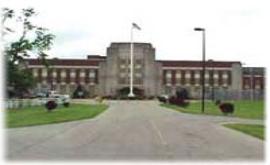
Federal Bureau of Prisons
Federal Medical Center (as it’s now called)
Lexington, Kentucky

***

Tadd Dameron

**********

lagniappe

Sarah Vaughan, live, “If You Could See Me Now” (Tadd Dameron)

*****

radio gems: jazz

Bird Flight
WKCR-FM
New York (Columbia University)
Monday-Friday, 8:20-9:30 a.m. (EST)

I know of nothing, in radio or anywhere else, like Phil Schaap’s daily meditations on the music of Charlie Parker, which he’s been offering now, five days a week, for over twenty-five years. At its best, his show enthralls. At its worst, well, sometimes you wish Phil would play a little more music and talk a little less. But even when he goes on longer than perhaps he should, your tendency, as with a charmingly eccentric uncle, is to excuse his excesses.

Thursday, 9/23/10

Happy Birthday, Trane!

John Coltrane, September 23, 1926-July 17, 1967

“Naima,” live (with McCoy Tyner, piano; Jimmy Garrison, bass, Elvin Jones, drums), Europe, 1965

#1 (7/27/1965, Antibes, France)

***

#2 (4/1/1965, Comblain-La-Tour, Belgium)

**********

lagniappe

[Coltrane’s sound is] [b]ig, resonant, and it begins at a very high level. He comes to the microphone and delivers a big block of sound rather than doing the normal sort of bell-shape that the best soloists tend to do, where they start out small, then they get big, then they get small and elegant.

Physical descriptions of his sound, especially from my own mouth, always sound meager, because the whole thing about his sound—and the reason I keep using that word in the book—has to do with the fact that if you follow his career, and if you look at what he was doing at the end of his life, you hear these tracks that seemed more and more similar from one to the next, so in the end the message of his work was not so much about composition or structure any more, it was about sound—both the sound coming out of his individual instrument, and the sound coming out of his band.

Ben Ratliff

*****

thinking about time

The distance between today and 1965—the year of these performances (yesterday’s, too)—is like that between 1965 and 1920.

*****

radio

Today it’s all Trane all the time on WKCR-FM.

Wednesday, 9/22/10

Some performances are so full of energy and ideas and feeling—so full of life—you wish they’d never end.

Sonny Rollins (with Alan Dawson, drums; Niels-Henning Orsted Pedersen, bass); “Oleo” (excerpt), live, Denmark (Copenhagen), 1965

Often, as here, the heart of a jazz performance can be found in the interplay between horn and drums. Listen, for instance, to the way these two play off one another at :44-58.

**********

lagniappe

More from the same performance (featuring drummer Alan Dawson).

***

***

Where did Tony Williams come from?

He began taking lessons from Alan Dawson, in Boston, when he was eleven years old.

At seventeen, he was playing with Miles Davis.

*****

Want more of Sonny Rollins? Here. Here.