Some tracks, the first time you hear them (as I did this a couple weeks ago), you wonder how you ever got along without them.
Joe McPhee (tenor saxophone) with Otis Greene (alto saxophone), Mike Kull (electric piano), Herbie Lehman (organ), Dave Jones (guitar), Tyrone Crabb (bass), Bruce Thompson & Ernest Bostic (percussion), “Shakey Jake” (Nation Time, 1970; reissued 2009)
**********
lagniappe
random thoughts
Remember when there was a whole season—not just a storm or two—called “winter”?
A lot of trumpet players try to bowl you over. This guy, whose last album appeared on many year-end top-10 lists (When the Heart Emerges Glistening, Blue Note), does something different. He gets under your skin.
Ambrose Akinmusire (ah-kin-MOO-sir-ee) Quintet (AA, trumpet; Walter Smith III, tenor saxophone; Fabian Almazan, piano; Harish Ragavan, bass; Justin Brown, drums); live, New York (Jazz Standard), 2011
Part 1
***
Part 2
***
Part 3
***
Part 4
**********
lagniappe
musical thoughts
Everything you don’t love, make sure that’s not in your playing.
Wislawa Szymborska (vees-WAH-vah shim-BOR-ska), poet
July 2, 1923-February 1, 2012
The world—whatever we might think when terrified by its vastness and our own impotence, or embittered by its indifference to individual suffering, of people, animals, and perhaps even plants, for why are we so sure that plants feel no pain; whatever we might think of its expanses pierced by the rays of stars surrounded by planets we’ve just begun to discover, planets already dead? still dead? we just don’t know; whatever we might think of this measureless theater to which we’ve got reserved tickets, but tickets whose lifespan is laughably short, bounded as it is by two arbitrary dates; whatever else we might think of this world—it is astonishing.
But “astonishing” is an epithet concealing a logical trap. We’re astonished, after all, by things that deviate from some well-known and universally acknowledged norm, from an obviousness we’ve grown accustomed to. Now the point is, there is no such obvious world. Our astonishment exists per se and isn’t based on comparison with something else.
Granted, in daily speech, where we don’t stop to consider every word, we all use phrases like “the ordinary world,” “ordinary life,” “the ordinary course of events” . . . But in the language of poetry, where every word is weighed, nothing is usual or normal. Not a single stone and not a single cloud above it. Not a single day and not a single night after it. And above all, not a single existence, not anyone’s existence in this world.
—Wislawa Szymborska, Nobel Lecture (excerpt, translated from Polish by Stanislaw Baranczak and Clare Cavanagh), 12/7/96
Until 1996, when she was awarded the Nobel Prize in Literature, I’d never heard of her. Since then I’ve read virtually everything of hers that’s appeared in translation. How much does she mean to me? Well, she’s one of two charter members (the other’s saxophonist Von Freeman) of the ultra-exclusive MCOTD Hall of Fame.
Mostly Other People Do the Killing (Moppa Elliott, bass; Peter Evans, trumpet; Jon Irabagon, alto saxophone; Kevin Shea, drums), live, London (The Vortex), 7/14/11
**********
lagniappe
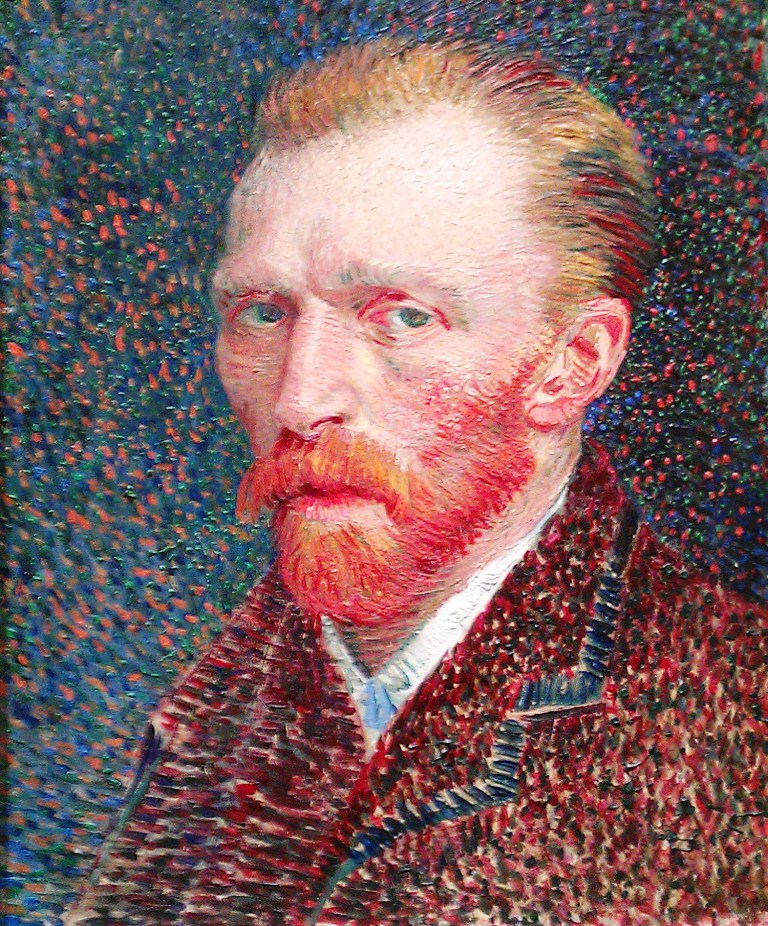
art beat: yesterday at the Art Institute of Chicago (after a hearing at the nearby federal court building)
Vincent van Gogh
The Bedroom (1889)
*******
Self-Portrait (1887)
With van Gogh, the life continually threatens to overtake the art; the challenge is to look with fresh eyes.
Henry “Red” Allen (trumpet), with Coleman Hawkins (tenor saxophone), Vic Dickenson (trombone), Pee Wee Russell (clarinet), Rex Stewart (cornet), Danny Barker (guitar), Nat Pierce (piano), Milt Hinton (bass), Papa Jo Jones (drums), “Wild Man Blues,” live (TV Broadcast, The Sound of Jazz), 1957
All-star jam sessions often fizzle. Not this one. What makes this so good? A lot of it, I think, has to do with saxophonist Coleman Hawkins, who takes the first solo after trumpeter Red Allen states the melody. Right from the beginning (1:27-) it’s apparent that Hawkins isn’t just going through the motions. He plays, throughout, with great concentration and conviction, not wasting a moment. This inspires everyone; you can see it in their faces (1:44-47, 1:55-58, 2:03-08, 2:39-44). He gives the others a lot to live up to—and they do.
Yesterday we left off in 1977; let’s fast-forward 33 years.
Von Freeman (tenor saxophone), with Mike Allemana (guitar), Matt Ferguson (bass), Michael Raynor (drums); “Lester Leaps In,” live, Chicago (New Apartment Lounge, 75th St.), 2010
Davis Sisters, “On the Right Road,” live (TV Broadcast), c. 1964
**********
lagniappe
my back pages
Thirty-five years ago tonight—how could I possibly begin a sentence “thirty-five years ago tonight” and be referring to something that happened when I was, at least nominally, an adult? Well, this actually happened that night so I guess it must be possible. On that cold, clear January night, at a small church thirty miles north of Chicago, Suzanne and I were married. Yes, there was music. Tenor saxophonist Von Freemanand pianist John Young (now gone) played before and after the ceremony. The processional was Duke Ellington’s“In a Sentimental Mood,” played by Von alone. What did all this sound like? Thanks to my friend (and ace recording engineer) James C. Moore, these sounds can be heard, thirty-five years later, here (M4A—give it a few seconds).
What do you get when you combine a pianist who plays with the percussive intensity of a drummer and a drummer who plays with the melodic buoyancy of a pianist?
Cecil Taylor (piano), Max Roach (drums), live
New York (Columbia University), 2000
**********
lagniappe
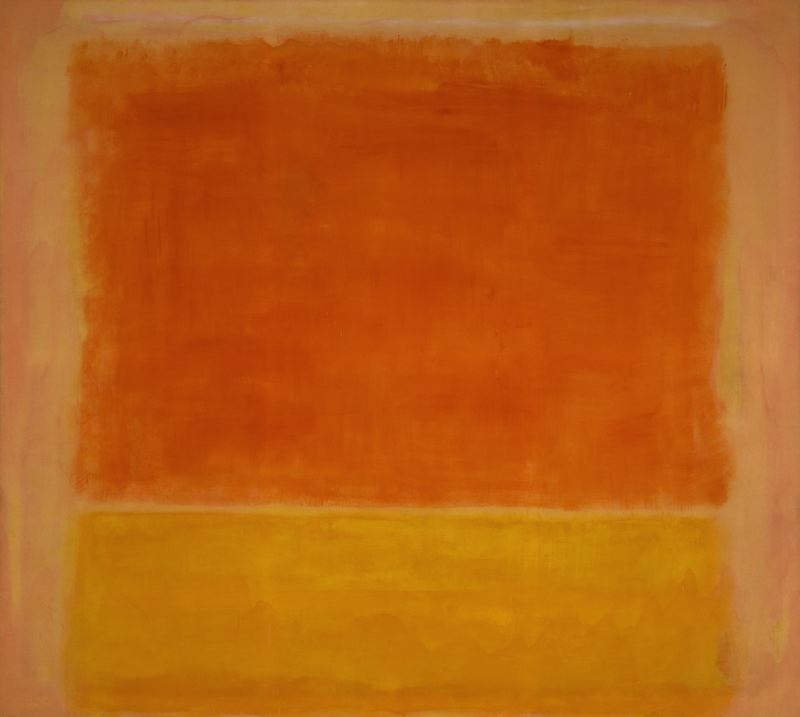
art beat: more from Thursday’s stop at the Art Institute of Chicago (after a hearing at the nearby federal court building)
Roy Hargrove Quintet,* “Strasbourg/Saint Denis,” live, Paris, 2008
What better way to begin the new year than with live music, which is what I did last Sunday (with my wife Suzanne and older son Alex), catching these guys at Chicago’s Jazz Showcase, where they played an ebullient set for the overflow crowd.
**********
lagniappe
reading table
In January baseball lives in the imagination.
Now he was stuck at this ramshackle ballpark between a junkyard and an adult bookstore on the interstate outside Peoria.
***
“The shortstop is a source of stillness at the center of the defense. He projects this stillness and his teammates respond.”
***
When your moment came, you had to be ready, because if you fucked up, everyone would know whose fault it was. What other sport not only kept a stat as cruel as the error but posted it on the scoreboard for everyone to see?
Just a week after hearing vibist Jason Adasiewicz’s Sun Rooms trio there, my older son Alex (home for the holidays) and I went back to the Hideout, a small club on Chicago’s north side, to hear these guys.
DKV Trio (Hamid Drake, drums; Kent Kessler, bass; Ken Vandermark, reeds), live, Chicago (Hideout), 12/28/11