What a treat to hear a guitar-led group that sounds so fresh.
Nels Cline (guitar) and Friends play the music of Andrew Hill
Live, New York (Jazz Standard), 2007
**********
lagniappe
musical thoughts
The more one studies the harmony of music, and then studies human nature, how people agree and how they disagree, how there is attraction and repulsion, the more one will see that it is all music.
In a country that paid proper respect to its cultural heritage, this would be played for children in school, as part of their cultural education. Instead kids encounter it, if at all, on TV—the soundtrack to a Viagra commercial.
***
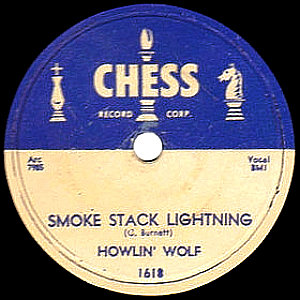
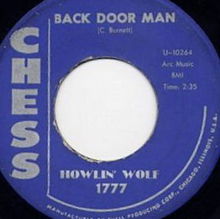
“Back Door Man” (rec. 1960, Chicago)
***
“Wang Dang Doodle” (rec. 1960, Chicago)
**********
lagniappe
musical thoughts
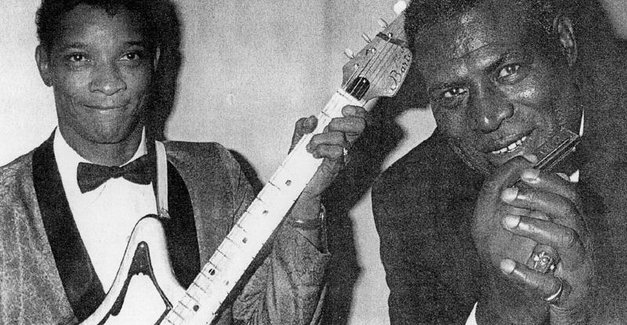
I started listening to people like Hubert Sumlin and trying to deal with a less muscular way of reaching people . . .
Rankin, Loda, Cissna Park, Schwer, Gilmer, Watseka: the world is filled with places we’ve never even heard of (many less than 150 miles away), as I was reminded yesterday driving home from Danville, Illinois, where I’d gone to see clients at the prison.
Regina Carter (violin), Yacouba Sissoko (kora), Will Holshouser (accordion)
Live, radio broadcast (KPLU-FM), 2011
Kora, violin, accordion—even the names of these instruments sound good together. You have, in succession, words of two, three, and four syllables. Consonants repeat (k/c, r, n), as do vowels (o, a). The last word (“accordion”) echoes both syllables of the first (“kora”), reversing them, as well as the end of the second (“violin”). What does any of this mean? Nothing—it’s simply, for me, a small source of additional pleasure.
Paul Motian, drummer, composer, collaborator, bandleader March 25, 1931-November 22, 2011
Paul Motian Trio (PM, drums; Joe Lovano, saxophone; Bill Frisell, guitar), “It Should’ve Happened a Long Time Ago” (P. Motian), live, New York (Village Vanguard), 2005
Stephen Paul Motian (he pronounced his surname, which was Armenian, like the word “motion”) was born in Philadelphia on March 25, 1931, and reared in Providence, R.I. In 1950 he entered the Navy. After briefly attending its music school in Washington, he sailed around the Mediterranean until 1953, when he was stationed in Brooklyn. He was discharged a year later.
He met Evans in 1955, and by the end of the decade he was working in a trio with him and the bassist Scott LaFaro. That group, in which the bass and drums interacted with the piano as equals, continues to serve as an important source of modern piano-trio jazz.
In the late 1950s and early 1960s Mr. Motian played with many other bandleaders, including Lee Konitz, Warne Marsh, Mose Allison, Tony Scott, Stan Getz, Johnny Griffin and, for a week, [Thelonious] Monk. After leaving his partnership with Evans, he worked steadily with the pianist Paul Bley, whom he often credited with opening him up to greater possibilities.
“All of a sudden there was no restrictions, not even any form,” he told the writer and drummer Chuck Braman in 1996. “It was completely free, almost chaotic.”
In an interview on Tuesday, Mr. Bley recalled: “We shared the same philosophy, musically. He knew that what he was doing in the past was not his answer. What he lived for was growth and change.”
Then, and even more with Mr. Jarrett’s quartet in the 1970s, Mr. Motian moved away from swing-based rhythm; he improvised freely, or played off melodic form. Eager to grow beyond percussion, he studied and composed on a piano he had bought from Mr. Jarrett, and in 1973 he made a record of his own compositions for ECM, “Conception Vessel,” with Mr. Jarrett and others. One of the last records he made with Mr. Jarrett’s quartet, “Byablue” (1977), consisted mostly of Motian originals.
But the old sense of swing never left, and it later became abundantly clear again, whether he was playing an original sketch built on uneven phrasing with gaps of silence or a root text of jazz like “Body and Soul.” Sometimes he would strip a beat to absolute basics, the sound of brushes on a dark-toned ride cymbal and the abrupt thump of his low-tuned kick drum. Generally, a listener could locate the form, even when Mr. Motian didn’t state it explicitly.
“With Paul, there was always that ground rhythm, that ancient jazz beat lurking in the background,” said the pianist Ethan Iverson, one of the younger bandleaders who played with and learned from him toward the end.
Mr. Motian’s final week at the Vanguard was with Mr. Osby and Mr. Kikuchi, in September. “He was an economist: every note and phrase and utterance counted,” Mr. Osby said on Tuesday. “There was nothing disposable.”
The Sensational Gospel Eagles, “Tell It To Jesus”
Live, South Carolina (Greenwood), 2011
Gospel groups come from somewhere; they’re rooted in a particular place. These guys, for instance, are from Greenwood, South Carolina, a town of about 22,000. The name of the high school football team? The Eagles.
Labels are often worse than useless. This guy, for instance, is often tagged as “cerebral.” But here’s something you can’t—I can’t, anyway—listen to without smiling.
Anthony Braxton, Composition No. 58
Taylor Ho Bynum Chicago Big Band,* live, 2009, Chicago
*****
Here’s another take—Braxton’s original recording (The Complete Arista Recordings of Anthony Braxton [Mosaic], rec. 1976).
To obtain the value
of a sound, a movement,
measure from zero.
***
A sound has no legs to stand on.
***
The world is teeming: anything can
happen.
—John Cage, “2 Pages, 122 Words on Music and Dance” (excerpts)
*Taylor Ho Bynum & Josh Berman (cor), Jaimie Branch (tpt), Jeb Bishop & Nick Broste (tb), Nicole Mitchell (fl), Caroline Davis, Keefe Jackson & Dave Rempis (saxes), Jeff Parker (g), Jason Adasiewicz (vib), Nate McBride (b), Tim Daisy & Tomas Fujiwara (d)