Shelby had been fooled about Florida, but that was okay. She wasn’t the first. She’d imagined a place that was warm and inviting and she’d gotten a place that was without seasons and sickeningly hot. She’d wanted palm trees and she’d gotten grizzly, low oaks. She’d wanted surfers instead of rednecks. She’d thought Florida would make her feel glamorous or something, and there was a region of Florida that might’ve done just that, but it wasn’t this part. It was okay, though. It was something different. It wasn’t the Midwest. It wasn’t a place where you could look around and plainly see, for miles, that nothing worthwhile was going on.
***
“Everybody calls this the real Florida . . . . I don’t understand an expression like that. Is part of the state imaginary?”
“I’m Going Home To Live With God” (Back Beat Records, 1973; produced by Willie Mitchell)
**********
lagniappe
*****
music—evidence of the existence of God?
[M]usic is and always has been the one thing that makes me a believer. You can say, ‘Oh, I’m an agnostic. I don’t believe in God.’ OK, fine, but then explain music to me.
Having trouble playing clips smoothly—without annoying little hiccups? One way to avoid this, as I’ve mentioned before, is to let a clip load completely before you play it (start the clip, then stop it, then start it again after the bar at the bottom has filled in all the way). Changing browsers may help, too. On my Mac, for instance, clips often play better on Safari than Firefox.
He’s [Tom Jones] got a new gospel album out on Lost Highway that is really good.
***
Absolutely love your latest clips. Was that Kermit Ruffins and Trombone Shorty on the Rebirth clip [don’t believe so]? If you haven’t already, please check out Praise & Blame by Tom Jones. I picked it up after reading a review by Jim Fusilli in the WSJ. It is very good. Thanks for what you do. I look forward to your email each day.
*****
art beat
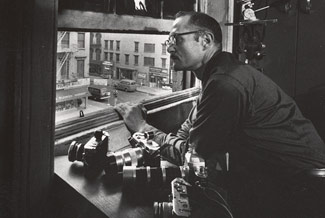
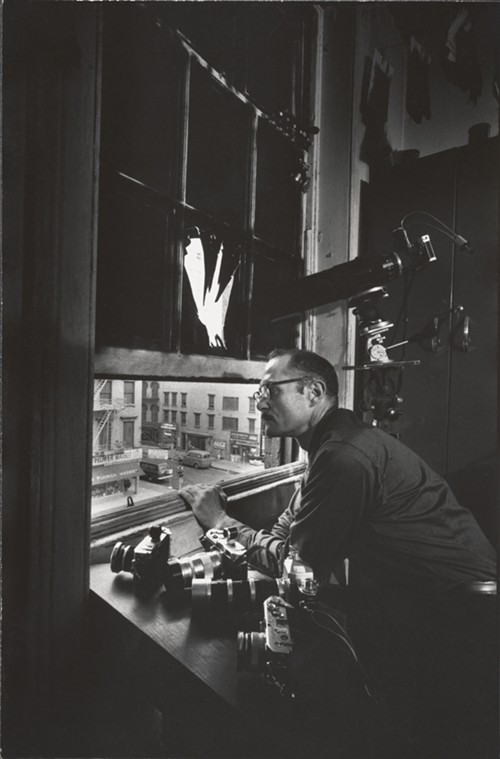
The other day I happened upon a wonderful photography exhibit at the Chicago Cultural Center (through September 19th), The Jazz Loft Project, W. Eugene Smith in NYC, 1957-1965.
From Smith’s loft (821 Sixth Ave. [near W. 28th St.])
***
Thelonious Monk
***
Zoot Sims
*****
musical thoughts
It is hard to believe of the world that there should be/music in it . . .
—William Bronk (from “The Nature of Musical Form”)
The Trumpeteers, live (TV broadcast, with “I John Saw the Number”), 1960s
**********
lagniappe
all roads lead (on Friday, anyway) to Bay City, Michigan
Friday morning: I post ? and the Mysterians’ “96 Tears,” which was recorded in 1966 in, yep, Bay City, a town of about 35,000 on Lake Huron that also gave the world Madonna (she was born there) and the Bay City Rollers their name (the first dart landed on Arkansas but “Arkansas Rollers” lacked pizazz).
Friday afternoon: I stop by a book fair in Chicago, where I buy one of the most beautiful books I’ve ever seen—a rare one by a favorite poet (William Bronk, Careless Love And Its Apostrophes, Red Ozier Press, 1985, limited edition [175 copies])—from a dealer (Jett W. Whitehead) based in, where else, Bay City.