Thursday, November 14th
Georg Friedrich Haas (1953-), String Quartet No. 5; Crash Ensemble, live, Ireland (Dublin), 2013
**********
lagniappe
musical thoughts
All theater is musical and all music theatrical.
Georg Friedrich Haas (1953-), String Quartet No. 5; Crash Ensemble, live, Ireland (Dublin), 2013
**********
lagniappe
musical thoughts
All theater is musical and all music theatrical.
People talk about getting enough of this or that in their daily diet. But what about beauty? There’s an epidemic, unreported by TV, radio, newspapers, of beauty malnutrition.
Lou Harrison (1917-2003), Threnody for Carlos Chavez (1978); William Winant Percussion Group with David Abel (viola), live, Berkeley, Calif., 2010
**********
lagniappe
art beat: Friday at the Art Institute of Chicago (while waiting for the jury to return a verdict in a trial involving an alleged conspiracy to steal millions of dollars of diamonds)
Paul Cezanne, The Bay of Marseilles, Seen From L’Estaque, c. 1885

alone
His sound world is so clear, so lyrical, it can be hard to leave.
Wolfgang Amadeus Mozart (1756-1791), Fantasia in D minor, K. 397
Yvonne Loriod (1924-2010), live, 1969
**********
lagniappe
art beat
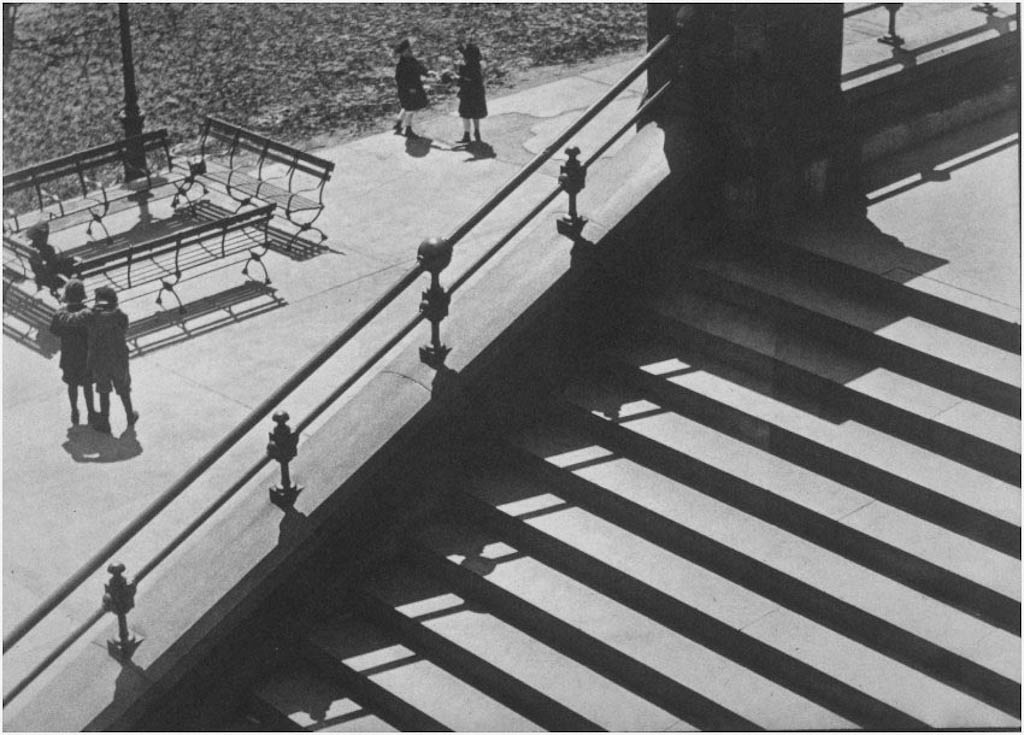
Paul Strand (1890-1976)
Feel like floating?
Morton Feldman (1926-1987), For Philip Guston (1984)
S.E.M. Ensemble, 2000
alone
Sometimes the performer makes all the difference. In the wrong hands this can seem a mess. In the right ones it sparkles.
Karlheinz Stockhausen (1928-2007), Klavierstücke XI (1956)
Prodromos Symeonidis, live, 2006
alone
Johann Sebastian Bach (1685-1750), Violin Sonata No. 3 in C major, 3rd movement (Largo); Christian Tetzlaff (1966-), violin, Berlin, 6/22/13
**********
lagniappe
art beat
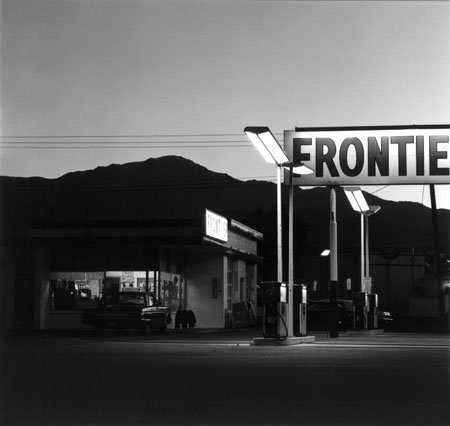
Robert Adams (1937-), Pikes Peak
mesmerizing
Benjamin Britten (1913-1976), Lachrymae (1950; arranged for viola and string orchestra, 1976); A Far Cry with Roger Tapping (viola), live, Cambridge, Mass., 2008
#1
#2
This I could listen to forever.
Morton Feldman (1926-1987), Piano and String Quartet (1985)
Aki Takahashi (piano) and Kronos Quartet
**********
lagniappe
musical thoughts
Earlier in my life there seemed to be unlimited possibilities, but my mind was closed. Now, years later and with an open mind, possibilities no longer interest me. I seem content to be continually rearranging the same furniture in the same room. My concern at times is nothing more than establishing a series of practical conditions that will enable me to work. For years I said if I could only find a comfortable chair I would rival Mozart.
***
If a man teaches composition in a university, how can he not be a composer? He has worked hard, learned his craft. Ergo, he is a composer. A professional. Like a doctor. But there is that doctor who opens you up, does exactly the right thing, closes you up—and you die. He failed to take the chance that might have saved you. Art is a crucial, dangerous operation we perform on ourselves. Unless we take a chance, we die in art.
alone
György Kurtág (1926-), Perpetuum Mobile (from Játékok [Games])
**********
lagniappe
reading table
‘There is no God and Mary is His Mother.’
—Robert Lowell (1917-1977), “For George Santayana” (excerpt)
Here, following Saturday’s post, is another guy who recently won a MacArthur “genius” grant (“a no-strings-attached stipend of $625,000”).
Jeremy Denk (1970-), pianist, writer
Ludwig van Beethoven (1770-1827), Piano Sonata No. 32 in C minor, live, New York, 2012
*****
Two summers ago, I was playing concerts in Santa Fe, some five hours’ drive from where I grew up. Travel is more difficult for my parents than it used to be, but they made the trek to hear me. They brought along a strange gift—a black notebook with my name on the front, written in my best prepubescent cursive. It had been excavated from a closet and smelled faintly of mothballs. I’d forgotten it existed but recognized it instantly: my piano-lesson journal. Starting in 1981, when I was eleven, it sat on my music rack, so that I could consult, or pretend to consult, my teacher’s comments. Week after week, he wrote down what I’d played and how it went, and outlined the next week’s goals.
I paged through nostalgically, reflecting on how far I’d come. But a few days later I was onstage, performing, and a voice made itself heard in my head: “Better not play faster than you can think.” It was the notebook talking. I was indeed playing faster than I could think—sometimes your fingers have plans of their own. The notebook voice went on. “Keep back straight,” it said. “Beware of concentration lapses.” Through several subsequent concerts, it lodged complaints and probed weaknesses, delivering opinions worse than any reviewer’s. It took me weeks to silence the voice and play normally again.
In popular culture, music lessons are often linked with psychological torment. People apparently love stories about performing-arts teachers who drive students mad, breaking their spirits with pitiless exactitude. There’s David Helfgott in “Shine,” Isabelle Huppert’s sadomasochistic turn in “The Piano Teacher,” the sneering Juilliard judges for whom Julia Stiles auditions to redeem her mother’s death in “Save the Last Dance.” (I can testify that the behavior of the judges at my real-life Juilliard audition was even meaner and funnier.) I’ve often rolled my eyes at the music-lesson clichés of movies: the mind games and power plays, the teacher with the quaint European accent who says, “You will never make it, you are not a real musician,” in order to get you to work even harder. But as the notebook recalled memories of lessons I’d had—both as a child and later, once the piano became my life—I wondered if my story was all that different.
—”Every Good Boy Does Fine: A Life in Piano Lessons,” New Yorker, 4/8/13
 music clip of the day