After spending a week and a half in federal court, trying a drug-conspiracy case involving the unfortunately named Imperial Insane Vice Lords, I’m ready for a world without words.
Morton Feldman (1926-1987), For Stefan Wolpe (1986)
Helsinki Chamber Choir, live, Helsinki, 2014
**********
lagniappe
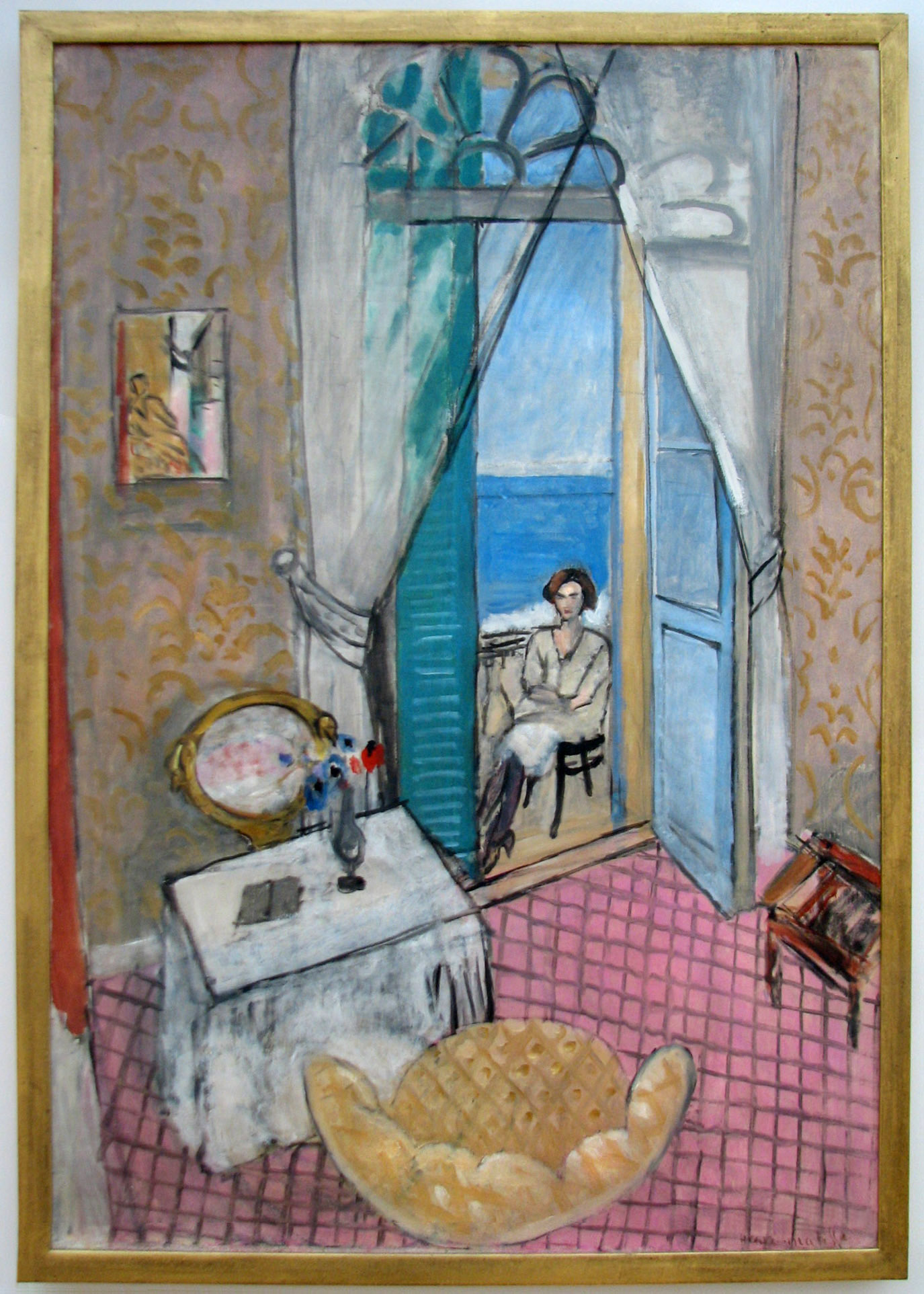
art beat: more from the other day at the Art Institute of Chicago
Ludwig van Beethoven (1770-1827), String Quartet No. 14 (Op. 131, C-sharp minor; 1826); Takács Quartet, live
**********
lagniappe
musical thoughts
Opus 131 . . . is routinely described as Beethoven’s greatest achievement, even as the greatest work ever written. Stravinsky called it ‘perfect, inevitable, inalterable.’ It is a cosmic stream of consciousness in seven sharply contrasted movements, its free-associating structure giving the impression, in the best performances, of a collective improvisation. At the same time, it is underpinned by a developmental logic that surpasses in obsessiveness anything that came before. The first four notes of the otherworldly fugue with which the piece begins undergo continual permutations, some obvious and some subtle to the point of being conspiratorial. Whereas the Fifth Symphony hammers at its four-note motto in ways that any child can perceive, Opus 131 requires a lifetime of contemplation. (Schubert asked to hear it a few days before he died.)
No matter what she’s playing, she seems never to touch the ground.
Maurice Ravel (1875-1937), Piano Concerto in G (1929-31); RAI National Symphony Orchestra (Claudio Abbado, cond.) with Martha Argerich (piano), live, Rome, 1969
Morton Feldman (1926-1987), Palais de Mari (1986); Blair McMillen (piano) & Ryan Olivier (video processing), live, Philadelphia, 2014
**********
lagniappe
musical thoughts
My obsession with surface is the subject of my music. In that sense, my compositions are really not ‘compositions’ at all. One might call them time canvases in which I more or less prime the canvas with an overall hue of the music.
—Morton Feldman, “Between Categories” (Give My Regards to Eighth Street)



 music clip of the day