Wednesday, December 11th
sounds of Chicago
Son Seals, “On My Knees,” live (TV show), 1980s
Musical notation has its place. Sometimes, though, it’s useless. How could marks on a piece of paper ever capture his attack?
sounds of Chicago
Son Seals, “On My Knees,” live (TV show), 1980s
Musical notation has its place. Sometimes, though, it’s useless. How could marks on a piece of paper ever capture his attack?
sounds of Chicago
The Stars of Heaven, live, Chicago, 2012
**********
lagniappe
art beat
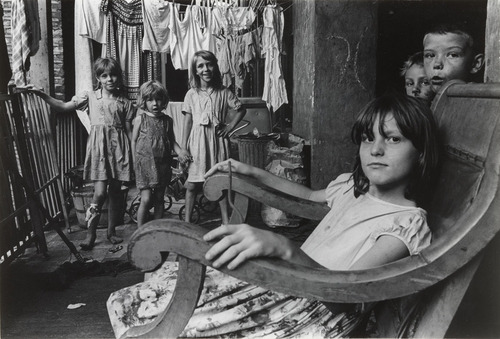
John H. White, Chicago (south side), 1973

sounds of Chicago
Robbie Fulks, “I’ll Trade You Money For Wine,” live, Norway (Oslo), 2013
**********
lagniappe
art beat
Danny Lyon (1942-), Uptown, Chicago (1965)
passings
Kalaparusha Maurice McIntyre, saxophonist, March 26, 1936-November 9, 2013
From the New York Times obituary (Nate Chinen, 11/14/13):
Kalaparusha Maurice McIntyre, a saxophonist who was a founding member of the Association for the Advancement of Creative Musicians, a pioneering Chicago avant-garde coalition, died on Saturday in the Bronx. He was 77.
***
Present at the association’s first meeting in 1965, Mr. McIntyre later articulated its objectives in an in-house newsletter, The New Regime. The priority, he wrote, was creative autonomy. But he also touched on sociopolitical issues: “We are trying to balance an unbalanced situation that is prevalent in this society.”
Maurice Benford McIntyre was born on March 24, 1936, in Clarksville, Ark., and raised in Chicago. His father was a pharmacist, his mother an English teacher. He studied music at Roosevelt University in Chicago until a drug habit derailed him, leading to a three-year stretch in prison, in Lexington, Ky., where he later said he got most of his musical education.
After returning to Chicago, he met the pianist Muhal Richard Abrams and the saxophonist Roscoe Mitchell, who were developing an aesthetic revolving around strictly original music. Mr. McIntyre became a fixture in Mr. Abrams’s Experimental Band and appeared on Mr. Mitchell’s 1966 album, “Sound,” the first release under the Association for the Advancement of Creative Musicians banner. Mr. McIntyre released his first album, “Humility in the Light of the Creator,” in 1969, the year that he adopted the name Kalaparusha Ahrah Difda, a confluence of terms from African, Indian and astrological sources. (He later modified it to Kalaparusha Maurice McIntyre.) Like many of his fellow association musicians, he began performing in Europe.
He moved to New York in 1974 and spent a productive stretch at the Creative Music Studio in Woodstock. But his career foundered in the ’80s and ’90s, and he took to busking — a practice he continued even after making several comeback albums, notably “Morning Song,” in 2004.
*****
Talking and playing, New York, 2010
*****
Live (with Karl Berger, vibes, piano; Tom Schmidt, bass; Jack DeJohnette, drums; Jumma Santos, drums, percussion), “Ismac,” Woodstock, N.Y., 1975
*****
Recording (with J.B. Hutto, vocals, guitar; Sunnyland Slim, organ, et al.), “Send Her Home to Me,” 1968
*****
Recording (with Malachi Favors, bass; M’Chaka Uba, bass; Thurman Barker, drums; Ajaramu [A. J. Shelton], drums), “Humility in the Light of the Creator” (Alternate), 1969
**********
lagniappe
musical thoughts
A human life. A series of notes. Which is more permanent?
People talk about getting enough of this or that in their daily diet. But what about beauty? There’s an epidemic, unreported by TV, radio, newspapers, of beauty malnutrition.
Lou Harrison (1917-2003), Threnody for Carlos Chavez (1978); William Winant Percussion Group with David Abel (viola), live, Berkeley, Calif., 2010
**********
lagniappe
art beat: Friday at the Art Institute of Chicago (while waiting for the jury to return a verdict in a trial involving an alleged conspiracy to steal millions of dollars of diamonds)
Paul Cezanne, The Bay of Marseilles, Seen From L’Estaque, c. 1885

only rock ’n’ roll
MC5, “Kick Out The Jams,” “Ramblin’ Rose,” “Motor City’s Burning,” “Tonight,” “Black To Comm #2,” live (TV studio), Germany (Bremen), 1972
**********
lagniappe
art beat
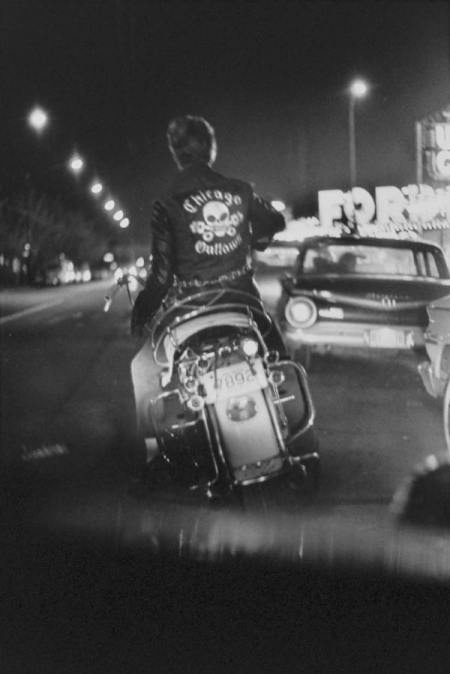
Danny Lyon (1942-), Chicago, 1960s
only rock ’n’ roll
Richard Hell and the Voidoids (with Robert Quine [1942-2004], guitar, et al.), “Blank Generation,” live, New York (CBGB’s), Blank Generation, 1980
**********
lagniappe
art beat
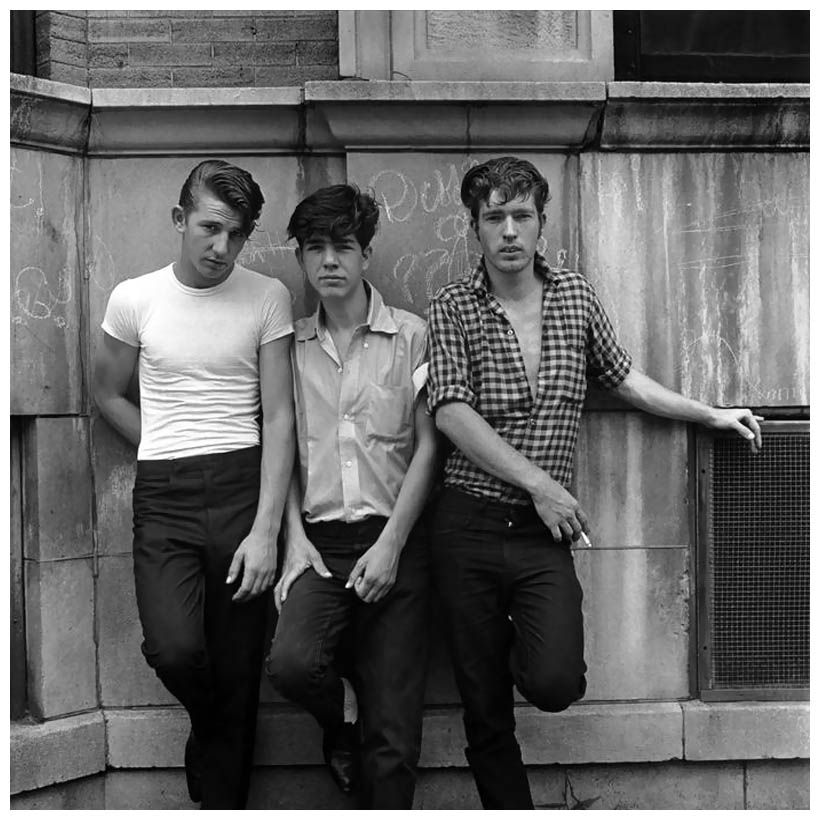
Danny Lyon (1942-), Chicago, 1965
sounds of Chicago
They sounded so good last week—let’s hear some more.
The Staple Singers, “Are You Sure,” live, 1971
**********
lagniappe
art beat
William Eggleston (1939-)

sounds of Chicago
King Louie, “My Niggaz” (2012-13)
**********
lagniappe
found words
From this week’s Chicago Reader music section:
. . . spastic, fuzzed-out bubblegum punk.
***
Local seapunk originator . . .
***
. . . like folk-shouter Odetta going through a goth/drone phase.
 music clip of the day