Monday, February 27th
basement jukebox
J.B. Lenoir (vocals, guitar; 1929-1967), “Mama Talk to Your Daughter,” 1954
basement jukebox
J.B. Lenoir (vocals, guitar; 1929-1967), “Mama Talk to Your Daughter,” 1954
timeless
Sleepy John Estes (1899-1977), “Diving Duck Blues” (with James “Yank” Rachell, mandolin; Jab Jones, piano), recorded September 24, 1929 (Memphis)
**********
lagniappe
art beat: other day, Whitney Museum of American Art (Dreamlands: Immersive Cinema and Art, 1905-2016, through February 5th)
Edwin S. Porter, Coney Island at Night (1905)
Merry Christmas
Blind Lemon Jefferson, “Christmas Eve Blues,” 1928
*****
Victoria Spivey (with Lonnie Johnson, guitar), “Christmas Morning Blues,” 1928
*****
Bessie Smith (with Joe Smith, cornet; Charlie Green, trombone; Fletcher Henderson, piano), “At the Christmas Ball,” 1925
*****
Leroy Carr, “Christmas In Jail—Ain’t That A Pain,” 1929
*****
Johnny Moore’s Three Blazers (feat. Charles Brown, vocals, keyboards), “Merry Christmas, Baby,” 1947
*****
Lowell Fulson, “Lonesome Christmas (I & II),” 1950
*****
Sonny Boy Williamson II, “Sonny Boy’s Christmas Blues,” 1951
*****
John Lee Hooker, “Blues For Christmas,” 1959
**********
lagniappe
art beat
Helen Levitt (MCOTD Hall of Fame), New York, early 1940s
Chicago blues
day four
Magic Sam (AKA Samuel Maghett, 1937-1969)
“All Your Love,” “Lookin’ Good,” live (TV broadcast), Germany, 1969
***
“All Your Love,” 1957
***
“Love Me with a Feeling,” 1957
***
“Everything Gonna Be Alright,” 1958
***
“21 Days In Jail,” 1958
Chicago blues
day three
Otis Rush (1935-; vocal, guitar) with Fred Below (1926-1988; drums), et al., “I Can’t Quit You Baby,” live, East Berlin, 1966
***
Here’s the original 1956 recording.
**********
lagniappe
reading table
On the first page of the course syllabus [for the class, taught at Columbia, on “The American Radical Tradition”], I always included the words of Max Weber, a rebuke to those who believe that critics of society should set their sights only on “practical” measures: “What is possible would never have been achieved if, in this world, people had not repeatedly reached for the impossible.”
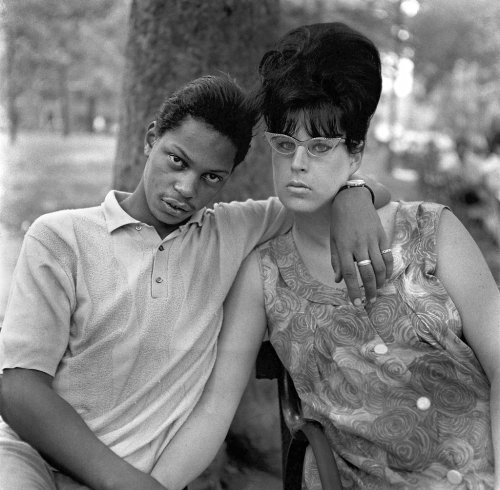
—Eric Foner, “American Radicals and the Change We Could Believe In,” The Nation, January 2-9, 2017 issue
Chicago blues
day two
Junior Wells (1934-1998; vocal, harmonica), Buddy Guy (1936-; guitar), et al., “Cryin’ Shame” (AKA “Country Girl”), live, Chicago, 1970
*********
lagniappe
reading table
winter wind—
he can’t find his roost
the evening crow—Kobayashi Issa (1763-1827), translated from Japanese by David G. Lanoue
more
R.L. Burnside (and family), live, Independence, Miss., 1978
“When My First Wife Left Me”
***
“Boogie Instrumental”
sounds of Independence*
R.L. Burnside (1926-2005), “Poor Boy a Long Way from Home,” live, 1978
*Mississippi.