Saturday, 8/13/11
sounds from Tokyo
(an occasional series)
Live from Tokyo (2010)
Vodpod videos no longer available.sounds from Tokyo
(an occasional series)
Live from Tokyo (2010)
Vodpod videos no longer available.sounds of India
(an occasional series)
All knotted up?
You’ve come to the right place.
Nikhil Banerjee (1931-1986), sitar
Live, Raag Malkauns (excerpt)
The best way to listen to this?
Here’s what I suggest: somewhere out of the way, headphones, eyes closed.
At the end you’ll be a different person than you were at the beginning.
(That’s a good thing, right?)
*****
More? Here. And here. And here.
**********
lagniappe
reading table
The house was quiet and the world was calm.
The reader became the book; and summer nightWas like the conscious being of the book.
The house was quiet and the world was calm.The words were spoken as if there was no book,
Except that the reader leaned above the page,Wanted to lean, wanted much to be
The scholar to whom his book is true, to whomThe summer night is like a perfection of thought.
The house was quiet because it had to be.The quiet was part of the meaning, part of the mind:
The access of perfection to the page.And the world was calm. The truth in a calm world,
In which there is no other meaning, itselfIs calm, itself is summer and night, itself
Is the reader leaning late and reading there.—Wallace Stevens, “The House Was Quiet and the World Was Calm”
If all the music in the world were an ocean, what I’ve heard might fill a thimble.
Nikhil Banerjee, sitar, October 14, 1931-January 27, 1986
Raga Gara, live (TV broadcast)
Vodpod videos no longer available.*****
Raga Hemant, live, Amsterdam, 1970 (Raga Records 1994)
Vodpod videos no longer available.Sometimes you don’t know you have a thirst until you hear a musician
who quenches it.
Nikhil Banerjee (sitar), October 14, 1931-January 27, 1986
Raag Maluha Kaylan (excerpts), live (with Anindo Chatterjee, tabla)
Part 1
Vodpod videos no longer available.***
Part 2
Vodpod videos no longer available.***
Part 3
Vodpod videos no longer available.***
Part 4
Vodpod videos no longer available.Want more? Here.
**********
lagniappe
radio gems: Indian music
Raag Aur Tal
WKCR-FM
New York (Columbia University)
Sunday, 7:00-9:00 p.m. (EST)
Recordings, interviews, live studio performances—this program has it all.
A companion show, Morning Ragas, airs on Sunday morning
(6:00-8:00 a.m. [EST]).
Indian Music Festival, part 4
This instrument, in this man’s hands, makes some of the most haunting sounds I’ve ever heard.
Hariprasad Chaurasia, bansuri (bamboo flute), with Zakir Hussain, tabla, Raga Chandrakauns, live, India (Pune), 1992
*****
lagniappe
Want more Indian music?
part 1: Ali Akbar Khan, sarod
part 2: Nikhil Banerjee, sitar, with Zakir Hussain, tabla
part 3: Shivkumar Sharma, santoor, with Zakir Hussain, tabla
Indian Music Festival, part 3
Light, clear, open: I could listen to this all day.
Shivkumar Sharma, santoor, with Zakir Hussain, tabla
Raga Kausi Kanada, live
*****
Raga Kirwani, live
**********
lagniappe
Shivkumar Sharma is responsible for validating the santoor as a classical instrument . . . . and it is especially exciting to hear him with an accomplished tabla master, particularly his long-time collaborator Zakir Hussain.
—Peter Lavezzoli, The Dawn of Indian Music in the West (2006)
*****
More Indian music?
Every Sunday one of my favorite radio stations, WKCR-FM (broadcasting from Columbia University), offers four hours of Indian music (6-8 a.m., 7-9 p.m. [EST])—records, interviews, studio performances, etc.
Cheesiness knows no boundaries.
Omar Souleyman
#1
*****
#2
*****
#3
*****
#4
Want more? Here.
**********
lagniappe
Omar Souleyman is a Syrian musical legend. Since 1994, he and his musicians have emerged as a staple of folk-pop throughout Syria, but until now they have remained little known outside of the country. To date, they have issued more than five-hundred studio and live-recorded cassette albums which are easily spotted in the shops of any Syrian city.
Born in rural Northeastern Syria, he began his musical career in 1994 with a small group of local collaborators that remain with him today. The myriad musical traditions of the region are evident in their music. Here, classical Arabic mawal-style vocalization gives way to high-octane Syrian Dabke (the regional folkloric dance and party music), Iraqi Choubi and a host of Arabic, Kurdish and Turkish styles, among others. This amalgamation is truly the sound of Syria. The music often has an overdriven sound consisting of phase-shifted Arabic keyboard solos and frantic rhythms. At breakneck speeds, these shrill Syrian electronics play out like forbidden morse-code, but the moods swing from coarse and urgent to dirgy and contemplative in the rugged anthems that comprise Souleyman’s repertoire. Oud, reeds, baglama saz, accompanying vocals and percussion fill out the sound from track to track. Mahmoud Harbi is a long-time collaborator and the man responsible for much of the poetry sung by Souleyman. Together, they commonly perform the Ataba, a traditional form of folk poetry used in Dabke. On stage, Harbi chain smokes cigarettes while standing shoulder to shoulder with Souleyman, periodically leaning over to whisper the material into his ear. Acting as a conduit, Souleyman struts into the audience with urgency, vocalizing the prose in song before returning for the next verse. Souleyman’s first hit in Syria was “Jani” (1996) which gained cassette-kiosk infamy and brought him recognition throughout the country. Over the years, his popularity has risen steadily and the group tirelessly performs concerts throughout Syria and has accepted invitations to perform abroad in Saudi Arabia, Dubai and Lebanon.—Sublime Frequencies
*****
art beat
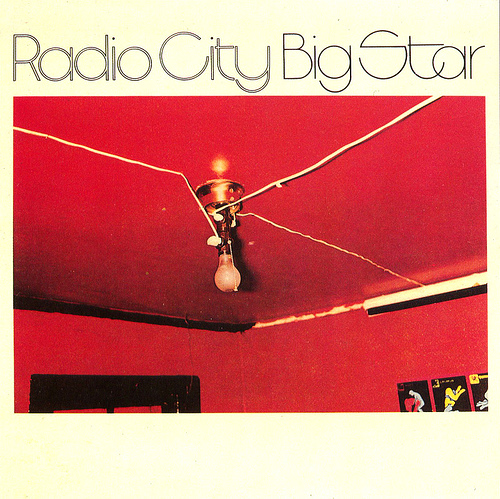
Album covers and art museums rarely mix. But in a display case at the Art Institute’s William Eggleston exhibit (which just opened), you’ll find this:
 music clip of the day