music clip of the day

jazz/blues/rock/classical/gospel/more

Category: art beat

Saturday, May 22, 2010

Here’s a piece that sounds different every time you hear it.

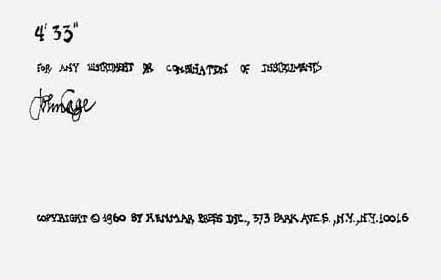
John Cage, 4’ 33” (1952)/David Tudor, piano

lagniappe

***

*****

I didn’t wish it [4′ 33″] to appear, even to me, as something easy to do or as a joke. I wanted to mean it utterly and be able to live with it.

***

Until I die there will be sounds. And they will continue following my death. One need not fear about the future of music.

—John Cage

*****

mail

Thank you so much for this.

—Robert Ambrose (in response to an email letting him know that he and Bent Frequency were featured here)

*****

art beat

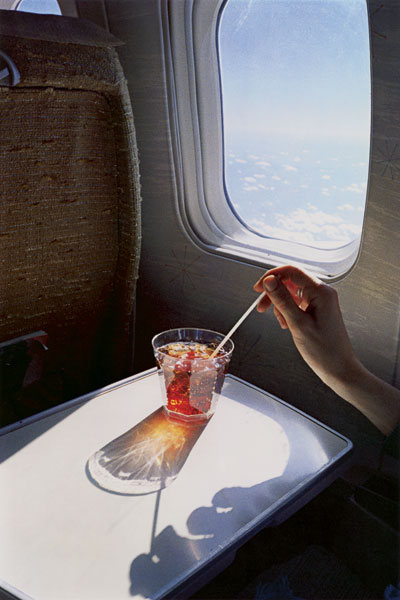
Tomorrow’s the last day to see the William Eggleston exhibit at Chicago’s Art Institute.

Want more? Here. Here.


Tuesday, 5/4/10

How often do you get to witness something of this historical magnitude—the first MCOTD clip directed by a MCOTD reader? (Before suspicious minds begin to wonder, let me assure you that this selection was untainted by payola—MCOTD cannot be bought [at least not cheaply].)

Man/Miracle, “Pushing and Shoving” (2010)

**********

lagniappe

art beat

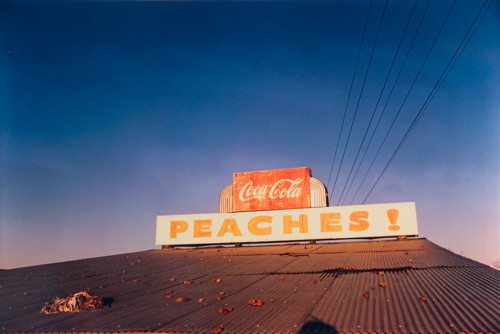
William Eggleston (Art Institute exhibit closes May 23rd)


Want more? Here.

Monday, May 3, 2010

this just in from my (almost-19-year-old) son Luke

K’naan, “Take A Minute”

lagniappe

more from Luke

Kanye West with Drake & Lupe Fiasco

Mike Posner with Big Sean

Akon with Wyclef Jean

Mr. J. Medeiros

Passion Pit

Asher Roth

Lupe Fiasco

*****

listening room

WKCR-FM (broadcasting from Columbia University) is hosting a Country Music Festival through tomorrow, playing “full programs of country radio’s heyday from the 1930s to the 1960s” —Grand Ole Opry, Sage Brush Round Up, Louisiana Hayride, Mother’s Best Flour, etc.

*****

increasingly difficult

Yesterday someone happened upon this site via the following search (which hit on the recent Duke Ellington post):

it is becoming increasingly difficult to

*****

art beat

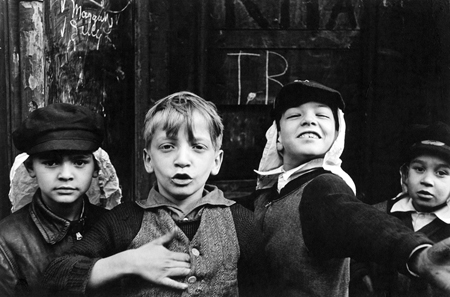
Helen Levitt (c. 1940)


Sunday, 4/4/10

When it comes to working an audience, no one outshines gospel singers.

Paul Porter, “Two Wings,” live, Cleveland, 2009

**********

lagniappe

Want more gospel?

Stevie Wonder

Al Green

Aretha Franklin

Otis Clay

*****

art beat

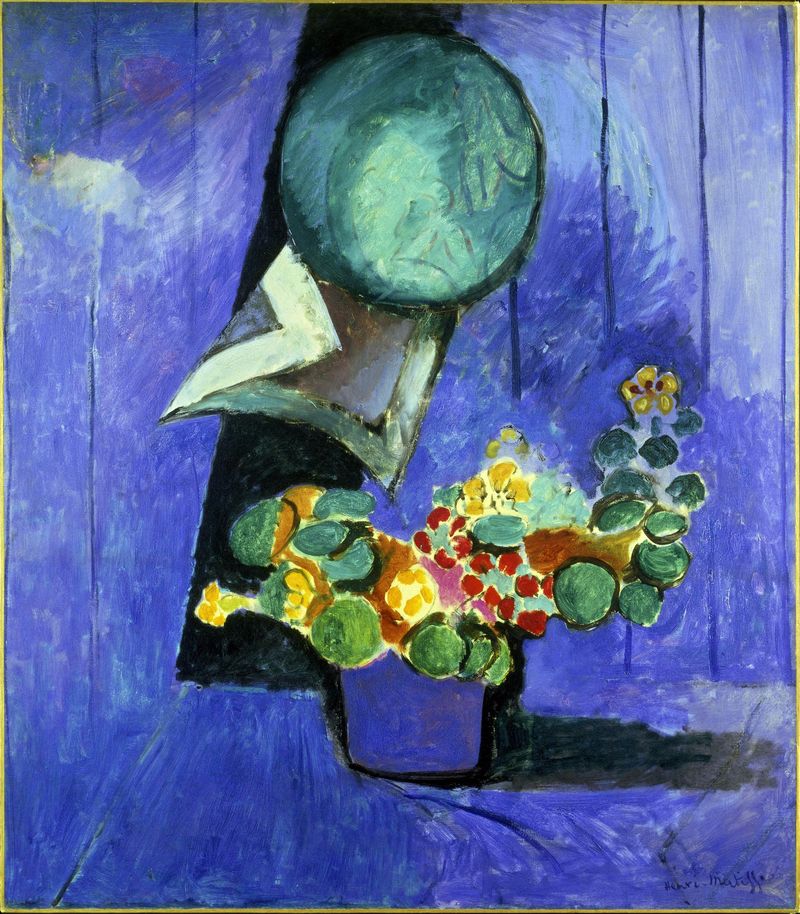
Henri Matisse, Flowers and Ceramic Plate (1913)

This is just one of dozens of reasons to see “Matisse: Radical Invention, 1913-1917,” which will be at the Art Institute through June 20th, then at the Museum of Modern Art beginning July 18th. At the risk of sounding like a PR flack, this exhibit (which I saw opening weekend and will return to soon) has critics scrambling for superlatives: “revelatory” (Artforum), “thrilling” (San Francisco Chronicle), “breathtaking” (Los Angeles Times)—well, you get the idea.

Friday, 4/2/10

[T]he greatest rock is birthed from equal parts intelligence and stupidity.—Chris Bohn (The Wire, 2/10)

Jandek

“Real Wild,” live, Glasgow, 2004

*****

Live, Houston, 2009

**********

lagniappe

Much speculation has been made over the true identity of the mysterious singer/songwriter Jandek, and his equally obscure record label, Corwood Industries. For over 25 years, the artist released album after album of twisted, ghostly, and utterly unique songs that crooned a tale of despair.

***

Jandek played his first ever concert on October 17th, 2004 in Glasgow, Scotland as part of the Instal Festival, accompanied by Richard Youngs on bass, and Alexander Neilson on drums. The name Jandek did not appear on any of the promotional material for the festival. Some members of the audience, in disbelief, recognized the man from his album covers and could not mistake the sound for any other. Word quickly spread that Jandek had indeed performed . . . —Raphi Gottesman

*****

art beat

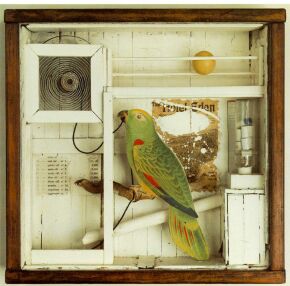
Joseph Cornell, Hotel Eden (c. 1945)


Monday, 3/22/10

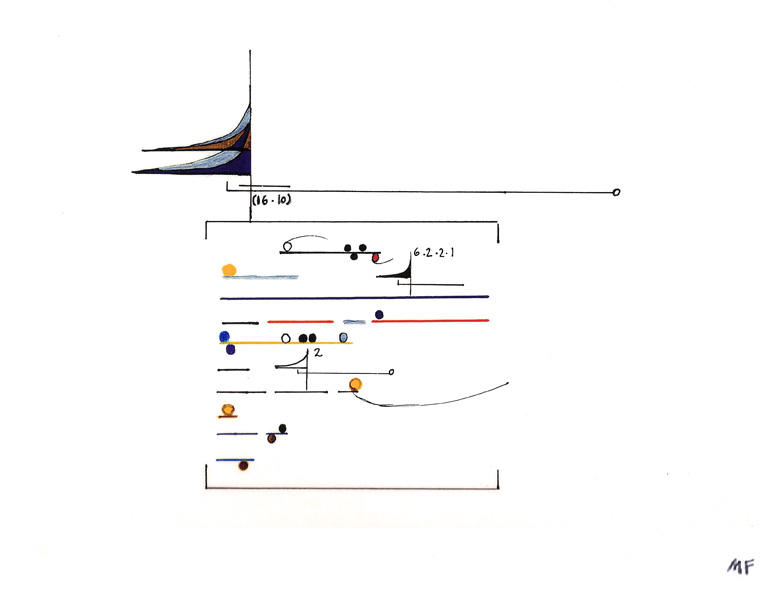
Trying to capture jazz in standard notation can be like trying to translate poetry into another language—what you wind up with is everything but the poetry. So composer/trumpeter Wadada Leo Smith (who, like many of his peers, eschews “jazz” as a label for his music) invented his own system of graphic notation.

***************

Wadada Leo Smith (trumpet) with his Golden Quartet (Vijay Iyer [piano], John Lindberg [bass], Ronald Shannon Jackson [drums]); Eclipse, 2005

Part 1

*****

Part 2

*****

Part 3

*****

Part 4

*****

Part 5

*****

Part 6

*****

Part 7

*****

Part 8

**********

lagniappe

art beat

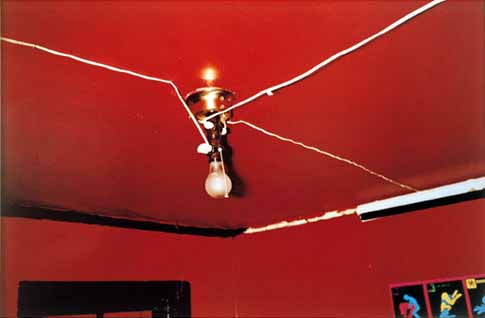
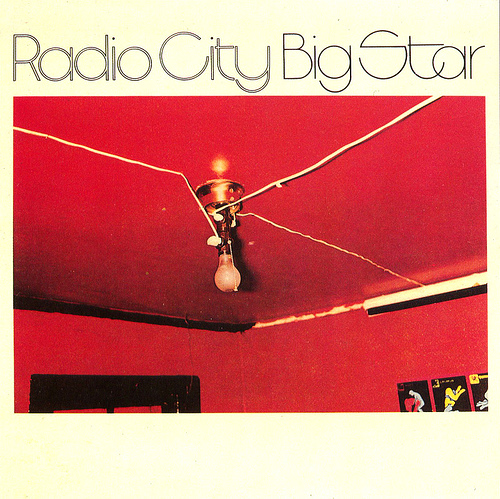
Earlier this month, when I mentioned the exhibit of William Eggleston’s photographs that’s currently at the Art Institute—posting an album cover that you’ll find in a display case there—I didn’t expect that Big Star would appear here again before the month’s end. But then I didn’t expect that Alex Chilton would pass away, either. Alex had more than simply an artistic interest in Eggleston and his work. He’d known the photographer, who was a good friend of his parents, since he was a little boy. Here, again, is the image Alex chose for that album cover, followed by a couple more from this exhibit.

***

***

Saturday, 3/6/10

For some people, going their own way seems to be the only way they could possibly go.

Captain Beefheart (AKA Don Van Vliet)

The Artist Formerly Known As Captain Beefheart (BBC Documentary, 1997)

Part 1

*****

Part 2

*****

Part 3

*****

Part 4

*****

Part 5

*****

Part 6

**********

lagniappe

Don’t you think that somebody like Stravinsky, for instance . . . that it would annoy him if somebody bent a note the wrong way?—Captain Beefheart

*****

About the seventh or eighth time [I listened to Trout Mask Replica], I thought it was the greatest album ever made—and I still do.—Matt Groening

*****

art beat

Paintings by Don Van Vliet

**********

**********

Monday, 3/1/10

Cheesiness knows no boundaries.

Omar Souleyman

#1

*****

#2

*****

#3

*****

#4

Want more? Here.

**********

lagniappe

Omar Souleyman is a Syrian musical legend. Since 1994, he and his musicians have emerged as a staple of folk-pop throughout Syria, but until now they have remained little known outside of the country. To date, they have issued more than five-hundred studio and live-recorded cassette albums which are easily spotted in the shops of any Syrian city.

Born in rural Northeastern Syria, he began his musical career in 1994 with a small group of local collaborators that remain with him today. The myriad musical traditions of the region are evident in their music. Here, classical Arabic mawal-style vocalization gives way to high-octane Syrian Dabke (the regional folkloric dance and party music), Iraqi Choubi and a host of Arabic, Kurdish and Turkish styles, among others. This amalgamation is truly the sound of Syria. The music often has an overdriven sound consisting of phase-shifted Arabic keyboard solos and frantic rhythms. At breakneck speeds, these shrill Syrian electronics play out like forbidden morse-code, but the moods swing from coarse and urgent to dirgy and contemplative in the rugged anthems that comprise Souleyman’s repertoire. Oud, reeds, baglama saz, accompanying vocals and percussion fill out the sound from track to track. Mahmoud Harbi is a long-time collaborator and the man responsible for much of the poetry sung by Souleyman. Together, they commonly perform the Ataba, a traditional form of folk poetry used in Dabke. On stage, Harbi chain smokes cigarettes while standing shoulder to shoulder with Souleyman, periodically leaning over to whisper the material into his ear. Acting as a conduit, Souleyman struts into the audience with urgency, vocalizing the prose in song before returning for the next verse. Souleyman’s first hit in Syria was “Jani” (1996) which gained cassette-kiosk infamy and brought him recognition throughout the country. Over the years, his popularity has risen steadily and the group tirelessly performs concerts throughout Syria and has accepted invitations to perform abroad in Saudi Arabia, Dubai and Lebanon.—Sublime Frequencies

*****

art beat

Album covers and art museums rarely mix. But in a display case at the Art Institute’s William Eggleston exhibit (which just opened), you’ll find this: