What a joy it is to hear an improvising musician whose mind moves as fast as her fingers.
Geri Allen, live, Atlanta, 2009
**********
lagniappe
art beat
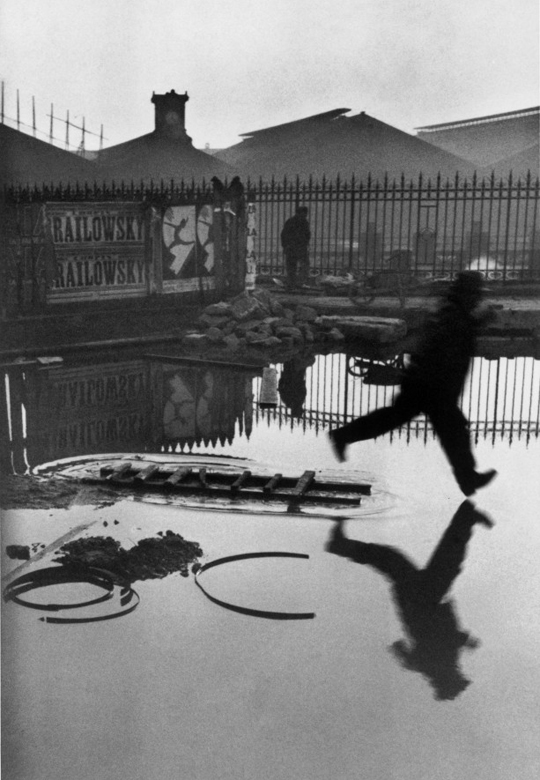
In 1932 I saw a photograph by Martin Munkacsi of three black children running into the sea, and I must say that it is that very photograph which was for me the spark that set fire to the fireworks . . . and made me suddenly realize that photography could reach eternity through the moment. It is only that one photograph which influenced me. There is in that image such intensity, spontaneity, such a joy of life, such a prodigy, that I am still dazzled by it even today.
Martin Munkacsi, Three Boys at Lake Tanganyika, c. 1930
*****
radio: space is the place
Tonight, from 6-9 p.m. (EST), WKCR-FM(broadcasting from Columbia University) will be featuring recordings of live performances by Sun Ra & His Solar Arkestra at Soundscape, a New York loft space (West 52nd St. and 10th Ave.) that presented live music from 1979 to 1983.
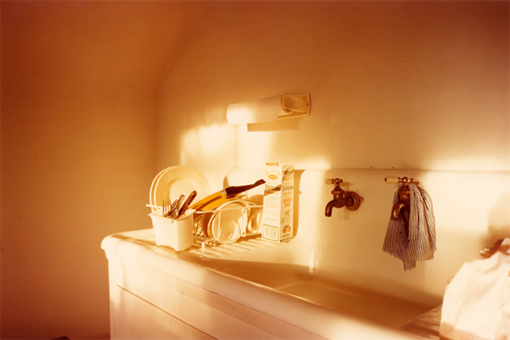
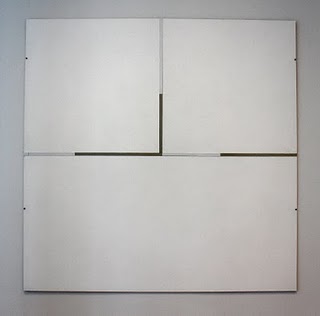
While at the Art Institute the other day, I wandered into a small room of paintings by this guy—who, in his early 20s (in the 1950s), moved to New York to study music with Lennie Tristano.
Robert Ryman, from The Elliot Room (Charter Series), 1985-87
He’s [Tom Jones] got a new gospel album out on Lost Highway that is really good.
***
Absolutely love your latest clips. Was that Kermit Ruffins and Trombone Shorty on the Rebirth clip [don’t believe so]? If you haven’t already, please check out Praise & Blame by Tom Jones. I picked it up after reading a review by Jim Fusilli in the WSJ. It is very good. Thanks for what you do. I look forward to your email each day.
*****
art beat
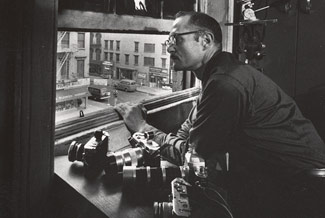
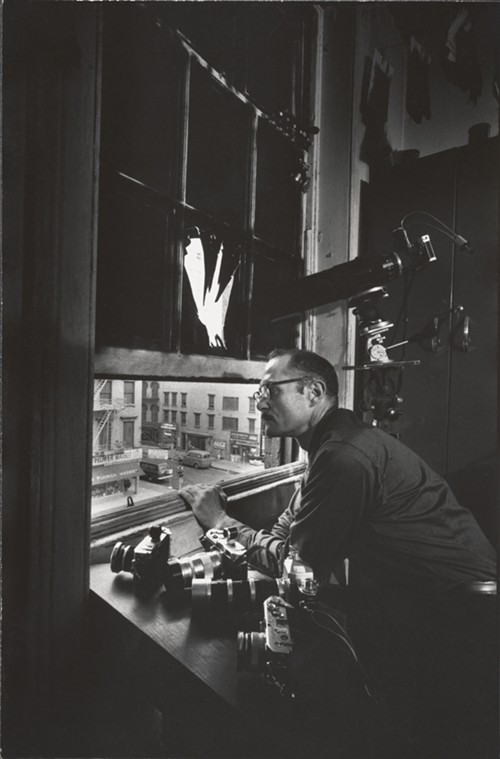
The other day I happened upon a wonderful photography exhibit at the Chicago Cultural Center (through September 19th), The Jazz Loft Project, W. Eugene Smith in NYC, 1957-1965.
From Smith’s loft (821 Sixth Ave. [near W. 28th St.])
***
Thelonious Monk
***
Zoot Sims
*****
musical thoughts
It is hard to believe of the world that there should be/music in it . . .
—William Bronk (from “The Nature of Musical Form”)
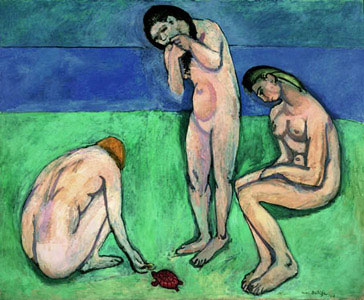
The New Yorker (8/16/10) writes of Matisse’s Bathers by a River, which is currently on view, in the exhibit “Matisse: Radical Invention, 1913-1917,” at the Museum of Modern Art: “it consumes at least as much aesthetic energy as it imparts.” Except when it’s on loan elsewhere, this painting hangs at Chicago’s Art Institute. Over the years I’ve seen it dozens (maybe hundreds) of times. Never once, as I looked at it, did it occur to me how much “aesthetic energy” it was “consum[ing].”
With the greatest artists, even the most familiar pieces sound as if you were hearing them for the first time.
Beethoven, Piano Sonata No. 14 in C# minor, Op. 27, No. 2 (“Moonlight”), 1801/Artur Schnabel, piano, 1933
1st & 2nd Movements
*****
3rd Movement
**********
lagniappe
The magnitude of his [Schnabel’s] creative accomplishments left technical considerations far behind. His Beethoven had incomparable style, intellectual strength, and phrasing of aristocratic purity. The important thing was that even when his fingers failed him, his mind never did. Schnabel was always able to make his playing interesting. A mind came through—a logical, stimulating, sensitive mind. And when Schnabel had his fingers under control, which was more often than not in his literature of Mozart, Beethoven and Schubert, he took his listeners to an exalted level. . . . There were no tricks, no excesses; just brain, heart and fingers working together with supreme knowledge.—Harold C. Schonberg, The Great Pianists (1963)
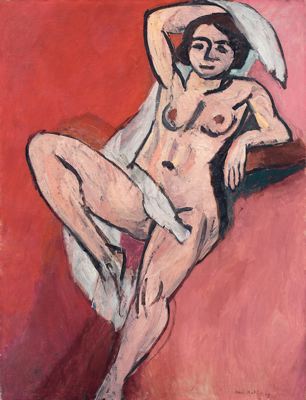
At the risk of repeating myself, the Matisse exhibit at Chicago’s Art Institute closes Sunday (then opens next month at New York’s Museum of Modern Art). How many other opportunities will you have to see this stuff?
Henri Matisse:
Seek the strongest color effect possible . . . the content is of no importance.
***
After a half-century of hard work and reflection the wall is still there.
This track comes from The Widow’s Might, a wonderful DVD with nearly 700 gospel songs in mp3 format (everything played on Sinner’s Crossroads in 2009) that’s available as a $75 premium from WFMU-FM.
**********
lagniappe
The Caravans’ star then was Inez, whom they called the High Priestess. She looks the part. A coffee-colored woman with high Indian cheekbones and an intense, almost drugged stare, she can sing higher natural notes than anyone on the road. Tina [Albertina Walker] said, ‘The rest of us sang awhile, but the folks really wanted to hear Inez whistle.’
—Anthony Heilbut, The Gospel Sound: Good News and Bad Times (6th ed. 2002)
*****
Determination is important. You’ve got to be determined to live what you sing as well as sing what you sing. God understands the . . . difficulty that we go through for the truth. The Bible says your determination will be rewarded because God sees it when no one else does.
The Matisse exhibit at Chicago’s Art Institute (which I returned to yesterday) closes on June 20th, then opens at New York’s Museum of Modern Art on July 18th. I have only one word of advice: Go!