As the date of his appearance in Besançon approached, Lipatti was becoming more and more ill [Hodgkin’s lymphoma]; nevertheless, in the days before the recital he wrote to his teacher Florica Musicescu and also to Paul Sacher that his health was fine. The morning of his performance, he practiced on the Gaveau piano in the Salle du Parliament without any problems. That afternoon, however, he developed a strong fever, and his doctor begged him to cancel; Lipatti did not want to consider this but admitted that he didn’t think he could perform. The organizer of the recital was contacted by telephone, and when he stated that the hall was already full, Lipatti made the decision to play. After some injections, he walked robot-like to the car that transported him to the hall. He took each step deliberately, with such difficulty that he decided that he would not leave the stage between pieces. The Radiodiffusion Française cancelled the live transmission of the recital, fearing the worst, but recorded the performance for future broadcast.
The hall was packed, with additional seating behind the piano . . . The concentration of both the artist and the audience members is palpable in both the photographs and the recording of the recital, with enthusiastic applause greeting each work.
***
Despite other planned concerts later in September and in October, Lipatti did not give another public performance.
Not even with all the fingers on all the hands of all the people in the city of Chicago could you count the possibilities offered by just three instruments.
Gyorgy Ligeti, Trio for Violin, Horn, and Piano (1982); Tomas Major (violin), Zora Sloka (horn), Denes Varjon (piano), 2009
Charles Mingus Quintet,* “So Long Eric,” “Peggy’s Blue Skylight,” “Meditations On Integration” (all by Mingus), live (TV show), Belgium, 1964
Mingus’s music, it seems, has everything. Call it “simple” or “complex” and you’d be both right and wrong—it’s both. Compositional elegance is balanced, exquisitely, with improvisational unruliness. Rhythmic momentum is no less—and no more—important than melodic invention. Like Ellington and Monk, he will, I’m confident, still be listened to a hundred years from now.
(Excerpts from this program have been posted previously.)
**********
lagniappe
art beat: yesterday at the Art Institute of Chicago
Ludovico Carracci, The Vision of Saint Francis, c. 1602
Going to the Art Institute again, after being away for a while, I felt a bit like someone who doesn’t realize he’s starving until he finds himself at a feast.
*****
*CM, bass; Eric Dolphy, alto saxophone, flute, bass clarinet; Clifford Jordan, tenor saxophone; Jaki Byard, piano; Dannie Richmond, drums.
Otha Turner (1907-2003) and the Rising Star Fife and Drum Band (with guest Luther Dickinson, guitar), “My Babe,” live, Memphis, 1990s
**********
lagniappe
art beat: more from Wednesday’s stop at the Art Institute of Chicago
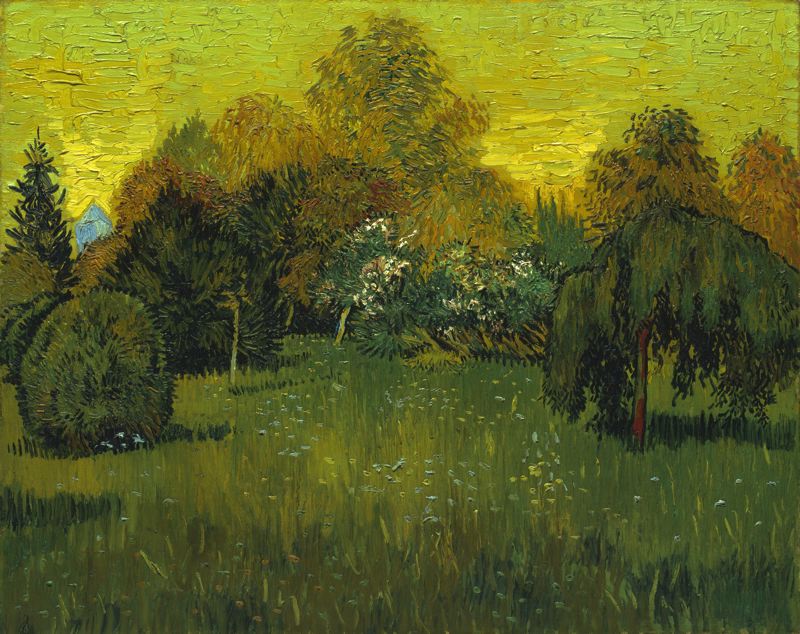
Vincent van Gogh, The Poet’s Garden (1888)
*****
musical thoughts
Last night, at the University of Chicago’s Mandel Hall, I heard what may be the finest encore I’ve ever heard. After devoting the second half of his concert to Beethoven’s mammoth Diabelli Variations, pianist Peter Serkin, following several trips offstage to rapturous applause, sat down and played, slowly, meditatively, the Aria from Bach’s Goldberg Variations. As the last note was fading, if someone had turned to me and said, with the kind of confidence one often encounters in Hyde Park, that the greatest achievements in the history of humanity can be heard at the piano, I couldn’t have done anything other than agree.
Mostly Other People Do the Killing (Moppa Elliott, bass; Peter Evans, trumpet; Jon Irabagon, alto saxophone; Kevin Shea, drums), live, London (The Vortex), 7/14/11
**********
lagniappe
art beat: yesterday at the Art Institute of Chicago (after a hearing at the nearby federal court building)
Vincent van Gogh
The Bedroom (1889)
*******
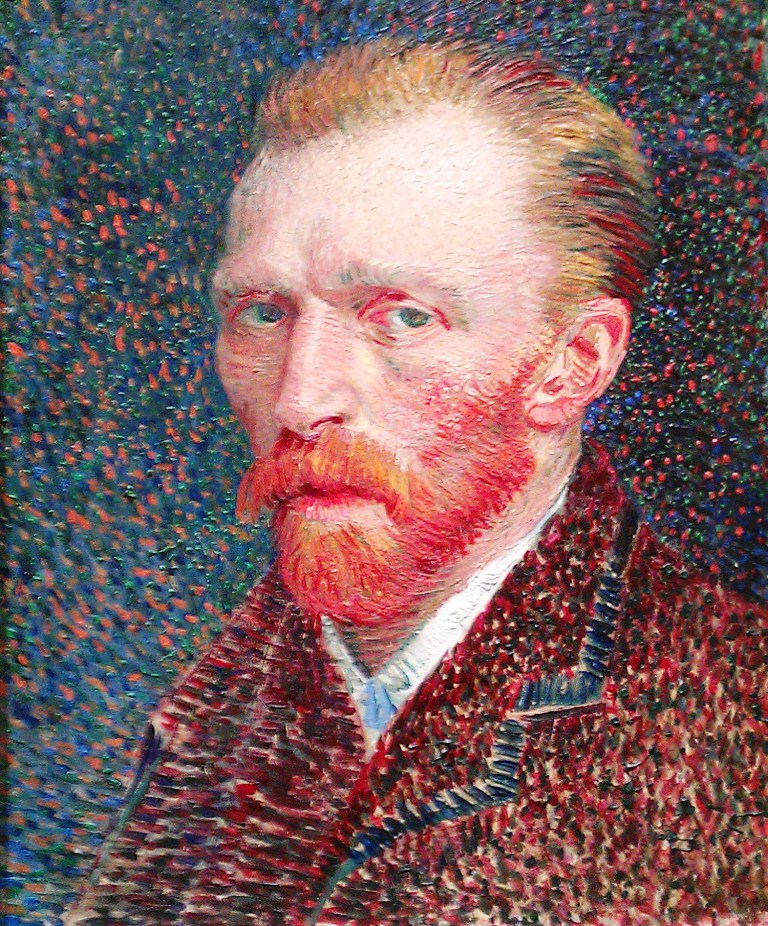
Self-Portrait (1887)
With van Gogh, the life continually threatens to overtake the art; the challenge is to look with fresh eyes.
If you wanted to conjure a world full of mystery, what better instrument to lead the way than one that possesses neither the brightness of the violin nor the darkness of the cello?
Morton Feldman, Rothko Chapel (1971), live, Houston (Rothko Chapel), 2011; Kim Kashkashian (viola), Brian Del Signore (percussion), Sarah Rothenberg (celeste), Maureen Broy Papovich (soprano), Houston Chamber Choir (Robert Simpson, cond.)
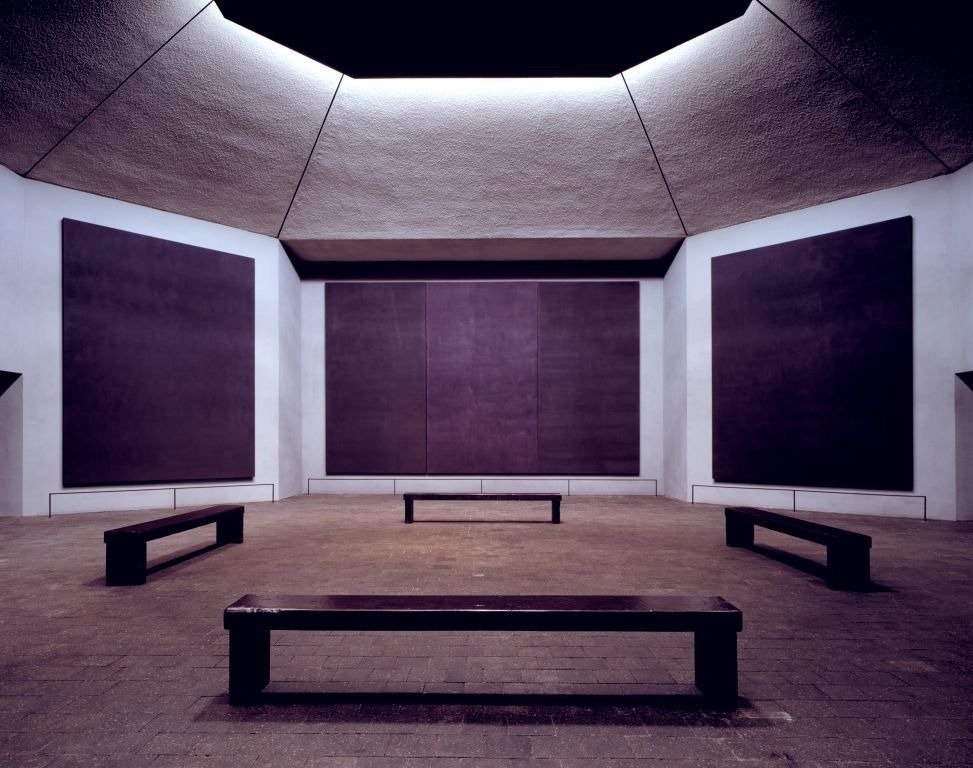
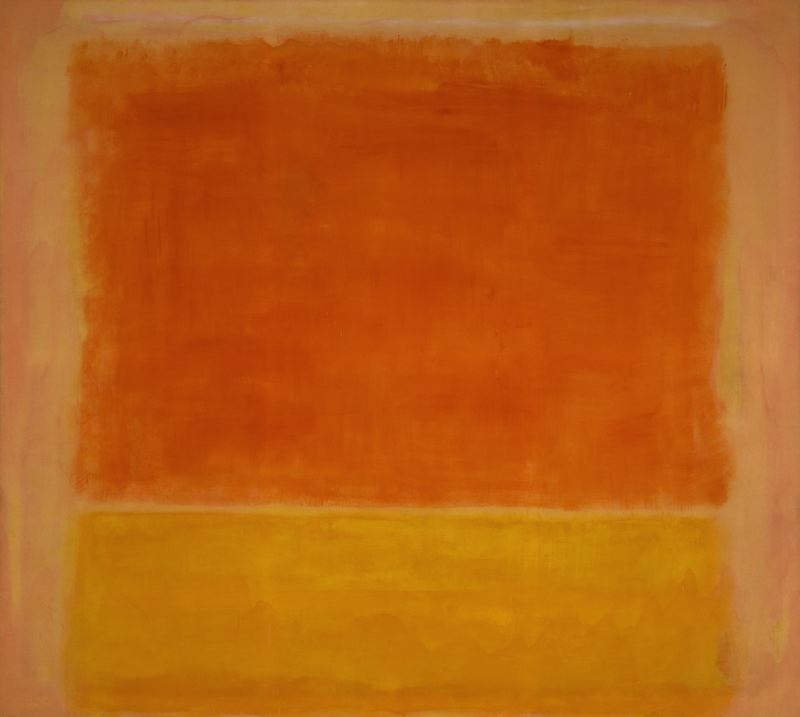
The Rothko Chapel is an interfaith sanctuary, a center for human rights — and a one-man art museum devoted to 14 monumental paintings by abstract expressionist Mark Rothko. The Houston landmark, commissioned by John and Dominique de Menil, opened its doors 40 years ago, in February 1971.
For the past four decades, the chapel has encouraged cooperation between people of all faiths — or of no faith at all. While the chapel itself has become an art landmark and a center for human-rights action, the sanctuary’s creator never lived to see it finished. Rothko committed suicide in 1970.
Approaching the chapel from the south, visitors first see a steel sculpture called Broken Obelisk by Barnett Newman in the middle of a pool — it appears to be floating on the surface of the water. The chapel itself is a windowless, octagonal brick building. Solid black doors open on a tiny glass-walled foyer. (The foyer was walled off from the rest of the interior when the Gulf Coast’s notorious humidity began to affect the paintings.)
The main room is a hushed octagonal space with gray stucco walls, each filled by massive paintings. Some walls feature one canvas, while on others, three canvases hang side by side to form a triptych. A baffled skylight subdues the bright Houston sun, and the surfaces of the paintings change dramatically as unseen clouds pass outside. There are eight austere wooden benches informally arranged, and today, a few meditation mats. A young woman brings the meditation hour to a close by striking a small bowl with a mallet, creating a soft peal of three bells in the intense silence of the room.
Concerts, conferences, lectures, weddings and memorial services all take place in the chapel throughout the year, but on most days you will find visitors — about 55,000 annually come to see, to meditate, to write in the large comment book in the foyer, to read the variety of well-thumbed religious texts available on benches at the entrance.
***
These paintings do not feature the luminous color fields that made Rothko famous. The paintings in the chapel are dark, in purplish or black hues. And there’s a reason for that, says [chapel historian Suna] Umari.
“They’re sort of a window to beyond,” she explains. “He said the bright colors sort of stop your vision at the canvas, where dark colors go beyond. And definitely you’re looking at the beyond. You’re looking at the infinite.”
***
At first glance, the paintings appear to be made up of solid, dark colors. But look closely, and it becomes evident that the paintings are composed of many uneven washes of pigment that create variations in every inch. Stepping back, waves of subtle color difference appear across the broad surfaces — leading to an unmistakable impression of physical depth.
***
Though Mark Rothko didn’t live to see the sanctuary he created, Christopher Rothko says his father knew what it should be.
“It took me a while to realize it, but that’s really my father’s gift, in a sense, to somebody who comes to the chapel. It’s a place that will really not just invite, but also demand a kind of journey.”
What do you get when you combine a pianist who plays with the percussive intensity of a drummer and a drummer who plays with the melodic buoyancy of a pianist?
Cecil Taylor (piano), Max Roach (drums), live
New York (Columbia University), 2000
**********
lagniappe
art beat: more from Thursday’s stop at the Art Institute of Chicago (after a hearing at the nearby federal court building)




 music clip of the day