“Move On Up A Little Higher” (W. Herbert Brewster)
Mahalia Jackson, radio broadcast, early 1950s
*****
Brother Joe May, live, early 1950s
*****
Rev. Timothy Flemming Sr., live, Atlanta, 1976
**********
lagniappe
art beat: yesterday at the Art Institute of Chicago (with my son Alex)
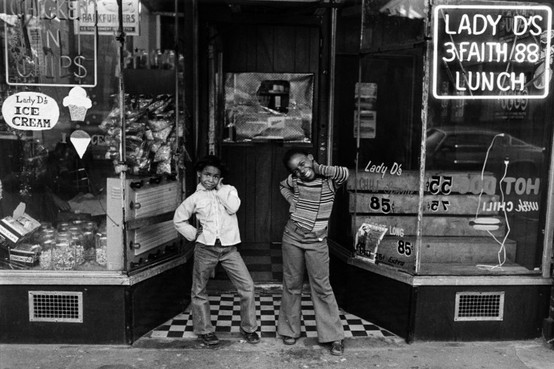
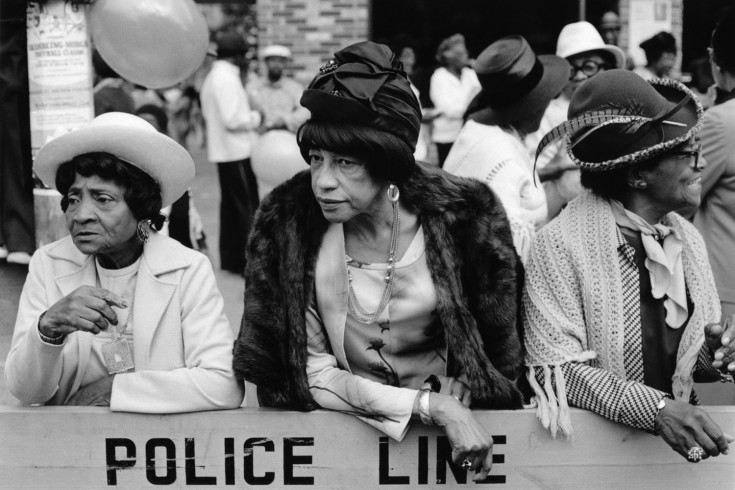
Helen Levitt, Janice Loeb, James Agee, In the Street (1948), featured in the exhibit Film and Photo in New York (through 11/25/12)
(For better quality go to the “Settings” icon [lower right] and select 480p.)
*****
random thoughts
Sixty years ago today Dwight D. Eisenhower was elected the thirty-fourth President of the United States and, closer to home, my parents’ second son was born. What’s it like turning sixty? Surprising. But no more surprising, I suppose, than finding oneself entwined, in perpetuity, with Ike.
John Cage, composer, September 5, 1912-August 12, 1992
Today, celebrating his centennial, we revisit past clips.
*****
10/9/09
No matter where you are, this landscape is just around the corner.
John Cage (1912-1992), In a Landscape (1948); Stephen Drury, piano
**********
lagniappe
musical thoughts
Music is a means of rapid transportation.
***
What I’m proposing, to myself and other people, is what I often call the tourist attitude—that you act as though you’ve never been there before. So that you’re not supposed to know anything about it. If you really get down to brass tacks, we have never been anywhere before.
***
As far as consistency of thought goes, I prefer inconsistency.
—John Cage
*****
5/22/10
Here’s a piece that sounds different every time you hear it.
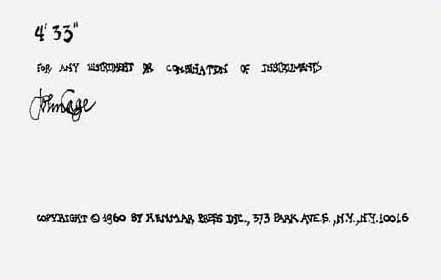
John Cage, 4’ 33” (1952); David Tudor, piano
lagniappe
***
*****
musical thoughts
I didn’t wish it [4′ 33″] to appear, even to me, as something easy to do or as a joke. I wanted to mean it utterly and be able to live with it.
***
Until I die there will be sounds. And they will continue following my death. One need not fear about the future of music.
Monday, n. the day the weekly tide of confusion rolls in.
How about something simple?
John Cage (1912-1992), Six Melodies (for violin and keyboard; dedicated to Josef & Anni Albers), 1950; Annelie Gahl (violin) & Klaus Lang (electric piano), 2010
“Thank You (Falettinme Be Mice Elf Again),” TV Show (Soul Train), 1974
*****
“In Time,” Fresh, 1973
Jazz legend Miles Davis was so impressed by the song “In Time” . . . that he made his band listen to the track repeatedly for a full 30 minutes. Composer and music theorist Brian Eno cited Fresh as having heralded a shift in the history of recording, “where the rhythm instruments, particularly the bass drum and bass, suddenly [became] the important instruments in the mix.”
Music, for some people, is no less vital than oxygen.
James Rhodes, talking and playing (2010)
**********
lagniappe
reading table
To Praise the Music
by William Bronk (1918-1999)
Evening. The trees in late winter bare
against the sky. Still light, the sky.
Trees dark against it. A few leaves
on the trees. Tension in their rigid branches as if
–oh, it is all as if, but as if, yes,
as if they sang songs, as if they praised.
Oh, I envy them. I know the songs.
As if I know some other things besides.
As if; but I don’t know, not more
than to say the trees know. The trees don’t know
and neither do I. What is it keeps me from praise?
I praise. If only to say their songs,
say yes to them, to praise the songs they sing.
Envied music. I sing to praise their song.
(Want to hear Bronk, a MCOTD Hall of Famer, read this? Here.)
*****
art beat: more from Tuesday’s stop at the Art Institute of Chicago
It’s impossible, sometimes, to separate our experience of music, especially pop music, from the surrounding circumstances. The other day, for instance, I was taking my son Luke back to school in Bloomington, Indiana. He was playing dashboard DJ. As we rolled through the hills of southern Indiana, nearing our destination, this came on after a long stretch of hip-hop (Lil Wayne, Eminem, Young Jeezy, Tyga, et al.), and the electronic intro, the Björk-like voice—they lit up the highway.
Ellie Goulding, “Lights”
**********
lagniappe
art beat: yesterday at the Art Institute of Chicago (after a hearing at the nearby federal court building)
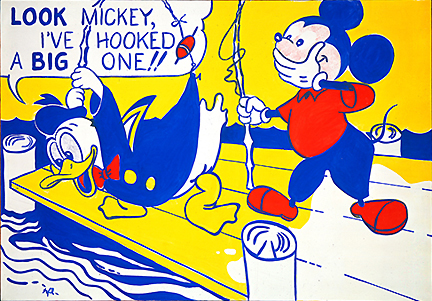
Roy Lichtenstein: A Retrospective (through 9/3/12)







 music clip of the day