music clip of the day

jazz/blues/rock/classical/gospel/more

Category: art beat

Saturday, March 8th

alone

Lonnie Holley, “Looking for All (All Rendered Truth)” (2012)


*****

For 18 years, the Atlanta-based documentary filmmaker George King has been shooting [artist and musician] Lonnie Holley . . . King has mined the footage to make a video for “Looking for All (All Rendered Truth),” a song from Holley’s 2012 debut album, “Just Before Music.” . . . [The footage] offer[s] glimpses of the artist as a young man: showing off his intricate sandstone sculptures or wandering amid the scavenged materials — a baby doll, a “Dead End” sign, a lawn jockey, a wrecked car, a child’s dress — in his Alabama yard-art environment. (There are also shots of a bulldozer tearing the place down, after it was condemned by the airport authority.)

“Lonnie is kind of a person without a country: he creates art that’s extremely sophisticated but that most people don’t know a thing about,” says the art collector and historian Bill Arnett, Holley’s longtime friend and patron. “Abstract art didn’t appear in Western easel painting, which is still the standard by which everything is measured, really until modernism. But black people were making abstract art in the the South for hundreds of years. It just wasn’t being recognized as art. Black people understood that to survive, they could not let their intentions and skills as artists be seen, so the art was done in cemeteries, or like Lonnie’s art it was hidden from view.”

—Mark Binelli, New York Times blog, 1/25/14

Sunday, March 2nd

Gospel?

Blues?

Rock ‘n’ roll?

Trying to keep them separate is like trying to draw lines in water.

Leo Welch, “Praise His Name,” live, Mississippi (Gravel Springs), 2013

**********

lagniappe

art beat

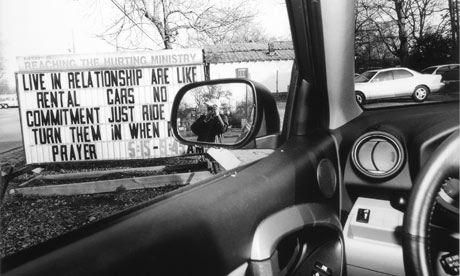
Lee Friedlander (1934-), Mississippi, 2008

friedlandermiss-007

Saturday, March 1, 2014

If you wanted to conjure a world of mystery, what better instrument to lead the way than one that possesses neither the brightness of the violin nor the darkness of the cello?

Morton Feldman, Rothko Chapel (1971), live, Houston (Rothko Chapel), 2011; Kim Kashkashian (viola), Brian Del Signore (percussion), Sarah Rothenberg (celeste), Maureen Broy Papovich (soprano), Houston Chamber Choir (Robert Simpson, cond.)

#1

***

#2

***

#3

Another take? Here.

**********

lagniappe

Rothko Chapel

***

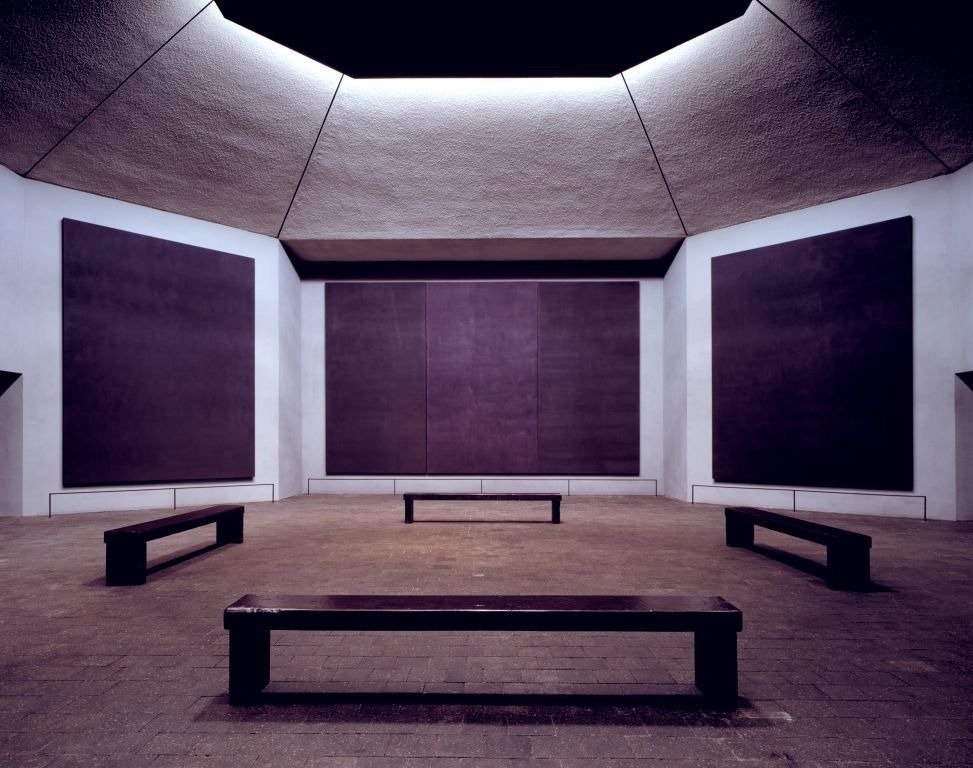
The Rothko Chapel is an interfaith sanctuary, a center for human rights — and a one-man art museum devoted to 14 monumental paintings by abstract expressionist Mark Rothko. The Houston landmark, commissioned by John and Dominique de Menil, opened its doors 40 years ago, in February 1971.

For the past four decades, the chapel has encouraged cooperation between people of all faiths — or of no faith at all. While the chapel itself has become an art landmark and a center for human-rights action, the sanctuary’s creator never lived to see it finished. Rothko committed suicide in 1970.

Approaching the chapel from the south, visitors first see a steel sculpture called Broken Obelisk by Barnett Newman in the middle of a pool — it appears to be floating on the surface of the water. The chapel itself is a windowless, octagonal brick building. Solid black doors open on a tiny glass-walled foyer. (The foyer was walled off from the rest of the interior when the Gulf Coast’s notorious humidity began to affect the paintings.)

The main room is a hushed octagonal space with gray stucco walls, each filled by massive paintings. Some walls feature one canvas, while on others, three canvases hang side by side to form a triptych. A baffled skylight subdues the bright Houston sun, and the surfaces of the paintings change dramatically as unseen clouds pass outside. There are eight austere wooden benches informally arranged, and today, a few meditation mats. A young woman brings the meditation hour to a close by striking a small bowl with a mallet, creating a soft peal of three bells in the intense silence of the room.

Concerts, conferences, lectures, weddings and memorial services all take place in the chapel throughout the year, but on most days you will find visitors — about 55,000 annually come to see, to meditate, to write in the large comment book in the foyer, to read the variety of well-thumbed religious texts available on benches at the entrance.

***

These paintings do not feature the luminous color fields that made Rothko famous. The paintings in the chapel are dark, in purplish or black hues. And there’s a reason for that, says [chapel historian Suna] Umari.

“They’re sort of a window to beyond,” she explains. “He said the bright colors sort of stop your vision at the canvas, where dark colors go beyond. And definitely you’re looking at the beyond. You’re looking at the infinite.”

***

At first glance, the paintings appear to be made up of solid, dark colors. But look closely, and it becomes evident that the paintings are composed of many uneven washes of pigment that create variations in every inch. Stepping back, waves of subtle color difference appear across the broad surfaces — leading to an unmistakable impression of physical depth.

***

Though Mark Rothko didn’t live to see the sanctuary he created, Christopher Rothko says his father knew what it should be.

“It took me a while to realize it, but that’s really my father’s gift, in a sense, to somebody who comes to the chapel. It’s a place that will really not just invite, but also demand a kind of journey.”

—Pat Dowell, “Meditation and Modern Art Meet In Rothko Chapel,” NPR, 3/1/11

*****

reading table

Our lives are Swiss –
So still – so Cool –
Till some odd afternoon
The Alps neglect their Curtains
And we look farther on!

Italy stands the other side!
While like a guard between –
The solemn Alps –
The siren Alps
Forever intervene!

—Emily Dickinson

Thursday, February 27th

sounds of Chicago

Klang (James Falzone, clarinet; Jason Adasiewicz, vibraphone; Jason Roebke, bass; Tim Daisy, drums), live (studio performance), 2009


**********

lagniappe

art beat: the other day at the Art Institute of Chicago

Mark Rothko (1903-1970), Untitled (Purple, White, and Red), 1953

140707_2536781

This painting and I have been getting together, several times a year, for decades. Admittedly, our relationship is rather one-sided. But, if anything, its indifference to me only deepens my feelings for it.

Monday, February 17th

sounds of Chicago

Baby Huey (AKA James Ramey, 1944-1970), “Listen To Me,” 1971 (Curtom)


**********

lagniappe

art beat: more from Thursday’s stop at the Art Institute of Chicago

Joan Mitchell (1925-1992), City Landscape, 1955

Joan_Mitchell_City_Landscape

Sunday, February 16th

No stage. No microphone. Just heart.

Evangelist Mary Brown and the Spiritual Singers, “I’ll Fly Away,” live, North Carolina (Plymouth, pop. ~4,000), 2011

**********

lagniappe

art beat: Thursday at the Art Institute of Chicago (after meeting with a client at the nearby federal jail)

Paul Cezanne, The Bay of Marseilles, Seen From L’Estaque, c. 1885

ambrvoll_02
If a stranger, standing next to me in front of this painting, leaned over and whispered, “There’s no better place to be on the planet,” I wouldn’t disagree.

Saturday, January 18th

never enough

One-word review: riveting.

Johann Sebastian Bach, Chaconne in D minor for solo violin (Partita for Violin No. 2); Ivry Gitlis (violin), live, Japan (Tokyo), 1990


**********

lagniappe

art beat

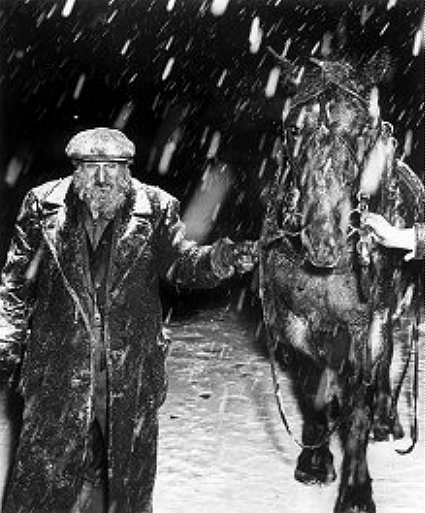
Weegee (AKA Arthur Fellig, 1899-1968)

weegee_12

Saturday, January 4th

Lucid, supple, propulsive: This stuff I could listen to all day.

Steve Lehman Octet (SL, alto saxophone; Jonathan Finlayson, trumpet; Tim Albright, trombone; Jeremy Viner, tenor saxophone; Jose Avila, tuba; Chris Dingman, vibraphone; Drew Gress, bass; Tyshawn Sorey, drums)

Live, Germany (Moers Festival), 2010

***

Live, 2011

**********

lagniappe

art beat

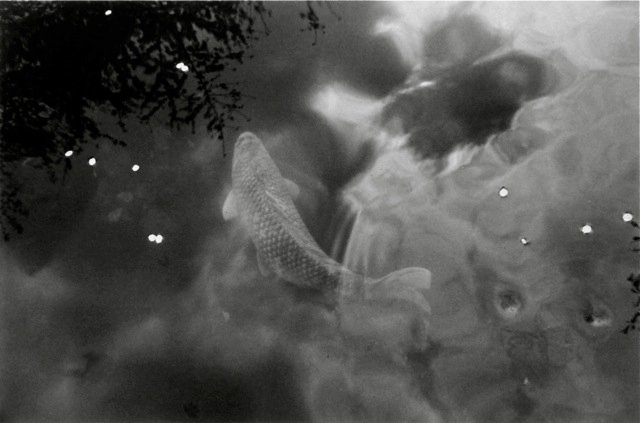
Lee Friedlander (1934-), Japan (Tokyo), 1981

Friedlander-Cherry-Blossom-Time-47

Friday, January 3rd

what’s new

Darkside, live, Paris (Pitchfork Music Festival), 10/31/13


**********

lagniappe

art beat

Lee Friedlander (1934-), Japan (Kyoto), 1981

1. Kyoto, 1981

Monday, December 30th

five takes

“Burning Love” (D. Linde)

Arthur Alexander, recording, 1972


*****

Elvis Presley, live, Greensboro, N.C., 1972


*****

Elvis Presley, recording, 1972


*****

Bruce Springstein, live, Italy (Florence), 2012


*****

The Korean Black Eyes, recording, 1974


**********

lagniappe

art beat

Weegee (AKA Arthur Fellig, 1899-1968)

weegee_09