Saturday, 7/17/10
replay: a clip too good for just one day
At his best, Lenny Bruce didn’t meet expectations—he confounded them.
Lenny Bruce, “All Alone,” live (TV broadcast [“The Steve Allen Show”]), 1959
(Originally posted 11/30/09.)
replay: a clip too good for just one day
At his best, Lenny Bruce didn’t meet expectations—he confounded them.
Lenny Bruce, “All Alone,” live (TV broadcast [“The Steve Allen Show”]), 1959
(Originally posted 11/30/09.)
Simple, subtle, soulful: blues is (as Artur Schnabel said of Mozart’s piano sonatas) “too easy for children, too difficult for adults.”
R.L. Burnside, “Goin’ Down South,” live, early 1970s, Mississippi
**********
lagniappe
musical thoughts
Music is the healing force of the universe.
—Albert Ayler
Music can be made anywhere—a street corner, a subway station, even a bathroom.
Shiyani Ngcobo
“The Bathroom Recordings,” live, France (Nantes), 1997
*****
“Izinyembezi” (Introducing Shiyani Ngcobo [2004])
**********
lagniappe
I’d like to make a plea for a new concept—elastic precision. It’s what [South African musician] Shiyani Ngcobo has, and what so many musicians have: an absolutely determined (in both senses of the word) and precise groove, with infinite, fractal variants that relate to what comes before and after. . . . Perfection may be infinitely seductive, but it’s the flaws and differences that make the beauty.
—Ben Mandelson, liner notes, Introducing Shiyani Ngcobo (2004)
They weren’t glamorous. And they couldn’t have been paying a whole lot. But everybody, it seemed, wanted to play with them.
Delaney & Bonnie
With Eric Clapton (guitar), Dave Mason (guitar), Bobby Whitlock (vocal); “Poor Elijah-Tribute to Robert Johnson”; live (TV broadcast), England, 1969
•••••
With Eric Clapton (guitar), George Harrison (guitar), Bobby Whitlock (keyboards), Carl Radle (bass), Jim Gordon (drums); “Comin’ Home”; live, England, 1969
*****
With Duane Allman (guitar), Gregg Allman (organ), King Curtis (tenor saxophone); “Only You Know And I Know”; live, 1971
(The bass player, whoever he is, is the MVP here—he lights up everything [check out, for instance, 1:06-1:56].)
I’ve tried listening to his recordings while doing something else, but that hasn’t worked. Whatever else I was doing, I just put aside. If it was nighttime, I turned off the light. Some music occupies every available inch of space—there isn’t room for anything else.
Alfred Cortot: Frederic Chopin, “Farewell” (Waltz in A-flat major, Op. 69, No. 1 [excerpt]); Robert Schumann, “Der Dichter Spricht” (Op. 15, No. 13 in G major [excerpt])
**********
lagniappe
Cortot looked for the opium in music.
—Daniel Barenboim
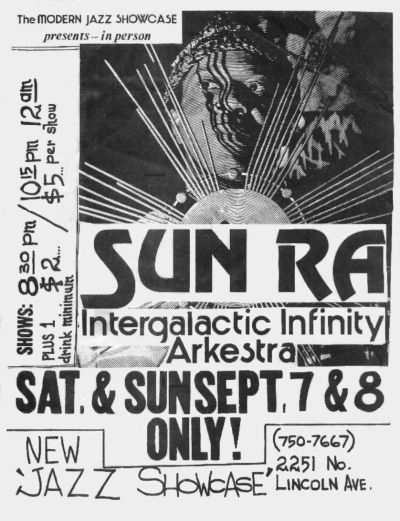
Here’s a big birthday shout-out to my wife Suzanne, who’s not nearly as crazy as I am about music—not nearly as crazy, period—but is crazy enough that she kept going out with me after I took her on our first date, in the summer of 1974, to Chicago’s Jazz Showcase (then on Lincoln Avenue) to see this guy, whose multimedia performance that night featured some of this footage—the stuff with the pyramids.
Sun Ra & His Arkestra in Egypt and Italy, 1971
**********
lagniappe
Even in the excesses of this era there were few audiences prepared for an ominous, ragtag group of musicians in Egyptian robes, Mongolian caps (Mongolian, as from the planet Mongo of Flash Gordon), and B-movie spacesuits who played on a variety of newly invented or strangely modified electronic instruments (the sun harp, the space organ, the cosmic side drum) and proclaimed the greatness of the most ancient of races (this, the Sun Ra of the Solar-Myth Arkestra); or, on yet another night, a merry band in jester’s motley, jerkins, and pointed caps (a la Robin Hood or perhaps the Archers of Arboria) who marched or crawled through the audience, chanting cheerful songs about travel to Venus. It was intensely dramatic music, moving from stasis to chaos and back, horn players leaping about, or rolling on the bandstand, sometimes with fire eaters, gilded muscle men, and midgets, an all-out assault on the senses. At the end of the evening the musicians and dancers moved among the audience, touching them, surrounding them, inviting them to join the Arkestra in marching off to Jupiter.
—John F. Szwed, Space Is The Place: The Lives And Times Of Sun Ra (1997)
*****
Sun Ra’s consistent statement, musically and spoken, is that this is a primitive world. Its practices, beliefs, religions, are uneducated, unenlightened, savage, destructive, already in the past. . . . That’s why Sun Ra returned only to say he left. Into the future. Into Space.
—Amiri Baraka (formerly known as LeRoi Jones)
*****
Silence is music. There are different kinds of silence, each silence is a world all of its own . . . silence is an integral part of all music . . .
***
When you meet a man
You meet a scheme of words
Patterns of concept
A concepted being
Whose very birth conception is called.
***
The earth cannot move without music. The earth moves in a certain rhythm, a certain sound, a certain note. When the music stops the earth will stop and everything upon it will die.
—Sun Ra
*****
Still another group that played last weekend at FitzGerald’s American Music Festival—these guys performed on Sunday (the 4th), along with Brave Combo and C.J. Chenier & the Red Hot Louisiana Band and the Blasters and Trombone Shorty and Orleans Avenue.
The Victory Travelers, live, Chicago, 2008
**********
lagniappe
three steps to a better day
1. Click here (Sinner’s Crossroads, Kevin Nutt’s weekly one-hour “gospel extravaganza” on WFMU-FM).
2. Click on the link for the most recent show (7/8/10).
3. Listen.
replay: a clip too good for just one day
Here is the onliest Thelonious.
Thelonious Monk, “Epistrophy,” live (TV broadcast), Paris, 1966
*****
Thelonoius Monk, “’Round Midnight,” live (TV broadcast)
*****
You can tell a lot about Monk’s music—about the centrality of dance, about the interplay between melody and rhythm, about the way a melody’s irregular accents override the pulse (making the dance melodic)—just by watching, in the second performance, the way his right foot moves.
**********
lagniappe
He played each note as though astonished by the previous one, as though every touch of his fingers on the keyboard was correcting an error and this touch in turn became an error to be corrected and so the tune never quite ended up the way it was meant to be.
***
You had to see Monk to hear his music properly. The most important instrument in the group—whatever the format—was his body.
—Geoff Dyer, But Beautiful: A Book About Jazz (1996)
(Originally posted 11/2/09.)
Alternate career plan for the next life (if the tap-dance thing doesn’t work out): rubboard player.
C.J. Chenier & the Red Hot Louisiana Band, “Jolie Blonde” & “Jambalaya,” New York City, 2008
Like the Blasters and Brave Combo, these guys played last weekend (Sunday the 4th) at FitzGerald’s American Music Festival.
**********
lagniappe
reading table
. . . I received five hundred thousand discrete bits of information today, of which maybe twenty-five are important. And how am I going to sort that out, you know?
—David Foster Wallace (in David Lipsky, Although of Course You End Up Becoming Yourself: A Road Trip with David Foster Wallace [2010])
*****
great minds at work
When you see your starting pitcher win a game, that means you’ve played a good baseball game.
—Lou Piniella, talking with Ron Santo on WGN Radio before last night’s Cubs game
You can learn how to play the harmonica. You can learn how to sing. What you can’t learn is the most important thing—presence.
Junior Wells (vocal and harmonica), Buddy Guy (guitar), “Cryin’ Shame” (AKA “Country Girl”), live, Chicago, 1970 (Chicago Blues)
Want more? Here.
 music clip of the day